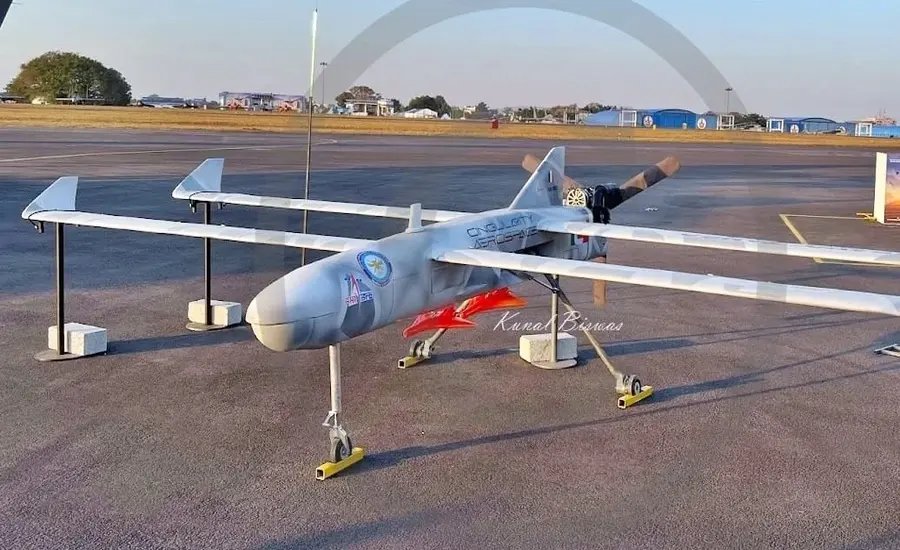
New Delhi: India’s high-altitude guardian drone is set to redefine border security, especially along the sensitive Himalayan frontiers. Known as “Tango Charlie,” this indigenous surveillance platform is designed to operate in extreme high-altitude conditions where human access is difficult. With advanced endurance, long-range monitoring, and cutting-edge satellite integration, the system gives the Indian Army a real-time strategic advantage.
This development highlights India’s growing focus on self-reliance in defence technology and strengthening surveillance along the Line of Actual Control (LAC).
What Is Tango Charlie Drone
India’s latest defence innovation, Tango Charlie, is an indigenous unmanned aerial system (UAS) developed to monitor high-altitude regions like Ladakh.
- Developed through collaboration between Cingularity Aerospace and ISRO
- Built specifically for Himalayan terrain and extreme weather conditions
- Designed to provide continuous aerial surveillance
This drone is part of India’s broader push toward Atmanirbhar Bharat in defence manufacturing.
Why Does India Needs High-Altitude Surveillance Systems
The Himalayan border regions pose serious operational challenges:
- Extremely low oxygen levels and freezing temperatures
- Difficult terrain where ground patrol is limited
- Rising need for real-time intelligence along the LAC
Traditional aircraft struggle in such environments, making drones like Tango Charlie essential for maintaining situational awareness and national security.
What are the Features of Tango Charlie Drone
1. High-Altitude Capability
- Operates at heights of up to 22,000 feet
- Suitable for thin air and unpredictable Himalayan conditions
2. Long Endurance
- Can fly continuously for up to 20 hours
- Enables uninterrupted surveillance missions
3. Extended Range
- Covers distances up to 1,000 kilometres
- Allows deep monitoring without multiple launch points
4. Advanced Engine Design
- Uses turboprop and turbine configurations
- Ensures performance in extreme cold environments
These features make it a high-altitude long-endurance (HALE) surveillance asset for the Indian Army.
What is the Importance of Tango Charlie Drone
Strengthening Border Security
The drone provides a persistent “eye in the sky” over sensitive regions, improving monitoring of troop movements and potential threats.
Reducing Risk to Soldiers
Minimizes the need for human patrols in dangerous terrains like Ladakh and Siachen sectors.
Real-Time Intelligence
Supports faster decision-making with live surveillance data.
Defence Modernisation
Aligns with India’s push to build indigenous military technology and reduce imports.
How It Compares to Other Defence Systems
India has been actively developing high-altitude systems:
- Akash Prime missile system optimized for high-altitude interception
- Indigenous UAVs like Rudrastra for tactical missions
- AI-based drones like Kaala Bhairav for future warfare
However, Tango Charlie stands out for its specialization in extreme-altitude surveillance and endurance missions.
What is the Role of Tango Charlie Drone on Line of Actual Control (LAC)
The primary deployment zone for this drone is the Line of Actual Control (LAC), where India faces ongoing strategic challenges.
- Enables 24/7 monitoring of border activity
- Tracks movement in remote and inaccessible regions
- Enhances preparedness in case of sudden escalations
This makes it a critical asset in maintaining regional stability and deterrence.
Boost to India’s Indigenous Defence Ecosystem
The development of Tango Charlie reflects:
- Strong collaboration between private sector and ISRO
- Growth of domestic aerospace innovation
- Reduced dependence on foreign surveillance systems
India is steadily moving toward becoming a global defence technology hub.