New Delhi: In a major development for civil aviation and defence cooperation, India and Russia have formally begun discussions on the joint production of the Ilyushin Il-114 regional turboprop aircraft. The announcement was made by Rostec — Russia’s flagship state corporation for defence and high-technology manufacturing — underlining a renewed momentum in Indo-Russian aerospace collaboration.
The proposal to co-produce the Il-114 in India aligns with New Delhi’s broader focus on bolstering domestic aerospace manufacturing under the “Make in India” / “Atmanirbhar Bharat” framework.
If realised, the collaboration could reshape regional connectivity, especially across remote and underserved routes, while deepening strategic ties in civil aviation between the two countries.
Background of Ilyushin Il-114 regional turboprop aircraft
The Ilyushin Il-114 was originally developed in the late 1980s by the Ilyushin Aviation Complex (later subsumed into United Aircraft Corporation, or UAC) to replace the aging turboprop airliner fleet typified by the Antonov An-24.
The first prototype took flight on 29 March 1990 — but the programme was plagued by technical, financial and organizational setbacks, including engine delays and the upheaval following the collapse of the Soviet Union.
Due to these hurdles, production was limited, and by the early 1990s, the project was effectively abandoned — though the design bureau retained rights and continued limited development.
Revival: The Il-114-300 and Renewed Potential
In recent years, the programme has received renewed attention under the modernized variant named Il-114-300. This updated version is built with a contemporary digital flight and navigation system, uses modern composite materials, and is powered by improved turboprop engines (TV7-117ST-01).
With a seating capacity of up to about 68, the Il-114-300 is designed for regional and short-haul routes, and is particularly suited to operate from short or unimproved airfields — a crucial capability for remote, underserved, or infrastructure-poor regions.
Its design also allows operation in harsh climates and challenging conditions — including regions with extreme cold or minimal ground support — making it a workhorse for remote zones, be it in Russia’s Arctic territories or mountainous or remote areas elsewhere.
For airlines, the Il-114-300 represents a lower-cost, efficient alternative to other regional turboprops such as ATR-42/72 or older An-24/An-26-type aircraft — with lower operating costs and suitability for smaller or underserved airfields.
Current Development: India-Russia Joint Production Talks
During the ongoing diplomatic engagements between India and Russia — coinciding with the 23rd India–Russia Annual Summit — the head of Rostec, Sergey Chemezov, confirmed that both countries have started preliminary discussions on the joint production of the Il-114 (as well as interest in the Sukhoi Superjet 100 / “Superjet”).
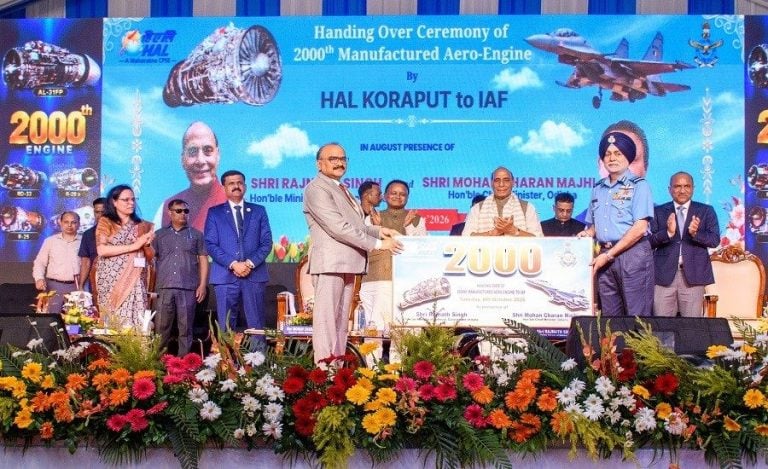
A memorandum has reportedly been signed between India’s Hindustan Aeronautics Limited (HAL) and Russia’s UAC, marking a formal step toward collaboration.
Both sides are said to have begun technical and commercial feasibility studies, with a view to establishing manufacturing capacity in India — possibly involving local assembly, supply-chain integration, and technology transfer.
Strategic and Economic Rationale
For India — a country with rapidly expanding domestic aviation demand, especially for regional connectivity across remote or infrastructure-poor areas — the Il-114-300 offers a compelling fit. Its ability to operate from short or unpaved runways makes it suitable for the kind of airfields common in mountain, island, or rural regions.
Manufacturing the aircraft domestically would support India’s push to strengthen its aerospace ecosystem, generate skilled jobs, and reduce dependence on foreign imports — in line with “Make in India” and self-reliance objectives.
For Russia, the collaboration offers a path to expand export markets, integrate Indian suppliers into its aviation supply chain, and deepen long-term aerospace cooperation — replicating past models of successful joint production (e.g., defense aircraft).
Furthermore, given the Il-114-300’s advantages in remote operations, this partnership could open up civil-aviation routes in underserved areas — boosting regional connectivity and supporting socio-economic development.
Key Challenges and Considerations Ahead
Technical, Certification and Regulatory Hurdles: While the Il-114-300 has undergone modernization and testing, its production is still being ramped up. The aircraft must meet global safety, certification and regulatory standards — especially if it is to serve in India’s civil aviation network or even under government-supported regional connectivity schemes.
Adapting the aircraft to Indian conditions — in terms of climate, airport infrastructure, passenger expectations, maintenance and after-sales support — will require concerted planning and investment.
Commercial Viability and Market Demand: Even though there is growing demand for regional connectivity in India, success will depend on whether airlines — domestic carriers, regional operators, and possibly state-run entities — commit to acquiring and operating Il-114s. Factors such as fuel efficiency, maintenance costs, availability of parts, and operational reliability will weigh heavily.
Also, it remains to be seen whether the joint production will remain limited to assembly or extend to deeper manufacturing and component supply-chain localisation (composites, engines, avionics, interiors, etc.).
Geopolitical and Strategic Context: The joint production comes at a time when global geopolitics, sanctions, and supply-chain realignments have affected the aerospace and defense sectors globally. While the India-Russia partnership enjoys decades-long trust and cooperation, any geopolitical shifts — especially external pressures — could influence the course, timeline, or scope of such collaborations.
Nevertheless, both sides have historically safeguarded aviation cooperation, which may give this endeavour resilience despite global uncertainties.
Key Implications of Ilyushin Il-114 regional turboprop aircraft
- Revival of Domestic Aircraft Manufacturing — If successful, the project could mark a landmark revival of licensed or joint production of civil aircraft in India, re-energising the domestic aerospace industry.
- Boost to Regional Connectivity — India’s remote, mountainous, and underserved areas — including regions in the Northeast, Himalayan zones, islands, and rural airfields — could get reliable turboprop connectivity, boosting travel, commerce, and regional development.
- Strategic Autonomy & Reduced Import Dependence — Domestic production reduces reliance on foreign aircraft suppliers, supports self-reliance, and could pave the way for more IIT-backed manufacturing projects.
- Employment, Skill Development, Supply-Chain Growth — Local assembly and manufacturing will require skilled manpower, component suppliers, maintenance crews — potentially generating thousands of jobs and nurturing an ecosystem around aviation.
- New Era of Indo-Russian Civil Aerospace Cooperation — Building on decades of defence collaboration, this move could broaden the partnership into civilian aviation, infrastructure, and commercial sectors.
Way Forward
- Whether technical-commercial feasibility studies advance to concrete agreements, and within what timeframe.
- Whether Indian civil-aviation regulators grant certification for the Il-114 for domestic airline operations.
- Which Indian players — public (e.g. HAL) or private — will join as manufacturing, assembly, or maintenance partners.
- Market response; whether Indian airlines (or regional carriers) commit to placing orders for Il-114s, and how they price and deploy them.
- Broader geopolitical developments that might affect Russia-India cooperation, supply chains, or access to components and technologies.