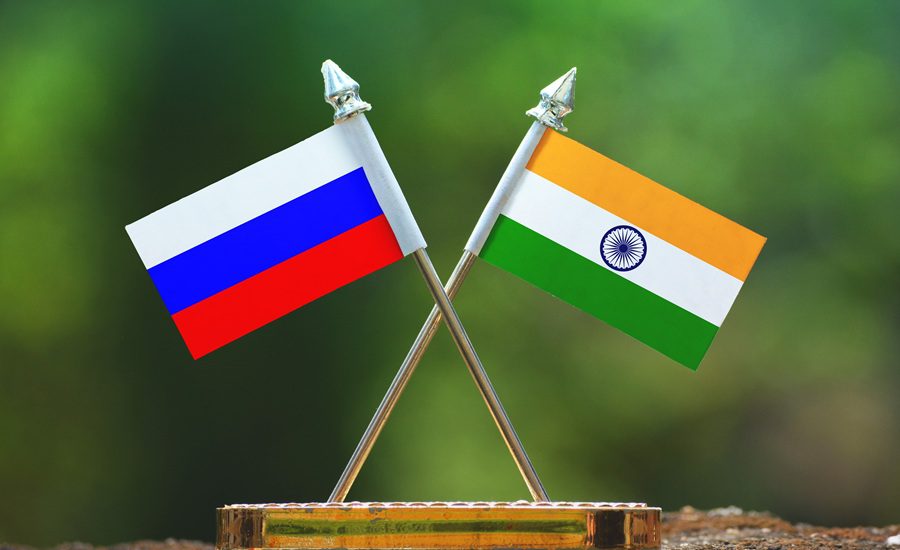
New Delhi: India and Russia are strengthening their decades-long space partnership by initiating plans for the mutual deployment of ground stations for their respective satellite navigation systems — NavIC (India) and GLONASS (Russia).
This initiative aims to improve positioning accuracy across both countries and reflects deeper bilateral cooperation in space technology, geopolitics, and defence-critical infrastructure.
Russian Ambassador to India Denis Alipov confirmed that technical work is currently underway to enable parity placement of ground measuring stations — allowing each side to host infrastructure for the other’s navigation system.
What Are NavIC and GLONASS Satellite Navigation Systems
NavIC (Navigation with Indian Constellation) is India’s indigenous regional satellite navigation system developed by ISRO, designed to provide precise positioning information across India and up to 1,500 km beyond its borders for both civilian and strategic usage.
GLONASS (Global Navigation Satellite System), operated by Russia, is a global alternative to GPS and provides worldwide positioning services. The mutual station initiative will help enhance signal precision and measurement quality for users of both systems.
Benefits of NavIC and GLONASS Satellite Navigation Systems
By hosting each other’s ground stations, India and Russia anticipate stronger satellite data measurement capabilities, which will translate to:
- Improved navigation accuracy in critical regions
- Greater redundancy and calibration for signals in civilian and defence domains
- Less reliance on Western navigation systems like the U.S. GPS infrastructure
- A technological foundation for future cooperation in space-based services
Russia is reportedly planning a GLONASS ground station in Bangalore, India, while India intends to establish a NavIC station in Novosibirsk, Russia—building on MoUs signed as early as 2016 between ROSCOSMOS and ISRO for mutual ground station collaboration.
Expanding Cooperation Beyond Navigation
The ground station initiative forms part of a broader strategic engagement in space science and technology between the two nations:
Human Spaceflight
A key area of cooperation remains India’s Gaganyaan manned mission, where Russia provides support on crew training and life support systems.
Propulsion and Satellite Technologies
Both nations share expertise in propulsion engineering and satellite navigation tech — strengthening capabilities for current and future space missions.
Emerging Technologies and Science Exchange
Beyond navigation systems, India and Russia are expanding collaboration in:
- Quantum technologies, including computing and communications
- Artificial Intelligence, with joint R&D in biometrics and intelligent systems
- Polar research and ocean science missions
- Multi-disciplinary scientific exchanges in materials science, physics, biomedicine, and healthcare
Read also: ISRO’s Solar Observatory Aditya-L1 Provides First Direct Proof of 40-Year-Old Solar Wind Theory