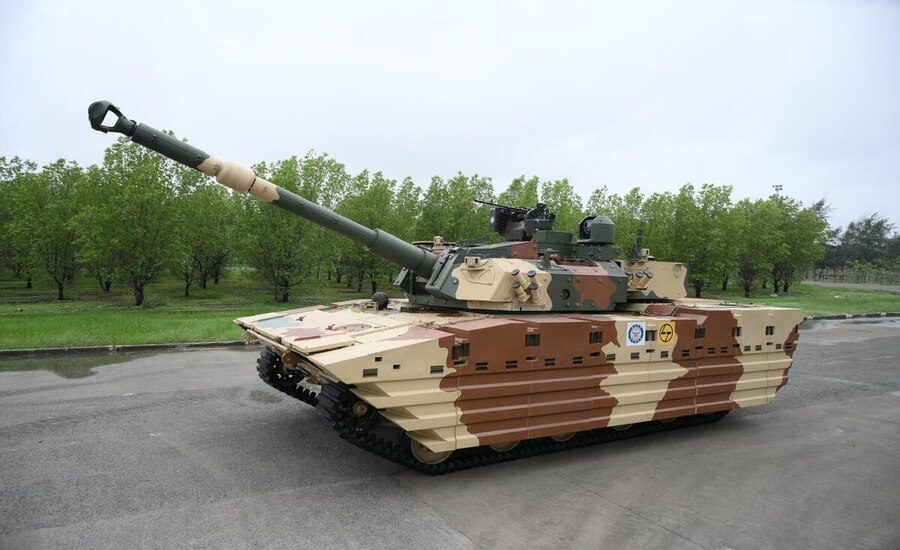
New Delhi: Indigenous Zorawar light tank program is facing a significant delay after the Indian Army asked for stronger protection levels than originally planned. The request could push the tank’s induction timeline from 2027 to 2028–29 as engineers work to improve survivability while maintaining the vehicle’s lightweight design for mountain warfare.
The Zorawar Light Tank is being jointly developed by the Defence Research and Development Organisation (DRDO) and Larsen & Toubro (L&T) to strengthen India’s capabilities in high-altitude regions such as Ladakh.
Why Is The Indigenous Zorawar Light Tank Being Delayed
The Indian Army has requested armour protection beyond STANAG Level 4, a NATO standard used to measure the protection levels of military vehicles.
Read also: Heron UAV Fleet Upgrade: Why Is The Indian Army Repairing Old Heron UAVs Instead Of Buying New Ones
This requirement aims to improve the tank’s ability to survive modern battlefield threats such as anti-tank guided missiles, autocannons, artillery fragments, and drone attacks. However, stronger armour increases weight, creating major engineering challenges.
What Is STANAG Level 4 Protection
STANAG standards define how well armored vehicles can withstand enemy attacks. STANAG Level 4 protection is designed to resist heavy machine-gun fire and certain explosive threats. The Army now wants protection levels beyond this standard to improve battlefield survivability against advanced weapons.
Balancing Protection And Mobility
One of the biggest challenges facing developers is maintaining the tank’s lightweight profile. The Zorawar was specifically designed as a 25-ton class light tank for operations in mountainous terrain. Additional armour can significantly increase weight, affecting speed, mobility, transportability, and operational performance at high altitudes.
Engineers must now find ways to add advanced protection systems without compromising the tank’s ability to operate in difficult Himalayan conditions.
Why Was The Indigenous Zorawar Light Tank Developed
The Zorawar Light Tank was conceived following heightened military tensions along the India-China border and the deployment of China’s Type-15 light tanks in high-altitude areas.
India required a modern indigenous light tank capable of rapid deployment and effective operations in regions where heavier tanks face logistical difficulties.
India’s First Indigenous Light Tank
The Zorawar is India’s first indigenous light tank specifically developed for Himalayan warfare. The platform was unveiled in 2024 and was developed in a remarkably short time. It is optimized for high-altitude combat while maintaining strong firepower and mobility.
Key Features Of The Indigenous Zorawar Light Tank
The Zorawar Light Tank is equipped with a powerful 105 mm main gun capable of engaging armored targets. It also features modern fire-control systems, high mobility, and the ability to operate effectively in rugged mountain terrain. The tank is designed for rapid deployment in strategically important border regions.
Airlift Capability For High-Altitude Warfare
One of the biggest advantages of the Zorawar is its airlift capability. Its lightweight design allows transportation by military aircraft, enabling rapid deployment to remote areas such as Ladakh and other mountainous regions where heavy armored vehicles are difficult to operate.
How Will The Delay Affect The Indian Army
The delay means the Indian Army may have to wait until 2028 or 2029 before the enhanced version enters service. However, defense experts believe the additional time could result in a more survivable and future-ready platform capable of facing evolving battlefield threats.
The decision reflects the Army’s focus on long-term effectiveness rather than rushing deployment with lower protection standards.
Future Of The Indigenous Zorawar Light Tank Program
Despite the delay, the Zorawar remains one of India’s most important indigenous armored vehicle projects. The tank is expected to play a major role in strengthening India’s defense posture in high-altitude regions while supporting the country’s broader goal of defense self-reliance under the “Atmanirbhar Bharat” initiative. As development continues, improved armor, advanced protection systems, and future upgrades could make Zorawar one of the most capable light tanks in its category.
FAQs
The Indian Army has requested stronger armor protection beyond STANAG Level 4 standards. Integrating enhanced protection while maintaining the tank’s lightweight design requires additional development time.
The Zorawar Light Tank is an indigenous Indian light battle tank jointly developed by DRDO and Larsen & Toubro for high-altitude warfare and rapid deployment in mountainous regions.
The original target was 2027, but current estimates suggest induction could move to 2028 or 2029 due to the additional armor requirements.