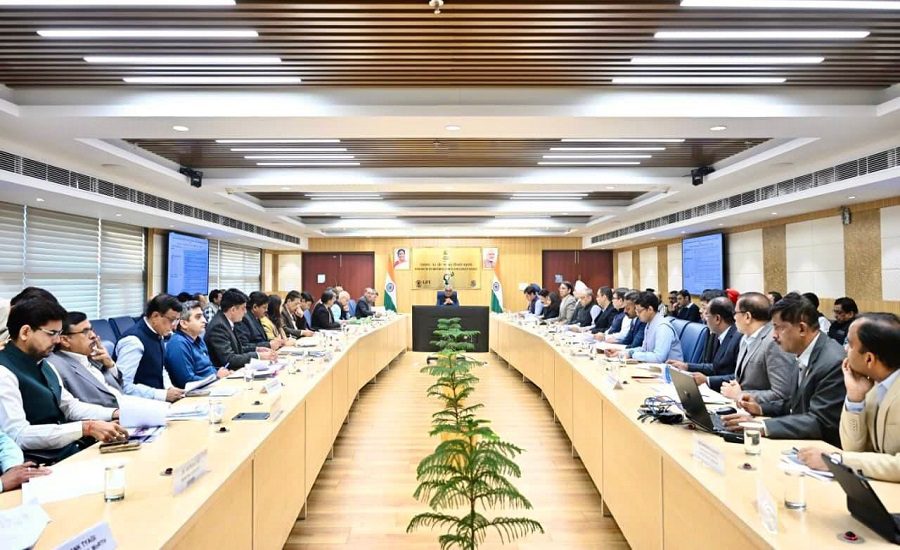
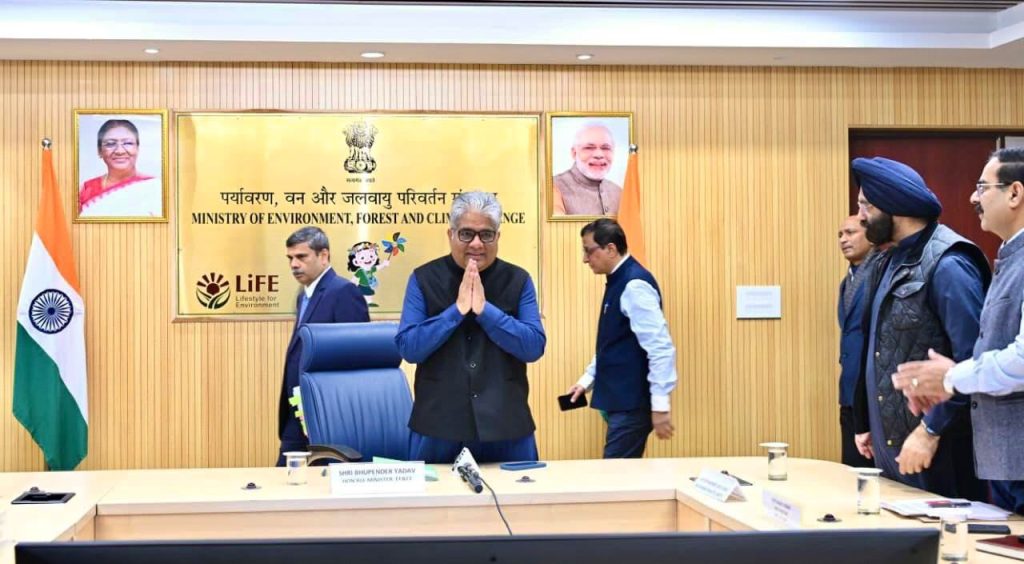
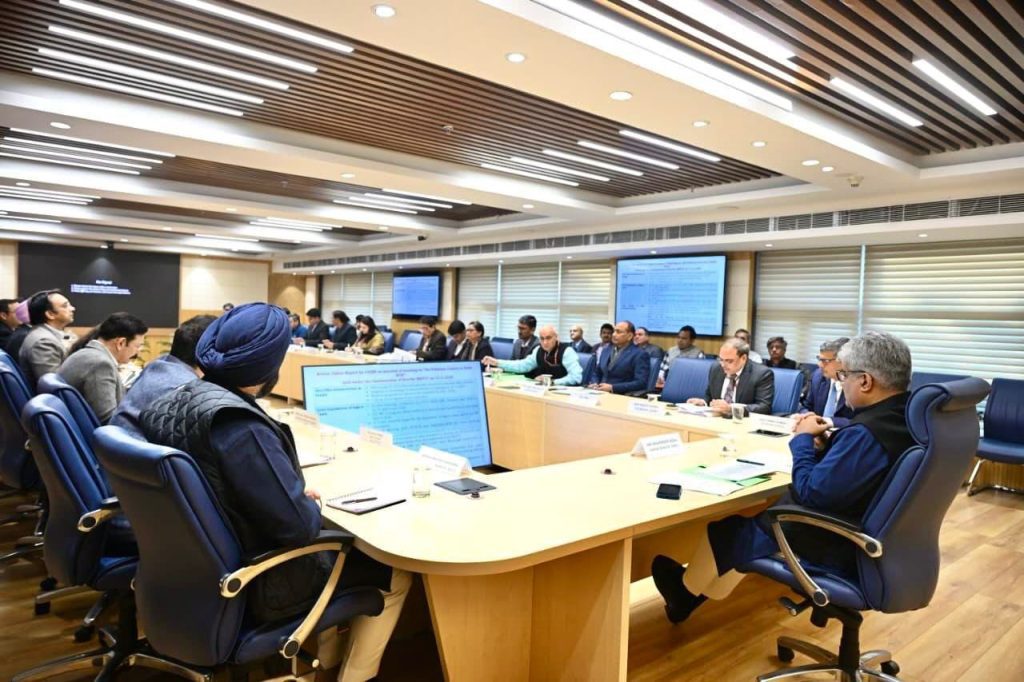
New Delhi: Union Environment, Forest and Climate Change Minister Mr. Bhupender Yadav chaired a high-level review meeting on air pollution in the Delhi-NCR region today. The Minister called upon authorities from all NCR states to expedite the implementation of Annual Action Plans for air pollution management, emphasizing strict adherence to timelines and quality execution of on-ground measures. The meeting was attended by Cabinet Minister for Environment and Forests, Government of NCT of Delhi, Sardar Manjinder Singh Sirsa, senior officials from the Ministry, CAQM, CPCB, and representatives from state governments and municipal bodies.
Focus on Holistic Air Pollution Management
During the meeting, Mr. Yadav conducted a meticulous review of each action point, underscoring the need for high-quality implementation across all identified sectors, including road development and repair, dust control, construction and demolition waste management, industry compliance with emission standards, smart traffic management, public transport enhancement, solid waste management, and greening of open spaces.
He directed all stakeholders to prepare detailed Annual Action Plans for the coming year, with clear monthly and weekly targets, to ensure proactive measures to curb pollution at its source. The Minister also announced that on-ground review meetings would be organized regularly to monitor progress and ensure accountability.
Read also: Supreme Court Says No “Magic Wand” to Solve Delhi-NCR Pollution, Calls for Continuous Monitoring
Industrial Compliance and Technology Integration
The meeting highlighted the critical need for industrial compliance. Around 2,254 red-category industrial units—including metal, textile, and food processing sectors—have been mandated to install calibrated Online Continuous Emission Monitoring Systems (OCEMS) and Air Pollution Control Devices (APCDs) by December 31, 2025. Mr. Yadav stressed that strict action, including potential closure, would be taken against non-compliant units. Simultaneously, authorities were instructed to monitor price escalations for these devices to prevent delays in implementation.
Road Development and Traffic Management
Road development works, including pothole repairs, are being closely monitored. Mr. Yadav instructed NCR states to strictly follow time-bound SOPs for pending works, while leveraging app-based monitoring for real-time citizen feedback. He also emphasized ensuring end-to-end pavements, proper drainage, and intensive on-ground inspections.
To address traffic congestion, the Minister highlighted 62 identified hotspots in Delhi, urging deployment of smart traffic management solutions, removal of encroachments and illegal parking, foot-over bridges, and enhanced police deployment during peak hours. He encouraged similar action plans across other NCR cities to ensure visible improvements in traffic flow and air quality.
Promoting Public Transport and Green Initiatives
Mr. Yadav reviewed progress in the transition of the public transport fleet to electric vehicles, noting that over 3,400 electric buses are operational in Delhi-NCR, expected to increase to more than 5,000 by March 2026. He also stressed targeted action against below BS-IV commercial vehicles and reiterated that BS-III and older vehicles have been barred from entering Delhi since November 1, 2025.
The Minister further directed officials to identify greening sites across NCR, involve communities in plantation drives, restore degraded forest land, and enhance urban green spaces, parks, water bodies, and wetlands. Education departments were asked to revive eco-clubs and green-warrior initiatives to promote youth participation in environmental conservation. Micro-plans for greening and conservation are to be implemented this winter and continued over the next five years with local elected representatives’ involvement.
Whole-of-Government and Whole-of-Society Approach
Mr. Yadav emphasized that improving air quality requires coordinated action across all levels of government and active participation from society. The review noted that progress from the last five meetings has established a framework of accountability and collaborative action.
The meeting concluded with the Minister stressing that time-bound and high-quality implementation of pollution management plans is crucial to ensuring a cleaner, healthier Delhi-NCR. He urged all stakeholders to maintain rigorous on-ground monitoring and citizen-focused outcomes.
Read also: 80% of Delhi-NCR Residents Considering Leaving the City Amid Severe Air Pollution Crisis