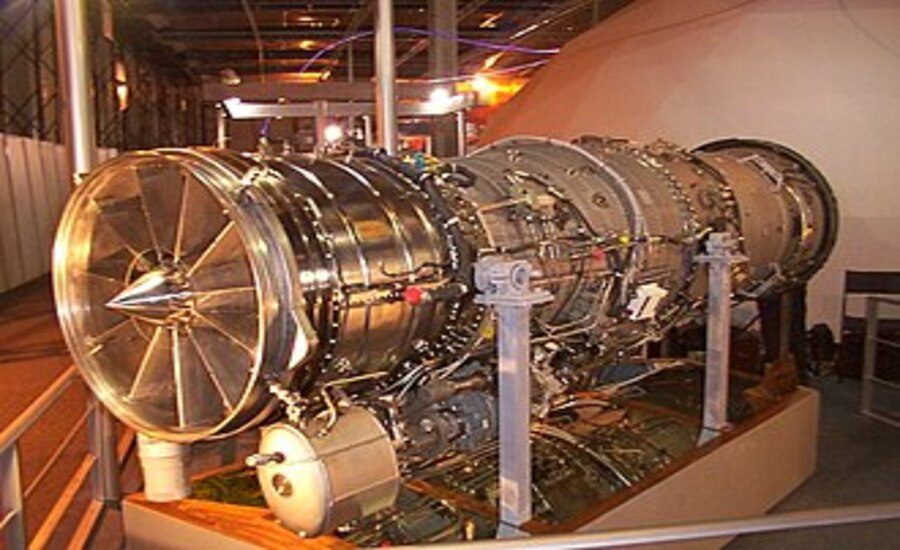
New Delhi: In a bold stride towards self-reliance, India’s DRDO has announced the development of the Advanced Turbo Gas Generator (ATGG) engine, a compact single-spool turbojet system that heralds a new era in indigenous propulsion.
This development aligns squarely with the government’s “Atmanirbhar Bharat” defence manufacturing mission, signalling that India is ready to reduce its dependence on foreign engine suppliers and strengthen its strategic autonomy.
Background of Advanced Turbo Gas Generator engine
The inventor behind the engine is the DRDO’s Gas Turbine Research Establishment (GTRE), Bengaluru, which has long been tasked with designing gas-turbine and aero-engine solutions for India’s armed forces.
In May 2024, GTRE selected Hyderabad-based precision-engineering firm Azad Engineering Limited as its industry partner to manufacture the ATGG. The engine contract calls for end-to-end manufacturing and assembly, with first deliveries expected by early 2026.
What is Advanced Turbo Gas Generator engine
The ATGG employs a single-spool turbojet architecture, chosen for compactness, simplicity and reliability.
It features additive manufacturing (AM) of large aerospace-grade components via laser-based Directed Energy Deposition (DED) systems – including a build-volume of ~1 m × 1 m × 3 m.
A significant subsystem is a high-speed permanent-magnet alternator, developed to work at tens of thousands of rpm, eliminating the need for excitation windings and enhancing reliability.
Importance & Strategic Significance of Advanced Turbo Gas Generator engine
This engine development carries multiple layers of significance:
Indigenous Capability: It strengthens India’s drive to achieve self-reliance (Atmanirbhar Bharat) in critical defence technologies — especially propulsion systems that have historically been imported.
Platform Versatility: While the initial target is missiles (e.g., maritime cruise missiles), the architecture is adaptable to UAVs, target drones, trainer aircraft and auxiliary power units. This allows spread of the investment across multiple platforms.
Manufacturing Ecosystem Boost: The combination of additive manufacturing techniques, rare-earth permanent-magnet alternators and precision engineering will uplift the domestic supply chain and manufacturing base.
Strategic Autonomy in Defence: Having a home-grown propulsion solution reduces reliance on foreign technology, export controls and supply chain vulnerabilities.
Key Challenges Ahead
While the milestones are promising, several challenges remain:
- The first batch of fully integrated engines is slated for early 2026, which is an ambitious timeline given the complexity of propulsion systems. Delays or performance shortfalls may hamper deployment.
- Transitioning from R&D prototype to mass-manufactured units often brings issues in quality control, consistency, and cost.
- Adapting the engine to multiple platforms (missile, drone, trainer) will require rigorous integration, testing under varied operational conditions (thermal, altitude, rpm, endurance).
- Use of rare-earth materials and AM-processed large components poses supply-chain, cost and technology risks — especially given the high precision demanded in aerospace systems.
- To become globally competitive, the engine must meet international reliability, maintainability and performance standards – beyond just indigenous advantage.
Key Implications
For India’s Defence Forces: This engine will enhance operational flexibility across missile, aerial and maritime platforms. It may accelerate deployment of next-gen indigenous systems.
For Domestic Industry: Azad Engineering and partner firms stand to gain significant production orders, technology transfer benefits and global credibility. The ripple effect into supply chain firms, AM technology providers and materials science may be substantial.
For Strategic Partnerships & Exports: With a reliable domestic engine, India could explore exports or joint ventures, increasing defence manufacturing exports and collaborations.
For Global Technology Landscape: India’s move into additive-manufactured propulsion and permanent-magnet alternators positions it among a handful of nations with advanced propulsion manufacturing capability.
Way Forward
- To stick to the early-2026 delivery timeline, DRDO, GTRE and Azad must adhere to milestones and manage risk-areas proactively.
- Accelerate investments in additive manufacturing, testing infrastructure, materials (especially for hightemperature turbine sections) and rare-earth magnet supply.
- Conduct full life-cycle testing under realistic conditions — including endurance, vibration, thermal extremes, integration with actual platforms.
- Prioritise one or two platforms initially (e.g., an anti-ship missile) for early deployment, while simultaneously gearing for expandability to UAVs and trainer aircraft.
- Once reliability is proven, explore export opportunities, technology ties or co-production with friendly countries — boosting economy and diplomacy.
- Continuity of funding, policy backing for indigenous manufacturing and streamlining of clearances will be crucial for long-term success.