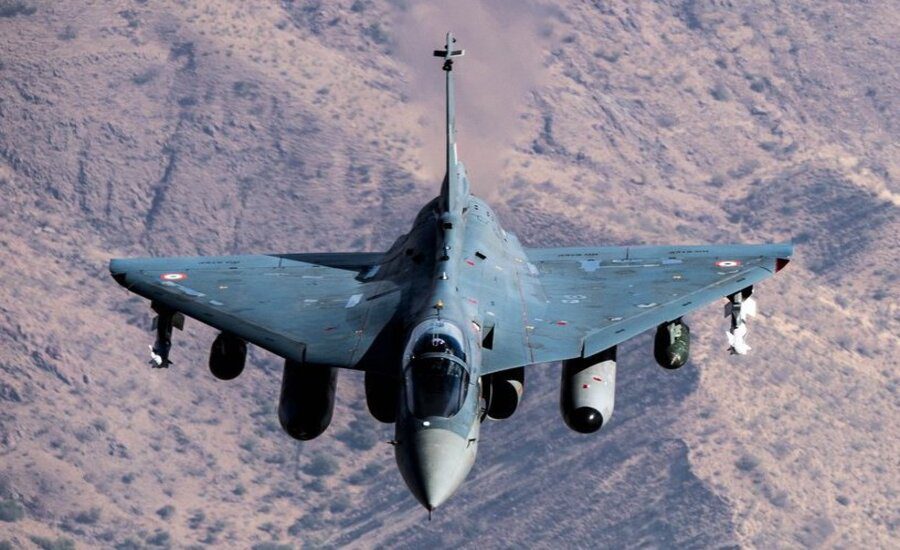
New Delhi : India’s Defence Research and Development Organisation (DRDO) has outlined a clear roadmap for its next-generation fighter aircraft, with the indigenous TEJAS MK-2 expected to mature in the next three to four years, followed by the more advanced Advanced Medium Combat Aircraft (AMCA).
This plan underscores India’s drive toward self-reliance in defence aviation and aims to bolster the Indian Air Force’s (IAF) operational strength with home-grown technology.
DRDO TEJAS MK-2 Roadmap: The Next Step in India’s Fighter Fleet
The Light Combat Aircraft (LCA) TEJAS programme has been one of India’s most ambitious defence aviation efforts.
After the successful induction of TEJAS MK-1 and progress with MK-1A, DRDO officials confirmed that the TEJAS MK-2 variant is rapidly advancing toward completion.
Timeline and Development Goals
According to senior DRDO officials, the TEJAS MK-2 is expected to be ready for rollout in the next 3–4 years, positioning it between 2029 and 2030 as an operational fighter if timelines hold. This aircraft is seen as a critical “bridge” between current capabilities and India’s future stealth fighters.
In addition, DRDO Chairman Dr. Samir V. Kamat has indicated that the first flight window for the indigenous TEJAS MK-2 might occur as soon as mid-2026, reflecting strong confidence in the programme’s pace.
Key Features of DRDO TEJAS MK-2
The TEJAS MK-2 is designed to be a medium-weight multi-role fighter with more power, payload capacity, and advanced avionics compared to earlier variants. It will feature improved aerodynamics, stronger engines, and enhanced weapon systems.
AMCA: India’s Indigenous Stealth Fighter Vision
What Is AMCA?
The Advanced Medium Combat Aircraft (AMCA) is India’s indigenous fifth-generation stealth fighter project. It aims to radically upgrade the nation’s aerial combat capabilities with features like low observable stealth design, advanced avionics, and cutting-edge sensor fusion.
Project Status and Timeline
The AMCA programme has been formally sanctioned, with DRDO, Hindustan Aeronautics Ltd (HAL), and the Aeronautical Development Agency (ADA) working together on development. While TEJAS MK-2 focuses on near-term capability, AMCA represents a future leap in aerial dominance expected to enter service after the MK-2 rollout.
Independent assessments suggest that AMCA’s first prototype and flight tests could occur in the late 2020s, with full-scale production possibly by the mid-2030s.
Stealth and Technology Emphasis
DRDO officials have repeatedly emphasised that stealth technology is essential for future air dominance, making the AMCA a cornerstone of India’s defence roadmap. This aircraft will incorporate advanced materials, internal weapon bays, and cutting-edge avionics to stay competitive with global fifth-generation fighters.
Key Focus of DRDO TEJAS MK-2 Roadmap
A major pillar of India’s fighter development strategy is self-reliance in sensors and weapons. The Uttam AESA radar, developed indigenously, has demonstrated world-class performance and will integrate into both the TEJAS and AMCA platforms.
Complementary systems such as electronic warfare suites, jammers, and missiles are also under active development, ensuring India won’t have to depend entirely on foreign suppliers for critical technologies.
What is the Importance of DRDO TEJAS MK-2 Roadmap
Reduced Dependence on Imports
The TEJAS and AMCA programmes directly support the Indian government’s Atmanirbhar Bharat (self-reliant India) initiative by cutting back on expensive foreign aircraft imports and fostering local industry growth.
Modernising the IAF Fleet
As older fighter jets like the Jaguar, Mirage 2000, and MiG-29 gradually retire, TEJAS MK-2 and subsequently AMCA will help fill crucial capability gaps and ensure continued air superiority for the Indian Air Force.
Challenges Ahead
While significant progress has been made, both TEJAS MK-2 and AMCA programmes still face challenges including:
- Integration of sophisticated indigenous engines and technologies.
- Meeting strict timelines amid global supply chain pressures.
- Certification and extensive flight testing to reach operational deployment.
Despite these hurdles, DRDO remains committed to achieving milestones that will position India as a leader in defence aviation.