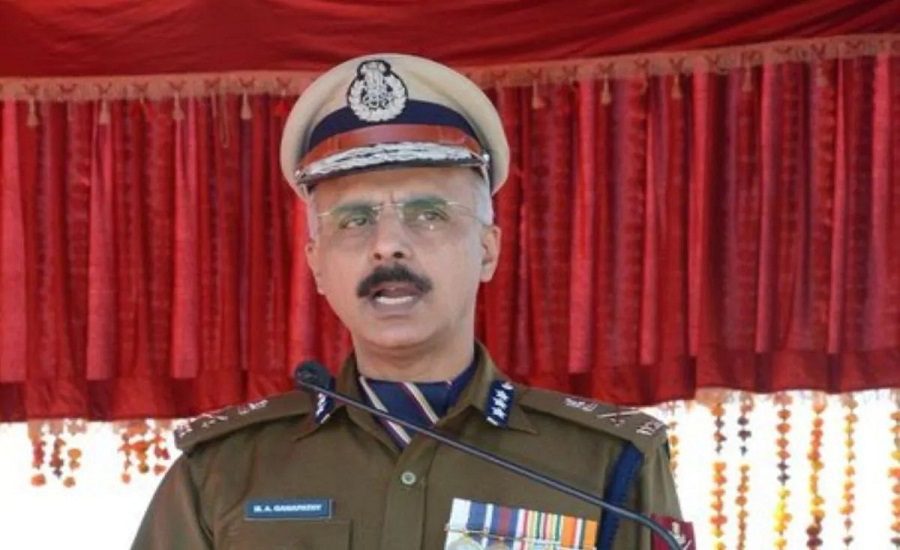
New Delhi: M. A. Ganapathy, IPS (Retd), a highly respected name in India’s internal security and aviation safety ecosystem, has joined GMR Airports as Executive Director, Security & Vigilance. With decades of experience in counter-terrorism, civil aviation security, and internal security management, his appointment is seen as a significant boost to GMR Airports’ security leadership.
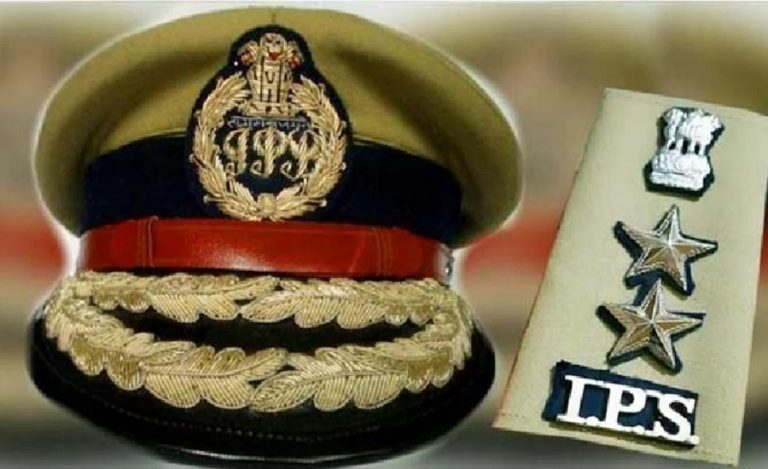
A 1986-batch IPS officer of the Uttarakhand cadre, Mr Ganapathy is widely regarded as one of India’s foremost experts in aviation security, having previously served in critical leadership roles including Director General of the National Security Guard (NSG), Director General of the Bureau of Civil Aviation Security (BCAS), and Additional Director General / Special Director General, Airport Sector, Central Industrial Security Force (CISF). His career also includes extensive experience in anti-hijacking operations and counter-terrorism preparedness.
Vast Experience in Aviation and National Security
Before joining GMR Airports, Mr Ganapathy culminated his distinguished career as Director General of the National Security Guard, India’s elite counter-terrorism force. He served in this role from 18 March 2021 until his retirement on 29 February 2024, overseeing the country’s premier force tasked with responding to terror threats, hostage situations, and anti-hijacking operations.
His earlier role as DG, Bureau of Civil Aviation Security placed him at the helm of India’s civil aviation security framework, where he played a crucial role in strengthening airport security protocols. Prior to that, as ADG/Spl. DG, Airport Sector, CISF (2017–2020), he focused on the introduction of state-of-the-art technology in aviation security, manpower rationalisation, and capacity-building of CISF personnel through collaboration with global aviation security leaders.
Early Life and Academic Background
Born on 1 March 1964 in Kodagu (Coorg) district of Karnataka, Mr Ganapathy completed his schooling in his home district. He pursued higher education at some of India’s most prestigious institutions, graduating in Economics from Madras Christian College, Chennai, in 1984.
He went on to earn a Master’s degree in International Studies from Jawaharlal Nehru University, New Delhi, in 1986, the same year he joined the Indian Police Service (IPS). Demonstrating a strong commitment to continuous learning, he later obtained a Degree in Law from the University of Delhi in 2007.
Early IPS Career in Uttar Pradesh
He began his policing career in the Uttar Pradesh cadre, serving there between 1987 and 1999. During this period, he held key positions including Senior Superintendent and Superintendent of Police in districts such as Kanpur City, Meerut, Allahabad, Nainital, Hardoi, and Sonebhadra.
His assignments exposed him to a wide range of policing challenges, including handling communal tensions, urban policing complexities, investigation of serious crimes, anti-dacoity operations, and tackling the Naxal problem. These early experiences laid the foundation for his later roles in national security and counter-terrorism.
Key Role in CBI and Cricket Match-Fixing Probe
Between 1999 and 2007, he served with the Central Bureau of Investigation (CBI) as SP and later DIG. One of the most notable phases of his career came in 2000, when he supervised the high-profile enquiry into allegations of cricket match-fixing.
The investigation culminated in disciplinary action against certain cricketers by the Board of Control for Cricket in India (BCCI). His role in this landmark probe has been documented in sports journalist Ed Hawkins’ book, _“Bookie, Gambler, Fixer, Spy: A Journey into the Heart of Cricket’s Underworld” (Bloomsbury, 2012), which discusses his investigative work in detail.
After his promotion, Ganapathy served as DIG, Anti-Corruption-I, Delhi, overseeing investigations into corruption cases.
Leadership Roles in Uttarakhand Police
Following the creation of Uttarakhand in 2000, he was allocated to the new state cadre. He served in several important positions including IG Crime/Law & Order, IG Garhwal Range, and IG Haridwar Mahakumbh-2010, where he managed security for one of the largest religious gatherings in the world.
In May 2016, at the age of 53, he was appointed Director General of Police (DGP), Uttarakhand. During his tenure, he emphasized rules-based policing and introduced multiple community policing models tailored to local needs, aiming to strengthen public trust in law enforcement.
Strategic Role at the Ministry of Home Affairs
From 2011 to 2016, Mr Ganapathy served in the Ministry of Home Affairs (MHA) as Joint Secretary (Left Wing Extremism) and later as Joint Secretary, Internal Security-I.
As JS (LWE), he supervised the implementation of critical infrastructure and security projects in Left Wing Extremism-affected states, including fortified police stations, telecom tower installations, and upgradation of special forces. He also played a pivotal role in drafting the National Policy and Action Plan – 2015, which laid out the Central Government’s comprehensive counter-LWE strategy.
As JS (Internal Security), he was instrumental in drafting the National Security Clearance Policy of 2015. He also represented India in various Joint Working Group deliberations on Counter Terrorism and participated in Financial Action Task Force (FATF) plenary sessions.
Training at Global Institutions
Ganapathy has undergone advanced training in security, leadership, and negotiations, including:
- National Defence College, New Delhi (2006) – National Security and Strategic Affairs
- Oxford University (2012) – Programme on Negotiations
- Harvard University, Kennedy School (2013) – Leadership in the 21st Century: Chaos, Conflict and Courage
Awards and Recognition
In recognition of his distinguished service, M. A. Ganapathy has been conferred with:
- Police Medal for Meritorious Service (2002)
- President’s Police Medal for Distinguished Services
Strengthening GMR Airports’ Security Framework
With his appointment as Executive Director, Security & Vigilance, GMR Airports is expected to benefit from Ganapathy’s deep expertise in aviation security, threat assessment, counter-terrorism preparedness, and regulatory compliance. His experience across CISF, BCAS, NSG, and MHA positions him uniquely to enhance security governance across GMR’s airport operations in India and abroad.
Industry observers view his induction as a strategic move, aligning with the increasing focus on technology-driven security systems, risk mitigation, and global best practices in airport security.