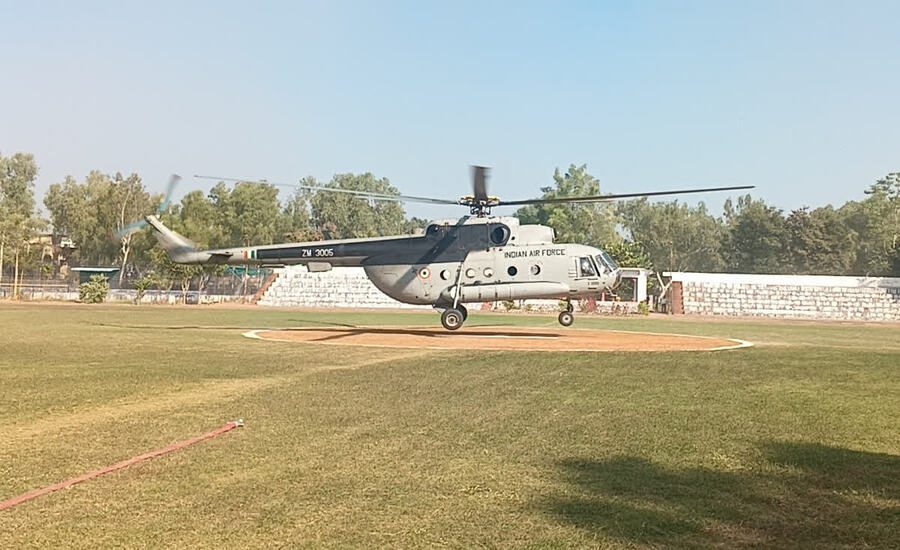
In what could prove to be a landmark event in India’s wildlife conservation history, a tigress from Madhya Pradesh’s Pench Tiger Reserve is slated to be airlifted to Rajasthan’s Ramgarh Vishdhari Tiger Reserve (RVTR) in Bundi district. The operation — using an Indian Air Force (IAF) helicopter — marks the first time Rajasthan is receiving a tiger from another state under an official interstate translocation program. Officials say the move is part of a broader initiative to strengthen genetic diversity among big cats and ensure a sustainable future for tigers in the region.
The tigress, identified as “PN-224,” was successfully tranquillised after a week-long tracking operation and fitted with a radio collar for continued monitoring. Once fit and cleared, she will be transported by air — a precaution to reduce stress and risk associated with long-distance travel via road.
If the operation succeeds, it will set a new precedent for interstate wildlife relocation — with potential implications for future tiger-conservation strategies across India.
Background of First Interstate Tiger Airlift
The Pench Tiger Reserve, straddling Madhya Pradesh and Maharashtra, is among India’s iconic tiger habitats. Over recent years, its population of tigers and tigresses has provided a genetically healthy source for conservation and translocation programs.
Faced with dwindling big-cat numbers and habitat fragmentation in parts of Rajasthan, especially in older reserves, conservation planners saw in Pench a viable source population whose surplus individuals could help restore tiger presence elsewhere.
Ramgarh Vishdhari Tiger Reserve — Reviving Tigers in Rajasthan
The Ramgarh Vishdhari region, officially declared a tiger reserve in 2022, spans forest and territorial lands across Bundi, Bhilwara and Kota districts of Rajasthan. Historically, while tigers existed here, their numbers either declined or the big cats dispersed over time. With its recent elevation to “tiger reserve” status, RVTR offers a renewed hope to bring tigers back — but that requires suitable individuals to repopulate the area.
Hence, the decision to bring a tigress from Pench to RVTR aims to:
- Reintroduce tigers to an existing forest landscape ready to support them
- Increase genetic diversity and strengthen long-term viability of tiger population in Rajasthan
- Use interstate translocation as a model for future conservation efforts
The Capture and Preparation of Tigress PN-224
According to reports, teams from the Madhya Pradesh and Rajasthan forest departments conducted a coordinated tracking operation in the dense forest terrain of Pench. The operation involved multiple teams, camera traps, and even elephant squads to navigate difficult terrain.
After several days, the tigress — identified as PN-224 — was finally located, tranquillised safely by wildlife veterinarians, and fitted with a radio collar. The collar will be used to monitor her movements and behaviour over the coming days, to ensure she is fit for translocation.
Medical and Fitness Assessment
Post tranquillisation, PN-224 will undergo a full health and fitness evaluation. Only after she is cleared by veterinary and forest officials will the actual airlift be scheduled. This step aims to minimize stress, injury risk, and ensure her survival post relocation.
Coordination & Permissions
The entire operation is taking place under strict wildlife-conservation protocols, with coordination between state forest departments, the central authority National Tiger Conservation Authority (NTCA), and the defence ministry (for use of IAF chopper). The central approval for the interstate transfer was granted recently, setting the stage for the planned airlift.
Officials have emphasized that this translocation — if successful — will not be symbolic alone — but a serious attempt to boost tiger population, safeguard genetic health, and test feasibility of interstate tiger relocation as a long-term conservation tool.
The First Interstate Tiger Airlift Plan: What Happens Next
- The tigress will be transported via IAF helicopter, reducing travel time drastically compared to a 14-hour road journey.
- She will be moved in a specially designed crate, under sedation, monitored by wildlife and aviation teams.
- On arrival at Ramgarh Vishdhari Tiger Reserve, she will be placed in a secure enclosure temporarily, to allow acclimatization before being fully released into the forest.
- Post release, a long-term monitoring plan via radio collar + periodic “survival audits” will be used to evaluate her adaptation, health and potential breeding.
- Forest officials have indicated that further translocations — possibly involving additional tigresses from Pench and other source reserves like Tadoba‑Andhari Tiger Reserve — may be planned in coming months, subject to the success of this operation.