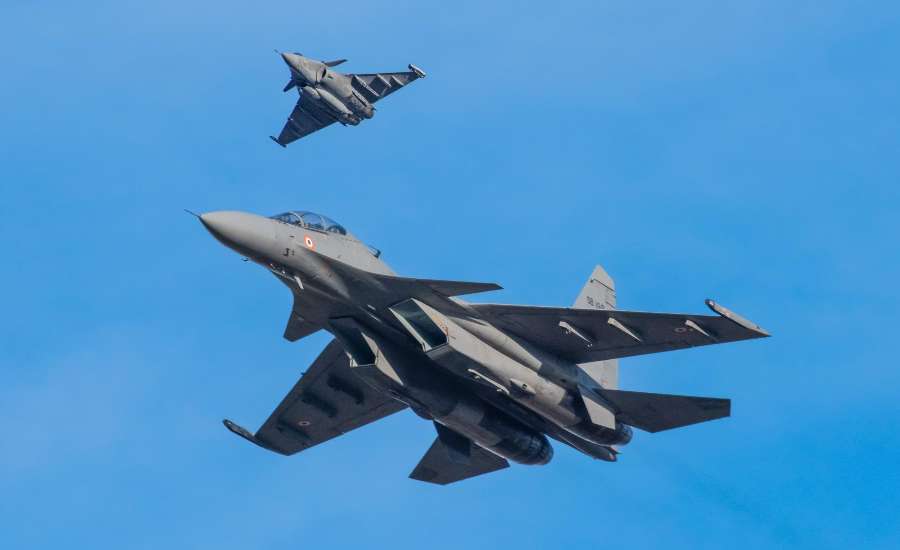
Peris: The 8th edition of Indian Air Force (IAF) and French Air and Space Force (FASF)’s bilateral air exercise, titled Exercise Garuda 25, concluded successfully on 27 November 2025 at Mont-de-Marsan Air Base 118 in France.
The Indian contingent, after completing the intensive training and joint operations, returned home on 02 December 2025. The exercise, described as one of the largest international air training engagements undertaken by the IAF this year, further solidifies the deep defence cooperation between India and France.
Background: What is Exercise Garuda?
Origins and Purpose: Exercise Garuda is a longstanding bilateral air exercise between India and France, first conducted in 2003 at Gwalior Air Force Station in India.
Alternating Venues: Since inception, the exercise has alternated between Indian and French airspace — with earlier editions held in locations like Istres Air Base (France), Kalaikunda Air Force Station (India), and Jodhpur Air Force Station (India).
Strategic Significance: Over the years, the exercise has evolved from simple formation-flying drills to sophisticated air operations involving combat-focussed missions, refuelling, air-lift support, and joint mission planning — reflecting the growing strategic partnership and mutual trust between the two countries’ air forces.
Garuda 25: Key Highlights & Operational Scope
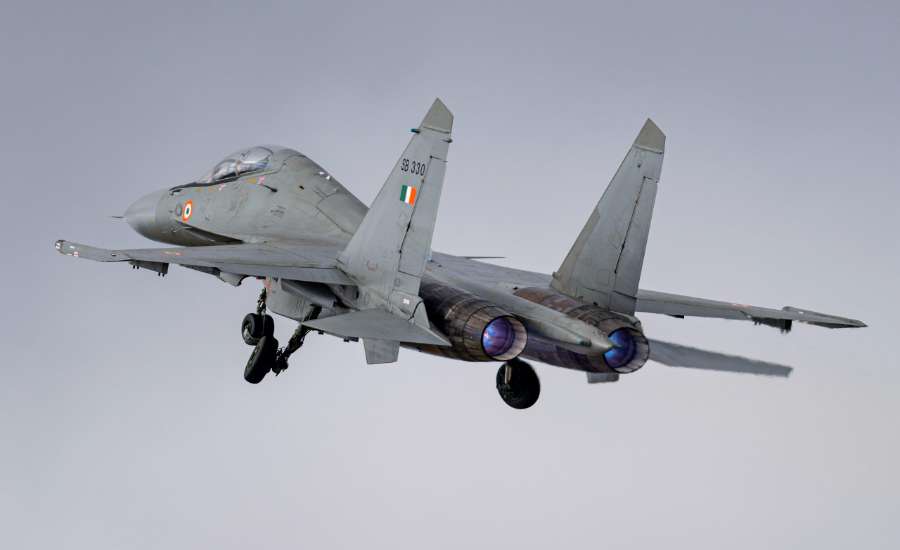
- The IAF deployed its frontline Su-30MKI fighter jets, backed by strategic support aircraft including IL-78 air-to-air refuelling aircraft and C-17 Globemaster III transport aircraft.
- On the French side, FASF contributed multirole fighters and other support platforms (though the official press release summarises primarily the IAF’s assets).
Training & Operations
- The exercise featured a broad range of complex air operations under realistic, high-intensity operational conditions. These included joint mission planning, coordinated strike and escort missions, and synchronised operations between IAF and FASF.
- One key objective was familiarisation with each other’s operational procedures — enabling both air forces to better understand and adapt to the other’s tactical doctrine and standard operating procedures. This is crucial in ensuring interoperability in real-world coalition operations.
- The IAF maintenance crews played a significant role in ensuring high serviceability of aircraft throughout the exercise, enabling smooth execution of planned missions, even under demanding sortie rates.
Scale & Significance
- Garuda 25 was described by the Indian Ministry of Defence as one of the largest international air training engagements by the IAF in 2025.
- Joint exercises of this scale underscore and reinforce the strong strategic partnership between India and France, showcasing their mutual commitment to defence cooperation and joint readiness.
Key Strategic Implications & Wider Significance
Strengthening India–France Defence Ties: The successful completion of Garuda 25 serves as a reminder of the deepening defence and strategic cooperation between India and France — a relationship that goes beyond occasional training exercises and reflects long-term alignment in security goals.
Over more than two decades since Garuda began, these exercises have become a regular feature, reflecting mutual trust and operational compatibility.
Enhancing Interoperability & Combat Readiness: Through shared planning, execution, and maintenance responsibilities, both air forces benefit from cross-learning — adopting best practices in operations, maintenance, logistics, and tactical missions. For the IAF, in particular, exposure to European airspace, combat doctrines, and coalition-style operations helps refine its war-fighting capabilities, especially in a global context.
Signalling Capability to the Region (and Beyond): In an era of evolving security challenges — from conventional threats to transnational crises — the ability of friendly air forces to seamlessly operate together sends a strong message of deterrence and readiness. Garuda 25 reinforces India’s role as a responsible global actor capable of coalition operations, and France’s continuing commitment to defence partnerships beyond its immediate neighbourhood.
What’s Next: The Road Ahead
While the conclusion of Garuda 25 marks the end of the latest chapter in Indo-French air cooperation, the broader trajectory suggests further deepening of joint activities. Lessons learnt from this edition — in mission planning, maintenance, refuelling operations, and tactical coordination — are likely to inform future air exercises, possibly even in multilateral formats. For IAF, such exercises help in fine-tuning doctrines, preparing for a variety of contingencies, and building long-term global interoperability.
As regional security dynamics evolve, cooperation between major air forces such as IAF and FASF becomes increasingly important — not just for bilateral interests, but for broader stability in international air security and coalition readiness.