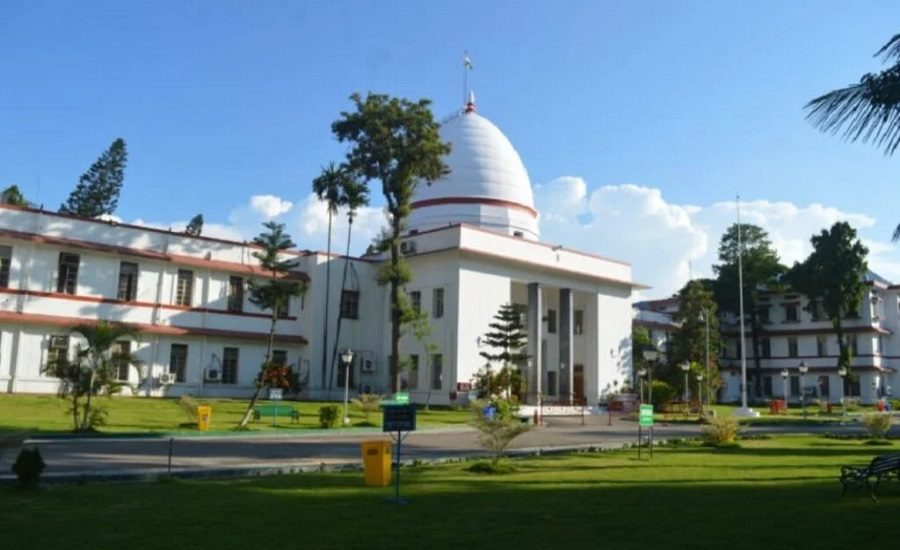
Guwahati, Assam – In a significant development marking rising dissent within Assam’s legal community, the Gauhati High Court Bar Association (GHCBA) has announced that it will boycott the foundation stone-laying ceremony for the proposed new High Court complex scheduled for January 11, 2026 at Rangmahal in North Guwahati.
The decision comes amidst intensifying opposition to the plan to relocate the Principal Seat of the Gauhati High Court from its current site in central Guwahati to the northern bank of the Brahmaputra.
Details of Gauhati High Court Bar Association Hunger Strike
The GHCBA’s announcement was made following an Emergent Extra-Ordinary General Meeting held on January 6, 2026, where members deliberated extensively over the proposed relocation and construction of the new High Court building.
Read also: Gauhati High Court Reinstates 52 ACS Officers Linked to Job Scam: Read More!
In an official press release, the Bar Association reaffirmed its consistent opposition to the relocation plan — a stance previously reflected in earlier resolutions and a referendum conducted among its member lawyers.
“In view of the resolution of the General Body, the Association has decided to abstain from participating in the proposed Foundation Stone Laying Ceremony,” the press release stated, urging all members to respect and honor the collective decision by refraining from attending the event in any manner whatsoever.
Scheduled Ceremony and Top-Level Attendance
The foundation stone ceremony is expected to be attended by several senior dignitaries, including the Chief Justice of India Justice Surya Kant, and other members of the judiciary and government. The new complex is part of a larger judicial township planned to be built at Rangmahal — a site across the Brahmaputra river from the existing High Court premises.
Gauhati High Court Bar Association Hunger Strike as a Peaceful Protest
To underline its protest against the relocation, the GHCBA has announced a peaceful hunger strike to be observed on January 8, 9, and 11.
The hunger strike will take place daily from 10:00 AM to 4:00 PM in front of the old High Court building near Gate No. 4.
The association has described the hunger strike as a democratic and peaceful expression of dissent, intended to highlight its strong objections to the relocation plan and its potential impact on access to justice for litigants and legal practitioners alike.
Government Plans and Financial Backing
The state government, for its part, has approved funds to construct a judicial township at Rangmahal.
In November 2025, the Assam Cabinet approved an allocation of Rs 479 crore for the first phase of the project, aimed at expanding judicial infrastructure and modernizing facilities.
Government officials argue that the new complex and township will provide improved infrastructure and long-term benefits. However, the Bar Association has repeatedly demanded a halt to the relocation, suggesting alternative solutions including the expansion of the existing premises in the city’s heart.
Historic Context of Opposition
The GHCBA’s protest is not entirely new. The Bar has previously held demonstrations and marches, such as a candlelight march against relocation, reflecting broader resistance within the legal community to the relocation plan — underscoring historical ties to the current location and the belief that moving the High Court could undercut legal access and institutional heritage.
What Happens Next?
As January 11 approaches, legal observers, government officials, and civil society groups in Assam will be closely watching how the protests unfold and whether negotiations might emerge to address the Bar’s concerns.
The conduct of the hunger strike, and the solidarity shown by legal professionals, could influence future discussions about judicial infrastructure planning in the region.