7 November 2026
ADVERTISEMENT
ADVERTISEMENT

A Tattoo Sensor For Monitoring Vital Health Parameters

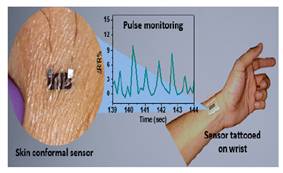
The Skin conformal sensor has the ability to perform non-invasive and continuous monitoring of vital health parameters
Sensor Tattoo
Indian Masterminds Stories

Intensive research in the department of epidermal electronics has resulted in the development of novel wearable sensors that provide a point of care diagnostics with comfortable and robust user experience. It is common knowledge that standard medical devices often tend to be bulky, rigid, and non-practical because they impede uninterrupted monitoring of vital health parameters while continuing day to day life schedule. In accordance with the soft and curvilinear shape of the human body, there is a requirement of skin like sensors that can be easily tattooed on the body.

Dr. Saurabh Kumar from Centre for Nanoscience and Engineering (CeNSE) at Indian Institute of Science, Bangalore, India a recipient of the INSPIRE Faculty Fellowship instituted by the Department of Science & Technology, Govt. of India is presently working on wearable sensors that use the largest human organ, skin, to retract information about the body.

Recently, he published his research in ‘ACS Sensors’, a scientific journal in which he discribed the procedure that his group undertook. They created a skin conformal tattoo sensor about 20 μm thick. The sensor’s main benefits lie in its ability to be unobtrusiveness and the provision of continuous monitoring of vital health parameters of an individual, for instance, pulse rate, respiration rate, and surface electromyography. The sensor acts as the sole conduit for sensing respiration rate and pulse which, in turn, makes usage of multiple sensors unnecessary. Its remarkably high sensitivity with a gauge factor (GF) is caused due to the development of nano-cracks and their propagation through the film upon application of strain. Furthermore, this sensor is easy to fabricate into any desired shape and size with the help of laser and ensures fast response.

The Skin conformal sensor has the ability to perform non-invasive and continuous monitoring of vital health parameters. Also, it is compact and has the potential to take place of rigid and bulky health monitoring devices. Moreover, wearable sensors do not hinder the daily activities of the user, thus enabling continuous monitoring of vital signs like pulse rate, respiration rate, UV rays exposure, skin hydration level, glucose monitoring, and so on. Aside from delving into his research on wearable sensors, Dr. Kumar is also training students in advanced research on biosensor technologies while actively engaging them in the development of tools for bio-research and clinical diagnosis.


Indian Masterminds Stories
Join our WhatsApp Channel
ADVERTISEMENT
ADVERTISEMENT
Related Stories
ADVERTISEMENT
ADVERTISEMENT
NEWS
HAL_resized
Leadership Updates: PESB Recommends Jasbir Singh for HAL Director (Engineering & R&D) Post
NCL CSR Blood Bank Project
NCL Signs ₹1.16 Crore CSR MoU to Establish Blood Bank at District Hospital in Singrauli
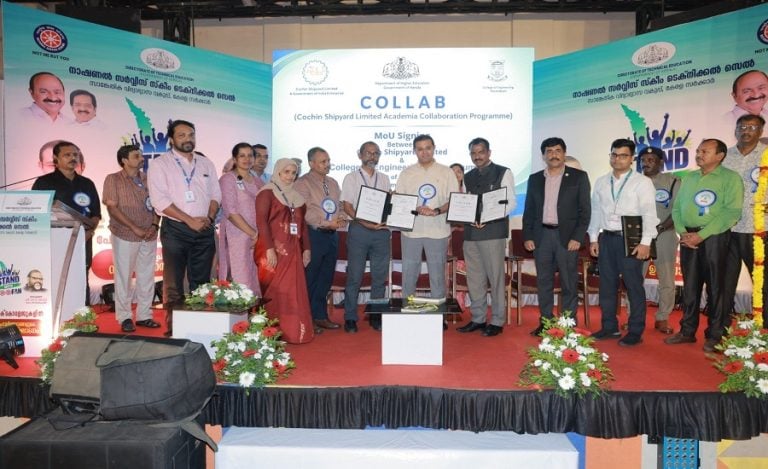
Cochin Shipyard COLLAB
Cochin Shipyard Signs MoUs with Four Kerala Engineering Colleges to Boost Research and Innovation 
NALCO Angul CPP Plant
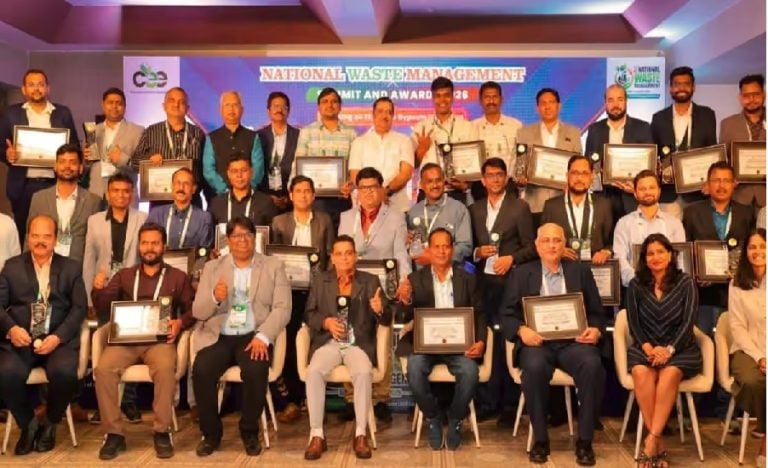
NALCO’s Angul Captive Power Plant Wins ‘CPP Plant of the Year’ Award for Fly Ash and Waste Utilisation 
MP-Police-
MP IPS Transfers: Malay Jain Appointed Balaghat SP; Sachin Kumar Atulkar, Pradeep Sharma Get Additional Charges
Praveen Mal Khanooja
Who Is Praveen Mal Khanooja? IA&AS Officer Gets Six-Month Extension as Additional Secretary in Petroleum Ministry
Justice Rajesh Bindal
Who Is Justice Rajesh Bindal? Former Supreme Court Judge Appointed NCLAT Chairperson
NLMC
CPSE Asset Monetisation: Inter-Ministerial Group Recommends Proposals Worth Over ₹1,100 Crore
ADVERTISEMENT
ADVERTISEMENT
Videos
Five years after Kargil, India sent its cricketing heroes to Pakistan where terrorism posed a deadly threat. The man guarding them, former Special Director of Intelligence Bureau, Mr. Yashovardhan Azad, reveals what all went behind the scenes during that crucial tour. 
Trust No One, Said His Instinct in Pakistan
Gajendra Singh Shekhawat
How India Plans to Boost Tourism, Create Jobs and Ease Overcrowding : Gajendra Singh Shekhawat on the Road to 2047
Dr Saket Badola IFS
Beyond Tigers and Safaris: How Corbett Literature Festival Wants to Change the Conservation Conversation
ADVERTISEMENT
UPSC Stories
IDAS Himanshu Tembhekar
Should UPSC Aspirants Give Up Their Hobbies? IDAS Officer Himanshu Tembhekar Explains
Should UPSC aspirants give up their hobbies? IDAS officer Himanshu Tembhekar explains how hobbies help...
UPSC Story
He Taught Students to Meet Expenses. Today, Sachin Bhadouria is a Scientist ‘B’ at CWPRS
Sachin Bhadouria overcame financial challenges and a Hindi-medium background to secure AIR 2 in a UPSC...
Vishwas Jhargad UPSC CAPF
A Photograph of His Mother Accompanied Vishwas Jhargad to the UPSC Interview, Where His Dream Came Closer
Vishwas Vijay Jhargad lost both parents as a child. With his family's support, he secured AIR 145 in...
CSR NEWS
NCL CSR Blood Bank Project
NCL Signs ₹1.16 Crore CSR MoU to Establish Blood Bank at District Hospital in Singrauli
The project will fund essential medical equipment, furniture and renovation of the existing building...
REC Foundation Solar Street Light
REC Foundation to Install 350 Solar Street Lights Across Six Districts of West Bengal to Improve Rural Safety 
The CSR initiative, undertaken in partnership with Y4D Foundation, aims to improve night-time safety...
nalco
NALCO Signs MoU with SDI Bhubaneswar to Provide Skill Training to 60 Youths in Odisha
The three-month CSR programme will benefit youths from villages near NALCO's Angul and Koraput complexes,...
ADVERTISEMENT
ADVERTISEMENT
ADVERTISEMENT
Latest
HAL_resized
Leadership Updates: PESB Recommends Jasbir Singh for HAL Director (Engineering & R&D) Post
NCL CSR Blood Bank Project
NCL Signs ₹1.16 Crore CSR MoU to Establish Blood Bank at District Hospital in Singrauli
ADVERTISEMENT
ADVERTISEMENT
ADVERTISEMENT
ADVERTISEMENT
ADVERTISEMENT
ADVERTISEMENT
ADVERTISEMENT
Videos
Five years after Kargil, India sent its cricketing heroes to Pakistan where terrorism posed a deadly threat. The man guarding them, former Special Director of Intelligence Bureau, Mr. Yashovardhan Azad, reveals what all went behind the scenes during that crucial tour. 
Gajendra Singh Shekhawat
Dr Saket Badola IFS
ADVERTISEMENT
ADVERTISEMENT