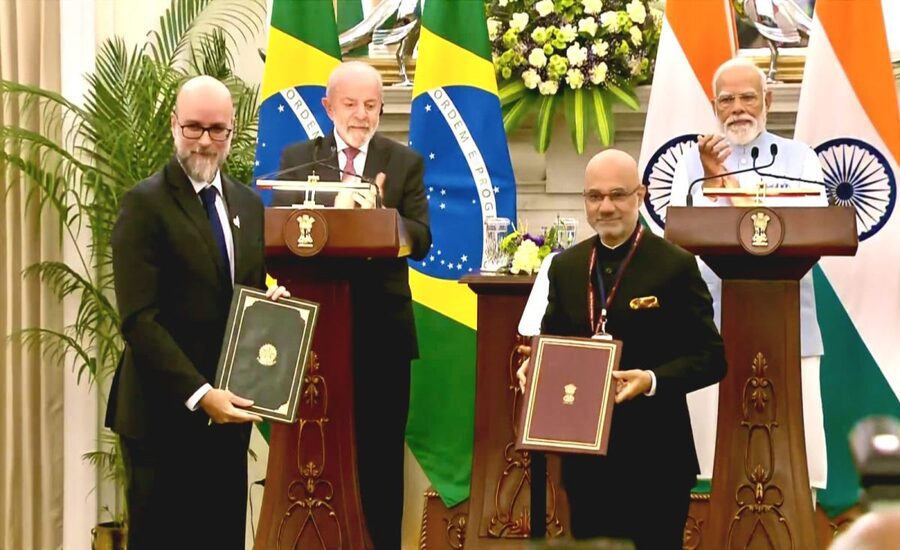
New Delhi: India and Brazil have exchanged a landmark Memorandum of Understanding (MoU) to harmonise the regulation of pharmaceutical products and medical devices, strengthening bilateral cooperation in public health oversight. The regulatory pact on pharmaceutical and medical device oversight was formalised in New Delhi between India’s Central Drugs Standard Control Organisation (CDSCO) and Brazil’s Brazilian Health Regulatory Agency (ANVISA).
This agreement, signed at Hyderabad House in the presence of Prime Minister Narendra Modi and Brazilian President Luiz Inácio Lula da Silva, aims to streamline regulatory practices, enhance the exchange of regulatory information, and promote coordinated oversight of medicines and medical technologies.
Details of India-Brazil Regulatory Pact
Under the pact, both nations will work on exchanging technical expertise related to pharmaceutical ingredients, drugs, biological products, and medical devices. The structured framework is designed to promote convergence in regulatory practices and deepen mutual understanding of each other’s regulatory systems — a step that could improve access to safer and more effective healthcare solutions for both populations.
Officials noted that the MoU reflects a shared commitment to ensuring the availability of quality-assured medicines and medical products through coordinated regulatory oversight, data sharing, and capacity building.
India-Brazil Regulatory Pact: Strategic Implications for India-Brazil Relations
The pact builds on wide-ranging cooperation between India and Brazil in health and pharmaceutical sectors, complementing existing bilateral engagement mechanisms. It is seen as a boost to South-South collaboration, especially with both countries playing influential roles in global forums such as BRICS and the G20.
India, known globally as a leading supplier of generic medicines, could see smoother export pathways to Brazil’s market through closer regulatory alignment. Conversely, Brazilian regulators may benefit from insights into India’s regulatory procedures, potentially enhancing medical product standards and safety checks.
Looking Ahead
The MoU sets the stage for future joint initiatives, including workshops, regulatory capacity building and enhanced information exchange. Officials from both sides have said the partnership is expected to strengthen supply chains, boost regulatory best practices, and support broader access to affordable healthcare solutions.
As both nations face common challenges in public health delivery, this pact reflects an emerging strategic partnership centred on regulatory cooperation and shared public health goals.
Read also: India and Brazil Sign MoU to Boost Steel Sector Mining and Advanced Mineral Technologies