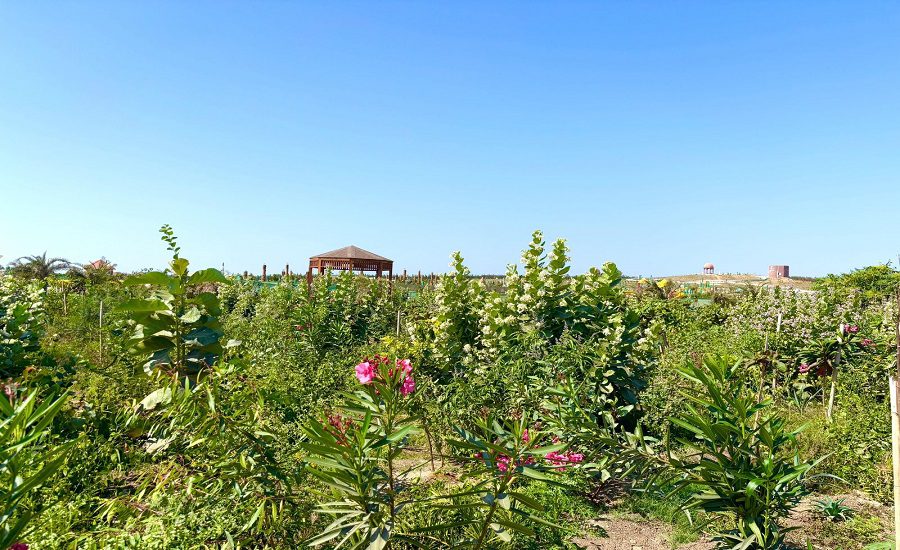
Gandhinagar: Under the leadership of Chief Minister Bhupendra Patel, the Gujarat government continues to advance its commitment to ‘Green Gujarat, Viksit Gujarat’, prioritising environmental sustainability alongside rapid development.
According to an official release from the Chief Minister’s Office (CMO), the state’s environmental initiatives align closely with Prime Minister Narendra Modi’s vision of Viksit Bharat@2047. Over the past three years, Gujarat has implemented large-scale plantation, mangrove restoration, and community-based ecological programmes designed to strengthen its green footprint.
Forest Cover Expanded Across 1.04 Lakh Hectares
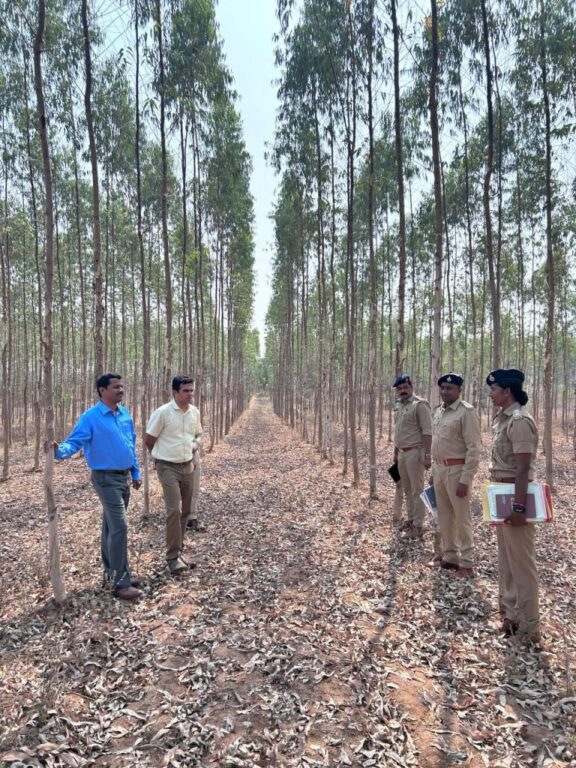
A major highlight of Gujarat’s green initiatives is the successful plantation drive carried out by the Forest Department.
- 1,04,270 hectares of forest land were planted with trees in the last three years.
- To increase greenery outside forest zones, 10,213 hectares were covered under the Samajik Vanikaran Yojana.
- With support from Forest Department assistance schemes, farmers planted trees across 1,09,425.60 hectares, significantly boosting the state’s agroforestry footprint.
These measures have strengthened Gujarat’s ecological resilience while promoting community participation in environmental conservation.
Gujarat Leads India Under the MISHTI Mangrove Mission
Gujarat has emerged as a frontrunner in implementing the Centre’s MISHTI (Mangrove Initiative for Shoreline Habitats & Tangible Incomes) scheme.
- 34,242 hectares of mangroves have been planted along the state’s coastline.
- This initiative strengthens natural coastal buffers, protects marine ecosystems, and enhances climate resilience in regions prone to cyclones.
Launched on June 5, 2023, MISHTI aims to restore mangrove ecosystems in coastal states through
- scientific mapping,
- nursery development,
- hydrological and geographical assessments,
- public awareness,
- research, and
- promotion of eco-tourism.
Gujarat’s progress under MISHTI highlights its leadership in climate-focused coastal management.
Boost to Grassland Restoration and Tribal Livelihoods
The state has also worked extensively to restore traditional grazing lands and improve forest-based livelihoods:
- 5,000 hectares of grassland were cultivated in the Banni region of Kutch.
- Over 52.52 lakh kg of grass was distributed free of cost to local communities to support livestock rearing.
- To promote sustainable livelihoods among tribal communities, the government distributed 158 lakh bamboo saplings over three years.
These efforts contribute to both ecological balance and rural economic empowerment.
Green Cover Critical for Climate Stability
Officials emphasised that expanding green cover is crucial for:
- maintaining climate stability,
- improving soil productivity,
- supporting biodiversity,
- protecting coastal ecosystems, and
- strengthening the rural economy.
Mangroves, in particular, provide essential protection by stabilising coastlines, supporting marine biodiversity, and reducing the impact of natural disasters.
₹3,140 Crore Allocated for Environment and Forest Management
Reaffirming its long-term commitment to environmental protection, the Gujarat government allocated ₹3,140 crore to the Forest and Environment Department in the 2025–26 State Budget.
The government stated that Gujarat will continue its efforts to create a sustainable, climate-resilient, and green future for upcoming generations while ensuring balanced, long-term development.