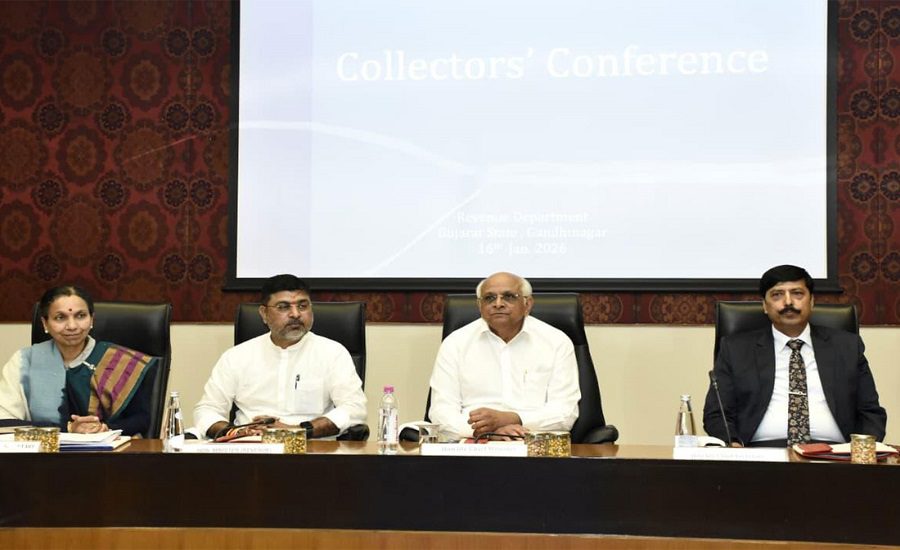
Gandhinagar: The Gujarat government is set to implement a series of procedural reforms across multiple departments to enhance the Ease of Doing Business (EoDB), aligning with the Centre’s directives. The reforms, discussed in detail during the state cabinet meeting on Wednesday, aim to reduce regulatory burdens for businesses and improve operational efficiency across sectors.
Key Reforms in Industrial Sector and GIDC
For the Gujarat Industrial Development Corporation (GIDC), proposed measures include:
- Optimizing land use in existing and upcoming industrial clusters.
- Revisiting industrial area allotment policies, enabling land parcel pooling, splitting, and mortgage facilities.
- Allowing land-use changes with change of business, conversion from leasehold to freehold, and flexibility to sublease, transfer, sell, or reassign industrial plots, including transfers to joint ventures and subsidiaries.
- Permitting low-cost and EWS (Economically Weaker Section) housing within industrial areas.
These reforms are designed to promote MSME growth and make industrial areas more investor-friendly.
Education Department Reforms
The education department plans to simplify compliance for private schools by:
- Removing the essentiality certificate.
- Reducing other mandatory certification requirements.
- Revising land requirement criteria for new institutions.
These steps aim to reduce bureaucratic hurdles and encourage private investment in the education sector.
Energy and Petrochemicals Reforms
Proposed reforms in the energy and petrochemicals sector focus on:
- Accelerating the release of electricity connections for residents and businesses.
- Eliminating the need for field inspections for power connections, speeding up approvals, and promoting ease of access.
Industries and Mines Reforms
The government also intends to:
- Compile a list of testing facilities in state institutions for MSME access.
- Remove double licensing for MSMEs to reduce unnecessary regulatory burdens.
- Amend municipal and other laws to eliminate dual licensing for approvals related to spas, police clearances, signage, salons, social functions, swimming-pool NOCs, discotheque NOCs, and liquor licenses.
Single-Window Approval System
A significant proposal includes designating a single nodal agency within the state IPA/IPB for pre-establishment, construction, connection, and operational approvals in notified industrial areas and parks. This aims to streamline industrial approvals and reduce bureaucratic delays.
The reforms also emphasize self-certification and declaration-based approvals, including:
- Consent to Establish (CTE) and Consent to Operate (CTO) for white and green-category industries.
- Sanitation certificates.
- Verification and stamping of low-risk commercial weights-and-measures instruments.
Impact on Businesses and MSMEs
Senior officials indicated that some of these changes could take effect as early as April 2026, providing a major boost to industrial development, MSMEs, and investment opportunities in Gujarat. The reforms are expected to significantly reduce compliance costs, simplify approvals, and encourage entrepreneurship in the state.
Read also: Gujarat Honored as “Best State for Promotion of Aviation Ecosystem” at Wings India 2026