New Delhi: Hindustan Aeronautics Limited’s (HAL) foundation laying of a new MRO hub at Missamari, Assam marks a major leap forward in strengthening Army Aviation and defence support infrastructure in India’s Eastern Theatre.
The development focuses on enhancing aircraft serviceability and operational readiness for frontline missions under the Government of India’s Atmanirbhar Bharat initiative.
Details of HAL MRO Hub at Missamari Assam
Hindustan Aeronautics Limited, India’s premier defence aerospace manufacturer, officially laid the foundation stone for the Maintenance, Repair and Overhaul (MRO) hub at Missamari in Assam on January 22, 2026.
Read also: Explained: What Are Solar-Powered Spy Drones and Why Is the Indian Army Deploying Them Now?
This new facility is designed to strengthen indigenous defence infrastructure and reduce dependence on foreign MRO providers.
Officials said the establishment of the hub will significantly cut down repair and maintenance turnaround time, streamline logistics, and provide sustained support for military aviation assets operating in India’s Northeast.
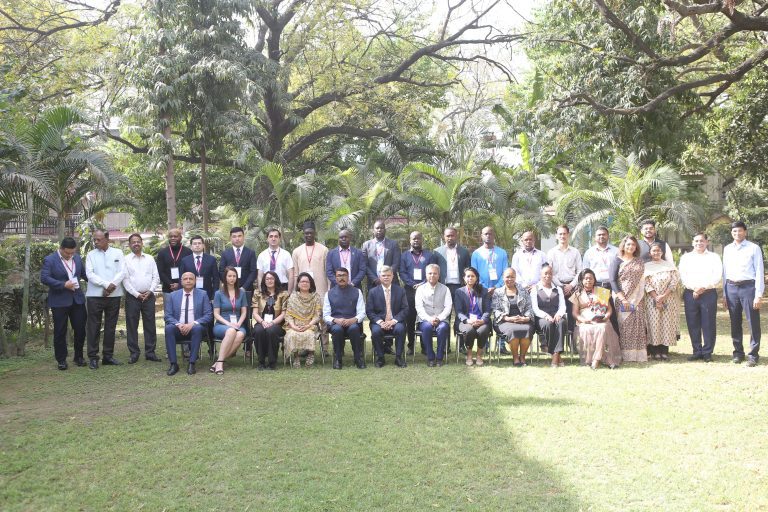
The event saw senior military leadership and HAL executives come together:
- Lt Gen Rana Pratap Kalita, General Officer Commanding of the Gajraj Corps, engaged with P.B. Rangarao, CEO of HAL’s Helicopter Complex, to discuss improving Army Aviation serviceability.
- The foundation stone was unveiled jointly by the GOC of the Blazing Sword Division and Mr. Rangarao, formally marking the start of construction.
Their discussions emphasised the need for expanded MRO infrastructure to improve operational availability and ensure swift repairs for helicopters and aircraft deployed in high-altitude and challenging sectors.
What is the Advantage of HAL MRO Hub at Missamari Assam
Missamari in Assam is a strategic choice for the facility due to its proximity to key Army aviation bases in the Eastern Theatre, a region marked by rugged terrain and weather-challenged zones requiring rapid deployment and maintenance capabilities.
Its placement is expected to dramatically reduce aircraft transit delays to distant repair stations — improving the Indian Army’s and Indian Air Force’s aerial readiness along the northeastern border.
Supporting Army Aviation and Indian Air Force Platforms
The MRO hub will support both Army Aviation helicopters and fixed-wing aircraft of the Indian Air Force (IAF) operating in the region. Planned services include:
- Engine, airframe, and component maintenance
- Diagnostic assessments and advanced repairs
- Logistics coordination and spares supply
Experts say the facility will dramatically shorten downtime for aircraft, enabling frontline units to sustain higher operational availability.
Boosting Operational Readiness & Combat Capability
Establishing the MRO hub aligns with India’s larger defence self-reliance strategy. Officials highlight that quicker turnaround time for aircraft repair directly contributes to improved combat readiness and rapid response capability along sensitive frontiers.
Moreover, enhanced MRO support is expected to benefit operations involving helicopters like HAL’s Dhruv, Chetak, and LCH Prachand, integral to Army Aviation missions in the Northeast.
Aligning with “Atmanirbhar Bharat” and Defence Modernisation
The MRO hub forms part of the Government of India’s Atmanirbhar Bharat (Self-reliant India) initiative, which emphasises building domestic defence capabilities in manufacturing, support infrastructure and technology.
HAL’s expanding MRO footprint signals a broader shift in India’s defence ecosystem — moving from outsourcing maintenance to strengthening local aerospace support.
What is the Impact of HAL MRO Hub at Missamari Assam
Strategic analysts indicate that improved aviation support in the Eastern Theatre holds particular importance due to evolving regional security dynamics — especially along the India-China border in Arunachal Pradesh and Assam sectors. Faster maintenance translates into quicker redeployment and higher mission readiness.
The hub is forecast to become operational over the next 18–24 months and could service a significant number of aircraft annually, enhancing national defence posture in one of India’s most challenging operational regions.
Read also: What Is the Indian Army’s Mobile Drone Lab? How It Can Transform Indian Army to Super Army