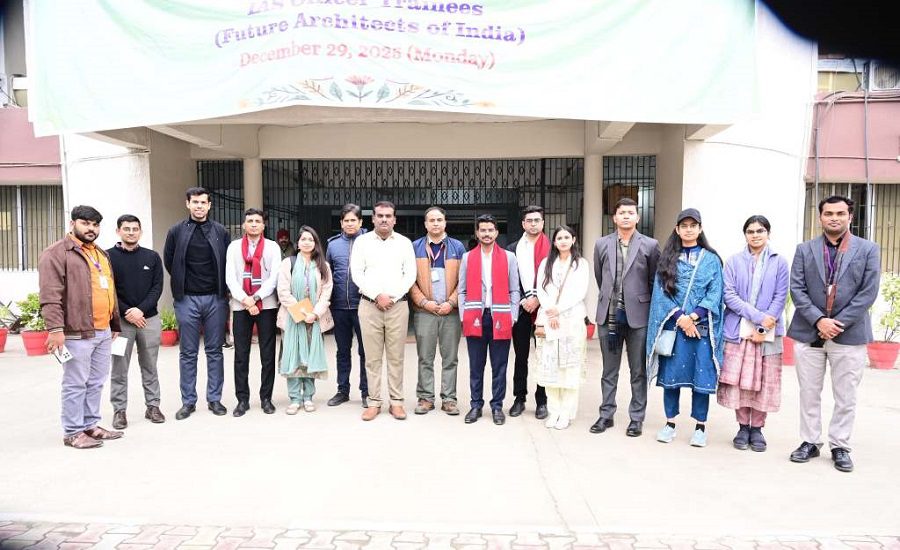
Patna: As part of their winter study tour, a team of 10 IAS officer trainees from the 2025 batch visited the National Institute of Pharmaceutical Education and Research (NIPER), Hajipur, on Monday to gain an in-depth understanding of the pharmaceutical sector and its growing importance in public policy, governance, and strategic national development.
Focus on Pharmaceuticals and Public Administration
The visit was aimed at familiarising future administrators with the role pharmaceuticals play in addressing public health challenges, strengthening regulatory frameworks, and contributing to socio-economic development. The interaction highlighted how effective governance and policy support are essential for the growth of the pharmaceutical ecosystem in India.
Read also: ACC Redesignates Three 2012-Batch IAS, IRS and IES Officers as Directors from January 1
Warm Welcome and Institutional Overview
The team of IAS trainees was formally welcomed by NIPER-Hajipur Registrar Abhishek Sahu, while Dean P Ramalingam provided an overview of the institute’s structure, mandate, and academic functioning.
The officials explained NIPER’s role as an institution of national importance dedicated to advanced education, research, and innovation in pharmaceutical sciences.
Departmental Presentations Highlight Policy Linkages
A series of presentations were made by the heads of various departments, detailing how the pharmaceutical sector intersects with:
- Public health and access to medicines
- Regulatory governance and compliance mechanisms
- Research-driven innovation
- Economic growth and employment generation
The sessions emphasized pharmaceuticals as a strategic tool for improving healthcare outcomes and strengthening national capacities.
Session on Role of Administrative Authorities
A dedicated session was held on the “Role of administrative authorities in the strategic development of the pharmaceutical sector.” The discussion underscored the importance of:
- Policy support and regulatory oversight
- Inter-sectoral coordination between health, industry, and research institutions
- Evidence-based decision-making in pharmaceutical governance
The session helped trainees understand how administrative leadership can shape sectoral growth and innovation.
Exposure to Research and Innovation
The IAS trainees later visited various laboratories at NIPER-Hajipur, where they interacted with postgraduate and PhD scholars. The interaction provided first-hand exposure to:
- Ongoing research projects
- Innovation ecosystems within pharmaceutical sciences
- Efforts toward capacity building and skill development
- Programme Conducted Under Leadership of NIPER Director
The study visit was successfully conducted under the guidance and leadership of NIPER Director K Ruckmani, who played a key role in facilitating meaningful engagement between the trainees and the institute.
Strengthening Administrative Understanding
The visit is expected to help IAS trainees develop a nuanced understanding of how science, policy, and administration intersect, particularly in sectors critical to national health security and development.