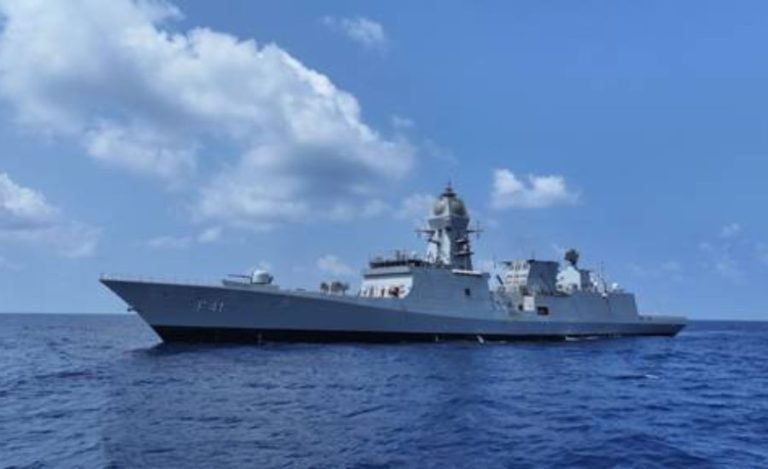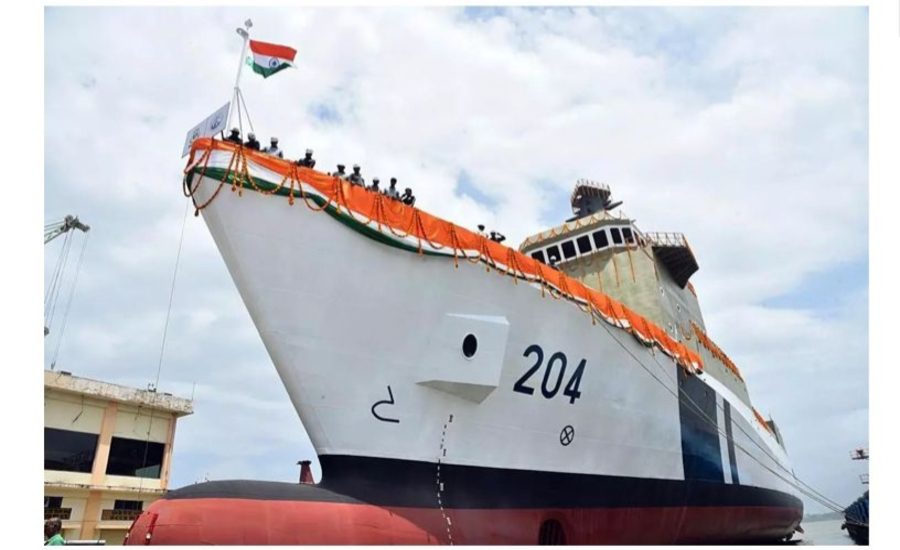
New Delhi: India’s maritime security and environmental response capabilities achieved a significant milestone with the Indian Coast Guard (ICG) formally inducting its first indigenously designed and built Pollution Control Vessel (PCV)—ICGS Samudra Pratap—at Goa Shipyard Limited (GSL).
This historic event reinforces the nation’s commitment to maritime environmental protection, coastal security, and Atmanirbhar Bharat (self-reliant India) defence manufacturing.
What is the Importance of ICGS Samudra Pratap for India’s Maritime Security
With over 60% indigenous content, Samudra Pratap represents a major achievement in India’s naval shipbuilding ecosystem and a core component of the Government’s Make-in-India initiative.
The vessel will significantly enhance the ICG’s operational reach and response capabilities across the vast Indian Ocean Region, particularly in combating incidents of sea pollution such as oil spills, chemical discharge, and maritime environmental disasters.
By commissioning this vessel, the Indian Coast Guard strengthens its ability to enforce marine pollution control regulations, conduct search and rescue (SAR) operations, and support maritime law enforcement tasks—thereby boosting both national security and environmental stewardship.
Design, Dimensions and Indigenous Integration of ICGS Samudra Pratap
Built by Goa Shipyard Limited, Samudra Pratap is the first PCV in the ICG fleet to be fully designed and constructed on Indian soil, showcasing the growth of the indigenous defence industrial base.
The vessel measures:
- Length: 114.5 metres
- Breadth: 16.5 metres
- Displacement: ~4,170 tons
These dimensions make the Samudra Pratap not only the first of its kind but also the largest ship currently operated by the Indian Coast Guard.
The construction of this PCV aligns with India’s broader strategic policy to reduce dependence on imported defence platforms while strengthening technological expertise within domestic shipbuilding firms.
What is the Operational Capabilities of ICGS Samudra Pratap
Samudra Pratap is equipped with advanced systems and mission support technologies that enable it to function across multiple maritime roles:
Pollution Response and Control Systems
Dynamic Positioning System (DP-1): Allows precise station-keeping in variable sea conditions.
Oil Fingerprinting Machine: Detects and identifies the nature of oil pollutants.
Gyro-Stabilised Chemical Detector: Facilitates active sensing of toxic or hazardous substances.
Onboard Pollution Control Laboratory: Provides real-time analysis of contaminants.
These capabilities make the vessel a powerful platform for marine pollutant containment, separation of oil from contaminated water, and environmental surveys within India’s Exclusive Economic Zone (EEZ) and adjacent waters.
What is Advanced Defence and Mission Systems in ICGS Samudra Pratap
Here are the advanced defence and mission systems integrated in ICGS Samudra Pratap;
30 mm CRN-91 gun
- Two 12.7 mm stabilised remote-controlled guns with integrated fire control systems
- Integrated Bridge & Platform Management Systems
- High-capacity external firefighting equipment
These features allow Samudra Pratap to perform beyond pollution control—extending to maritime law enforcement, coastal security, SAR, and firefighting support during emergencies.
Induction Ceremony and Leadership Engagement
The induction ceremony at Goa Shipyard was attended by Deputy Inspector General (DIG) V.K. Parmar, Principal Director (Materials) of the Indian Coast Guard, and Brajesh Kumar Upadhyay, Chairman & Managing Director of Goa Shipyard Limited, among other senior officials.
The event underscored close collaboration between the ICG and GSL, reflecting India’s rising capabilities in defence shipbuilding and marine technology.
About Goa Shipyard Limited
Goa Shipyard Limited (GSL) is one of India’s premier defence shipbuilding yards, operating under the Ministry of Defence.
Renowned for its expertise in designing and constructing advanced naval and coast guard vessels, GSL plays a critical role in strengthening India’s maritime security.
The shipyard is a key pillar of the Make-in-India and Atmanirbhar Bharat initiatives, delivering high-technology, indigenously built platforms for national defence and coastal protection.