New Delhi: In a major climate milestone, India has achieved 50 per cent of its installed power generation capacity from non-fossil fuel sources, five years ahead of its 2030 commitment under the Paris Agreement signed in 2015. The achievement comes at a time when several major global economies have slowed their renewable energy transition.
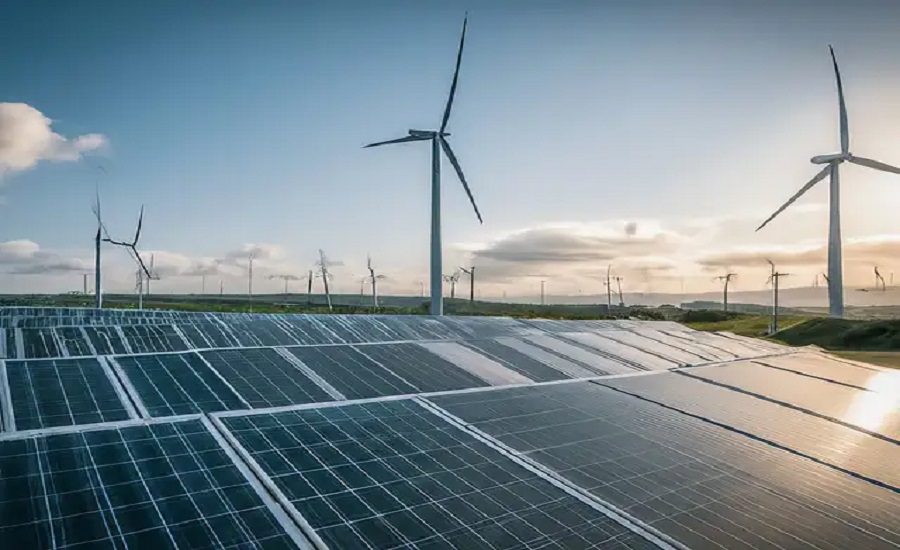
India now has a total installed power capacity of about 510 gigawatts (GW), comprising 247 GW from fossil-fuel sources and 262 GW from non-fossil fuel sources, including 254 GW from renewable energy such as solar, wind, hydro, and biomass.
Renewable Capacity Surges in 2025
India added nearly 50 GW of renewable energy capacity in 2025, backed by investments of approximately Rs 2 lakh crore. With this, the country’s total non-fossil fuel capacity has reached around 262 GW. The government expects to maintain a similar pace of renewable capacity addition in 2026, despite challenges such as land acquisition issues, right-of-way constraints, and delays in power purchase agreements.
Union Minister for New and Renewable Energy Pralhad Joshi said that India witnessed record renewable energy growth in 2025, with around 45 GW added between January and November, largely driven by solar energy.
“By the end of December, we will touch nearly 48–50 GW. The future is sunny and will be powered by renewables,” the minister said, expressing confidence that the momentum will continue in 2026.
Read also: India Launches National Supercomputing Mission 2.0 to Empower HPC, AI, and Quantum Convergence
Massive Investments Drive Green Transition
Industry estimates suggest an investment requirement of around Rs 4 crore per megawatt, translating to Rs 2 lakh crore for every 50 GW of renewable capacity addition.
According to an IREDA study, India will require investments worth Rs 30.54 lakh crore between 2023 and 2030 to achieve its ambitious target of 500 GW of non-fossil fuel capacity. Since 2014, public sector financial institutions have already deployed about Rs 10.79 lakh crore into renewable projects, including Rs 2.68 lakh crore in 2024–25 alone.
Industry Leaders See Strong Momentum
Vinay Rustagi, Chief Business Officer at Premier Energies, said 2025 has been a “highly charged year” for renewables, with new project commissioning rising over 50 per cent year-on-year. He attributed the surge to flagship schemes such as PM Surya Ghar Yojana and PM-KUSUM.
He also highlighted government efforts to boost domestic manufacturing of solar cells and ingot-wafers, leading to large investment announcements and a significant push in energy storage, supported by new capital subsidy schemes.
Grid Integration and Storage Key Challenges
Despite the growth, experts cautioned that grid integration and transmission bottlenecks remain major challenges. Rising renewable capacity has led to grid imbalances and power curtailment, particularly in states like Rajasthan.
Laxit Awla, CEO of SAEL Industries, noted that the sector is shifting from capacity expansion to capacity absorption, while long-term investment gaps and grid constraints continue to pose risks. He suggested mandating long-duration energy storage obligations alongside existing support mechanisms.
OMC Power CEO Rohit Chandra emphasized the need for improved last-mile connectivity, affordable financing, and investments in microgrids, storage systems, and EV charging infrastructure, especially in rural areas.
Focus on Scale, Storage and Transmission in 2026
Datta Infra MD Varchasvi Gagal said India’s energy transition is moving towards megaprojects, including multi-GW hybrid parks and storage-linked developments. N. Venu, MD & CEO of Hitachi Energy India & South Asia, stressed the need to strengthen the transmission network and accelerate renewable energy zones.
“With focused efforts in 2026, India can further enhance energy security and strengthen its leadership position in the global clean energy sector,” he said.