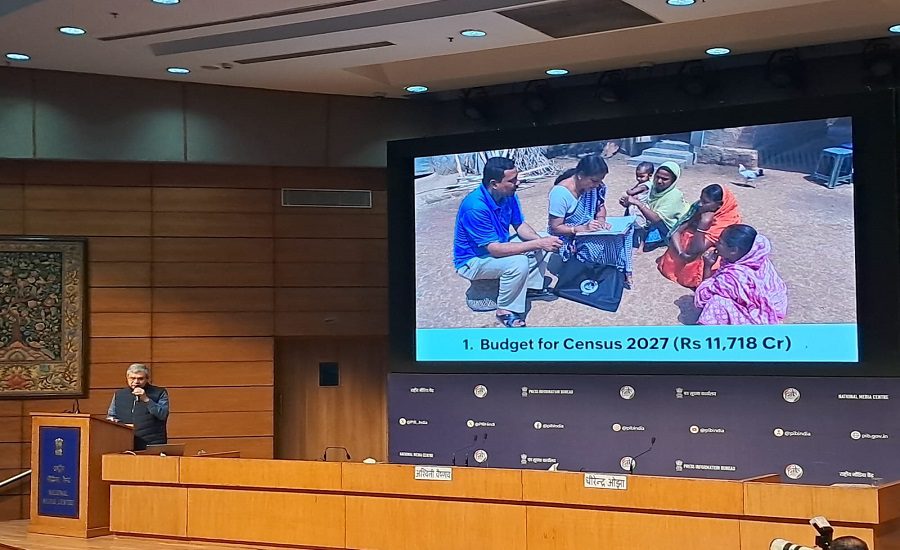
New Delhi: In a major administrative milestone, the Union Cabinet chaired by Prime Minister Narendra Modi has approved the proposal to conduct the Census of India 2027 at a total cost of ₹11,718.24 crore. This will be the 16th national census and the 8th since Independence, marking the world’s largest population data exercise now for the first time in a fully digital format.
Union Minister Ashwini Vaishnaw announced that the census will be carried out in two phases
Houselisting and Housing Census from April to September 2026
Population Enumeration in February 2027 (with snow-bound regions of J&K, Ladakh, Himachal Pradesh and Uttarakhand undertaking enumeration in September 2026)
The minister emphasised that the digital design has been developed with stringent data protection measures, calling Census 2027 a “historic leap in India’s data governance.”
Digital Census with New Tech Features
Census 2027 will deploy 30 lakh field functionaries, making it one of the largest administrative exercises globally. Data will be collected through a mobile application available on both Android and iOS, replacing traditional paper schedules.
A dedicated Census Management & Monitoring System (CMMS) will track real-time progress. In another first, households will have the option for self-enumeration, enabling citizens to fill in their details online.
To streamline operations, an innovative Houselisting Block (HLB) Creator web map application will be implemented, helping charge officers create and manage census blocks digitally.
Caste Enumeration to Be Included
As per the decision of the Cabinet Committee on Political Affairs (April 2025), Census 2027 will include caste enumeration, which will be captured electronically during the Population Enumeration phase. This is expected to add significant depth to India’s demographic and socio-economic insights.
Employment Generation and Capacity Building
The Census is expected to generate 1.02 crore man-days of employment, with around 18,600 technical personnel engaged for nearly 550 days at local levels. Additional technical manpower at district and state levels will support digital data handling and monitoring a move that will also enhance future employment prospects due to capacity building in data management skills.
Improved Data Dissemination
The government aims to release census results faster than ever before, supported by real-time digital processing and improved data systems. A new Census-as-a-Service (CaaS) model will provide ministries with clean, machine-readable, actionable datasets for policy-making.
Data will be accessible up to the village and ward levels, offering high-quality micro-data for planners, researchers and government agencies.
Significance of Census 2027
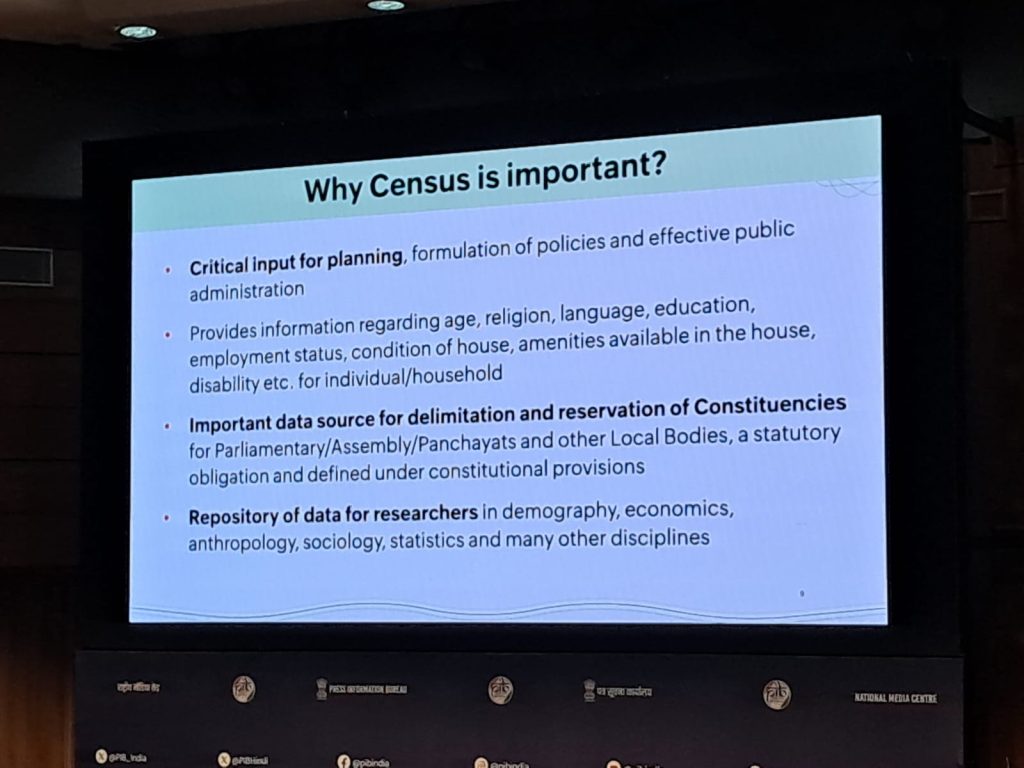
Census data is the backbone of governance in India, offering critical insights into housing, amenities, religion, language, literacy, migration, fertility, economic activity and socio-demographic patterns. Conducted under the Census Act, 1948, the exercise remains the primary source of granular population data in the country.
With its shift to a digital-first model, Census 2027 is poised to redefine India’s data ecosystem ensuring accuracy, transparency and faster availability of information that will directly support future governance and developmental planning.
Read also: HPC Indigenisation Supercomputers India Milestone: From 50% Local ICs to Fully Indigenous Systems