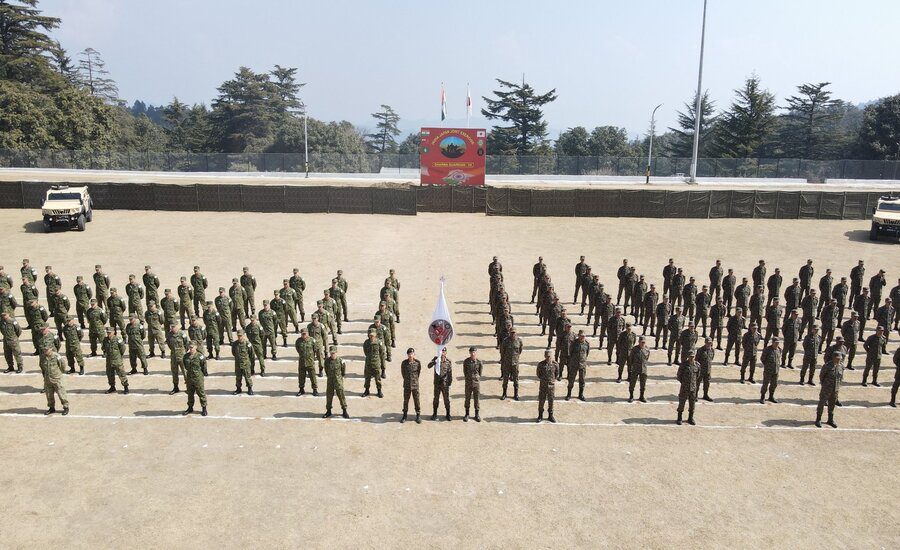
New Delhi: The India-Japan Dharma Guardian 2026 joint military exercise began on 24 February 2026 at the Foreign Training Node in Chaubattia, Uttarakhand, India, highlighting the deepening defence ties between the two Asian partners. This India-Japan defence cooperation exercise brings together elite troops from both countries to sharpen joint combat skills, improve interoperability, and practice coordinated responses in challenging semi-urban environments.
What Is Dharma Guardian Exercise?
Dharma Guardian is an annual bilateral military exercise conducted alternately in India and Japan. It is part of regular defence engagements aimed at strengthening strategic ties and joint operational efficiency.
The 2026 edition marks the 7th iteration of this important partnership drill.
Details of Dharma Guardian Exercise 2026
This year’s exercise is hosted in Chaubattia, Uttarakhand, Northern India. It will run from 24 February to 9 March 2026, spanning approximately two weeks of intensive training and coordination activities.
Who Is Participating in Dharma Guardian Exercise 2026
Each nation has deployed a 120-member contingent:
- The Indian Army contingent primarily includes troops from the Ladakh Scouts, known for combat experience in rugged terrain.
- The Japan Ground Self-Defense Force (JGSDF) is represented by personnel from the 32nd Infantry Regiment.
This balanced participation ensures shared learning and mutual operational development.
Key Objectives of the Dharma Guardian Exercise 2026
The main goals of Dharma Guardian 2026 are:
Strengthen Bilateral Military Ties
The exercise reinforces the strategic defence partnership as part of broader India-Japan cooperation.
Enhance Interoperability
Troops work together to improve joint planning and synchronized operations.
Sharpen Urban Warfare and Counter-Terror Skills
Training focuses on urban combat tactics, counter-terror drills, and realistic semi-urban scenarios to prepare forces for modern threats.
What Activities Are Included
The Dharma Guardian drills feature a range of tactical and operational tasks:
- Temporary Operating Base setup
- Intelligence, Surveillance & Reconnaissance (ISR) grid development
- Mobile check post operations
- Cordon and search missions
- Heliborne operations
- House intervention and close-quarters drills
Exercise #DharmaGuardian 2026
— ADG PI – INDIAN ARMY (@adgpi) February 24, 2026
The opening ceremony of the 7th edition of Joint Military Exercise Dharma Guardian 2026 between India and Japan was held today at Foreign Training Node, Chaubattia, Uttarakhand. The exercise is scheduled from 24 February to 9 March 2026.
Designed… pic.twitter.com/6uTSJx8ohp
These tasks simulate real-world situations to build team coordination and technical skill.
Strategic Importance
The exercise takes place amid evolving regional security dynamics in the Indo-Pacific. Such joint drills are seen as vital in strengthening deterrence capabilities and fostering trust among partner militaries. They also support global peace and stability in South and East Asia.
How This Fits Into India-Japan Ties
Dharma Guardian builds on a decade of growing defence collaboration between India and Japan. Institutional mechanisms such as defence dialogues, joint training programs, and exchanges have steadily enhanced bilateral cooperation. This exercise complements broader strategic dialogues and shared security priorities.
Looking Ahead
The learnings and feedback from Dharma Guardian 2026 will shape future training, interoperability frameworks, and defence engagements. It underscores a shared commitment to proactive defence cooperation and readiness for emerging threats in complex environments.