New Delhi: In a significant development for Indo-Russian strategic cooperation, Russia has formally proposed to India a joint programme for building Arctic-class ships. The offer, made by Russian First Deputy Prime Minister Denis Manturov during his visit to New Delhi, comes amid deepening maritime, trade, and defence ties — and could mark a major turning point for India’s long-term ambitions in high-latitude shipping and polar operations.
This initiative seeks to tap into Russia’s decades-long expertise in designing ice-class vessels for harsh Arctic conditions and India’s burgeoning shipbuilding capabilities, potentially reviving India’s maritime manufacturing sector while giving New Delhi a foothold in the strategically crucial Arctic region.
Background of Arctic-Class Vessel Collaboration
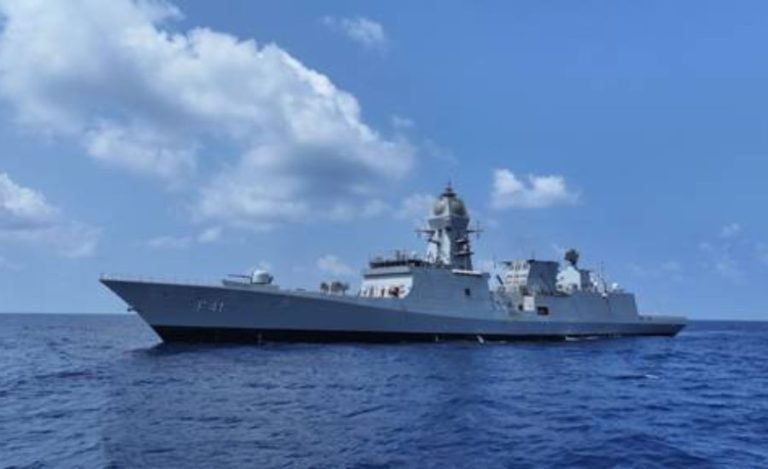
Russia has long been a global leader in polar-class, ice-breaking and ice-strengthened vessels. Its shipyards — especially those oriented toward Arctic navigation — have built nuclear icebreakers, cargo carriers, tankers, LNG vessels, and other specialised ships capable of operating in extreme cold and heavy ice conditions.
Given the demanding environment of the Arctic — thick ice, unpredictable weather, sub-zero temperatures, and limited infrastructure — such vessels must meet stringent “high ice-class” standards. These include reinforced hulls, specialized propulsion systems, adapted navigation and safety systems, and designs that allow safe passage even through multi-meter thick ice.
India’s Shipbuilding Push
On the other side, India has, in recent years, made a concerted push to revive and expand its shipbuilding industry. Recognizing its strategic maritime interests — from coastal security to expanded trade corridors — the Indian government approved a massive package to support domestic shipbuilding and maritime infrastructure. This shipbuilding push includes financial incentives, development of shipbuilding clusters, and support to private and public shipyards.
In such a situation, partnering with Russia to build Arctic-class vessels offers a timely opportunity: India can benefit from Russian design, engineering, and operational expertise while building up domestic capacity and technological know-how.
Major Proposals in Arctic-Class Vessel Collaboration
Joint Production of Ice-Class Vessels: According to Manturov, the proposed collaboration would involve the joint design and manufacture of “Arctic-class vessels”— cargo ships apt for tankers, bulk carriers, container ships, LNG carriers, among others — capable of safe navigation through ice-covered Arctic waters.
The plan reportedly involves a working group under the bilateral framework: on Russia’s side represented by the state nuclear-energy corporation Rosatom; on the Indian side by the Ministry of Ports, Shipping and Waterways. This institutional structure aims to oversee design transfer, adaptation to Indian shipyards, and eventual construction.
Strategic and Operational Rationale: The cooperation seeks to leverage several strategic benefits:
Access to Arctic shipping routes: As polar ice recedes and Arctic routes become more navigable for longer periods, Arctic-class ships could enable India to participate in trans-Arctic cargo and energy transport via the Northern Sea Route (NSR).
Energy and resource linkages: Given Russia’s energy-rich Arctic regions (oil, gas, minerals), and India’s growing energy needs, these ships could facilitate transport of LNG, crude, or other Arctic-sourced resources.
Commercial and export potential: If India develops capacity, it might not limit production to domestic needs; there may be potential to export ice-class vessels to other nations or private shipping firms, especially as global demand for polar-capable ships increases.
Revival of domestic shipbuilding industry: By building high-tech vessels, India can upscale its shipbuilding standards, generate skilled employment, and reduce dependence on foreign imports for specialised vessels.
Key Strategic Implications: Geopolitics, Economy, and Security
Changing Maritime Dynamics & Geopolitical Reach: The Arctic is no longer a remote, frozen backwater: it is emerging as a strategic theatre for trade, energy, and geopolitics.
For India, participation in Arctic shipping could:
- Expand its maritime footprint beyond the Indian Ocean and Indo-Pacific.
- Offer alternate trade and energy corridors, potentially reducing reliance on traditional routes such as the Suez Canal.
- Provide access to Russian Arctic resources, aligning with India’s long-term energy and resource security strategy.
Such ambitions, however, come with geopolitical overtones: expanded Indian presence in the Arctic may be watched closely by other Arctic-interested powers.
Economic & Industrial Benefits for India
- Absorb advanced polar-shipbuilding technology and transfer expertise to domestic yards;
- Build a cadre of engineers, designers, and ship-yard workers with specialised skills;
- Position itself to take global orders for ice-class vessels, tapping international demand;
- Broaden the base of maritime commerce, energy logistics, and possibly open new trade corridors — a potential economic multiplier.
Key Risks, Challenges & Hurdles
While promising, the proposal also comes with challenges:
Technical adaptation: Arctic-class vessels are not trivial — building them requires advanced materials, design precision, and robust testing; Indian shipyards may need significant upskilling.
Financial viability: Building and operating ice-class ships is costlier than standard vessels; demand for Arctic-route shipping — though growing — remains uncertain and seasonal.
Geopolitical and regulatory uncertainties: Arctic shipping — especially trans-Arctic cargo routes — involves complex international maritime regulations, environmental concerns, and geopolitical sensitivities.
Sustainability and environmental impact: Increased Arctic maritime traffic risks environmental damage to fragile polar ecosystems; any cooperation may draw scrutiny from environmental and global-north stakeholders.
Importance of Arctic-Class Vessel Collaboration
For India–Russia Relations
- The proposed Arctic-shipbuilding cooperation underscores how bilateral ties between India and Russia are evolving beyond traditional domains (defence, energy, arms sales) into advanced industrial and strategic sectors.
- It reflects growing mutual trust: Russia is willing to transfer sensitive polar-shipbuilding technology to India.
- It aligns with India’s “Make in India” and maritime-industry revival ambitions, leveraging high-technology cooperation rather than mere imports.
- It could reshape bilateral trade; beyond oil and energy, future cooperation may encompass maritime engineering, export of ships, and logistics infrastructure.
- If institutionalised, this partnership could become one of the most significant Indo-Russian industrial collaborations of this decade — a symbol of deepening strategic partnership in a changing global maritime-geopolitical landscape.
What’s Next: Road Ahead & What to Watch
During the ongoing visit of Vladimir Putin to India (as of December 2025), this proposal is slated to be formally discussed between the two sides — and could result in a joint working group or memorandum of understanding.
If approved, the immediate next steps would likely involve detailed feasibility studies, selection of Indian shipyards, technology-transfer agreements, and experimental shipbuilding orders.
International actors — especially Arctic nations and environmental watchdogs — will likely monitor developments closely; diplomatic messaging and compliance with global maritime and environmental regulations will matter.
India’s private sector and shipbuilding industry should prepare to scale up, train manpower, and adapt to polar-vessel manufacturing standards if this project moves forward.