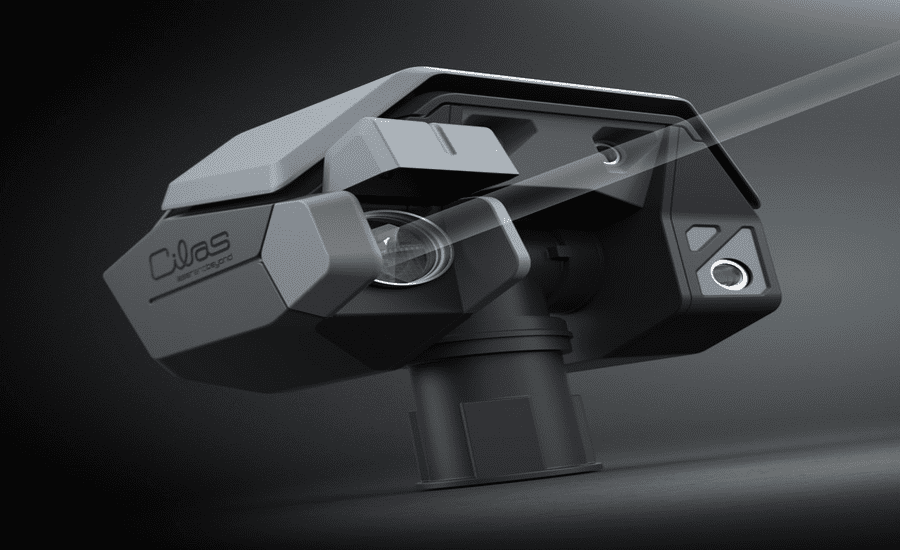
New Delhi: India responding to rising aerial threats from hostile unmanned aerial vehicles (UAVs), has signed a significant defence agreement with French firm CILAS S.A. to acquire the HELMA-P laser counter-drone system, a high-energy directed-energy weapon designed specifically to detect and neutralise hostile drones.
This move marks a major boost to India’s air defence capabilities and contributes to the country’s ongoing efforts to modernise its armed forces against evolving threats. The HELMA-P laser system will be integrated into India’s multi-layered defence network, enhancing protection of critical installations, border posts, and strategic assets.
What Is HELMA-P Laser System
The HELMA-P (High Energy Laser for Multiple Applications – Power) is an advanced directed-energy system developed by France’s CILAS that uses a concentrated laser beam to disable or destroy drones by targeting their sensors, batteries, and electronics without traditional ammunition.
Read also: Faster, Safer, Deadlier: How Jeanuvs-CVRDE Indigenous Autoloader Enhances Indian Army Firepower
It integrates with radar, optical and acoustic sensors, and existing command-and-control systems to provide rapid engagement of threats up to about one kilometre away. Unlike missile interceptors, HELMA-P requires only electrical power and cooling, making it a cost-efficient solution against frequent drone incursions.
Strategic Need: Why Does India Need HELMA-P Laser System
India’s shift towards laser-based counter-drone capabilities comes amid increased use of drones along contested borders and in asymmetric warfare. Traditional kinetic interceptors (missiles, guns) are often expensive relative to low-cost UAV threats. Directed-energy systems like HELMA-P offer precise engagement at a fraction of the cost, helping safeguard military bases, critical infrastructure, and troop deployments without the risk of collateral damage.
Key Features of the HELMA-P System
| Feature | Description |
| Type | Directed-energy, high-energy laser |
| Range | Up to ~1 km (1.7 km in some deployments) |
| Cost per engagement | Minimal (electricity-powered) |
| Integration | Compatible with radar, optical, acoustic sensors |
| Deployment | Ground-based units, mobile platforms |
The system has been tested in France under operational conditions, including protection of high-profile events like the Paris Olympics, giving India confidence in its battlefield performance.
Importance of HELMA-P Laser System
The acquisition of HELMA-P reflects a broader doctrinal evolution in India’s air defence posture. Instead of relying solely on jamming and kinetic weapons, the Indian Army and Air Force are incorporating directed-energy weaponry to counter low-altitude aerial threats more effectively. This layered approach enables faster, more economical engagements while enhancing deterrence against future drone incursions.
Strategic India-France Defence Partnership
India’s agreement with France to secure the HELMA-P system signifies a deepening defence cooperation between New Delhi and Paris. The deal, supported by major European defence companies MBDA and Safran Electronics & Defence, sees India’s Axiscades Technologies Ltd acting as the lead systems integrator — integrating HELMA-P with indigenous command-and-control platforms and vehicle-mounted counter-drone units.
This partnership aligns with India’s broader policy of diversifying defence suppliers and reducing over-dependence on traditional sources, and strengthens technological collaboration with European allies.