West Bengal: India has unveiled plans for a major rail infrastructure development in its most strategic and vulnerable stretch — the Siliguri Corridor, popularly known as the “Chicken’s Neck.”
The proposed tunnel rail project aims to fortify national security and ensure uninterrupted connectivity between mainland India and the northeastern states — a priority highlighted in the Union Budget 2026-27.
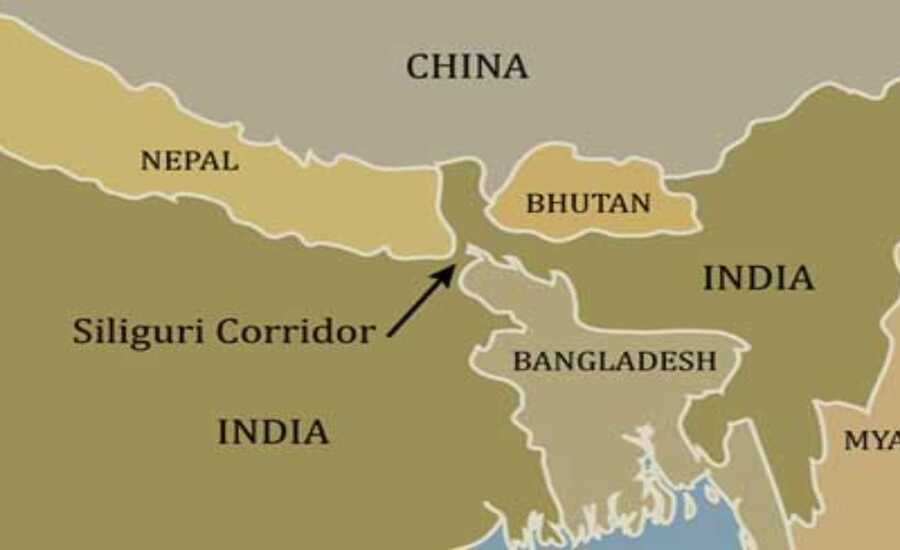
This corridor, barely 20–22 km wide and sandwiched between Nepal and Bangladesh, is considered a critical lifeline for supply, logistics, and defence.
The new plan includes laying underground railway tracks along a 40 km segment to reduce vulnerability to natural or geopolitical disruptions and enhance transportation resilience.
What Is the Siliguri “Chicken’s Neck”?
The Siliguri Corridor — nicknamed the Chicken’s Neck — is a narrow stretch of land in West Bengal that links the Indian mainland with its eight northeastern states, including Assam, Arunachal Pradesh, and Tripura. It is the only direct overland route for moving people, goods, and defence supplies in and out of the region.
Read also: Indian Army Reviews Fourth Base in Mizoram as Part of Expanded Defence Cover for Siliguri Corridor
Geographically, this corridor is strategically sensitive, bordered by Nepal to the west, Bangladesh to the east, and close to Bhutan and China. The tight land link makes it susceptible to disruptions from natural calamities or geopolitical tensions.
Importance of Siliguri Corridor Underground Rail Project
Union Railway Minister Ashwini Vaishnaw announced that detailed planning is underway to lay railway tracks underground along the critical 40 km strategic corridor. The objective is to enhance resilience and boost security preparedness for both civilian and defence movement.
Officials from the Northeast Frontier Railway (NFR) have said that:
- The underground rail section will run between Tin Mile Haat and Rangapani stations in West Bengal.
- The tracks will be laid at a depth of approximately 20–24 metres underground in largely plain terrain.
- Once complete, the corridor will have six railway lines — four above ground and two below — improving both capacity and robustness.
This design is meant to ensure that critical rail connectivity remains intact even during emergencies or external disruptions.
Strategic and Security Importance
The project carries significant strategic weight due to the Chicken’s Neck’s vulnerability:
- It is India’s only land bridge to sizable northeastern territories, supporting millions of residents and ongoing economic activity.
- The corridor’s narrowness makes it a potential choke point if disrupted by hostile actions, floods, or landslides.
- An underground rail network adds a layer of security against blockades, sabotage, or external aggression.
Military analysts point out that ensuring robust transport links through the corridor is essential not just for peacetime mobility but also for rapid deployment and reinforcement during security challenges.
What is the Impact of Siliguri Corridor Underground Rail Project
In addition to security, the underground rail project aligns with India’s broader goal of improving connectivity and economic integration:
- Enhances movement of goods and passengers to and from the Northeast.
- Reduces travel time and dependence on a single, exposed overground link.
- Supports logistics planning for trade and commerce across states.
- Likely to attract further investments and regional development projects due to improved infrastructure.
Transport economists note that improved connectivity could also stimulate economic growth across Bihar, West Bengal, and the northeastern states.
Complementary Rail Initiatives in North India
This rail project is part of a larger vision of strengthening India’s transportation network. In the Union Budget 2026-27, other strategic rail developments were highlighted, including:
- Expansion of high-speed rail corridors connecting the north, east, and northeast parts of India.
- Efforts to integrate remote regions into national economic circuits.
- Plans to expand existing tracks for enhanced freight and passenger capacity.
Together, these initiatives aim to bolster connectivity, national security, and economic cohesion across regions.