New Delhi: The Indian Army is poised to commence formal user trials of the indigenous Zorawar light tank across some of the country’s most challenging environments — including high-altitude cold deserts and scorching plains — in early 2026, according to the Defence Research and Development Organisation Chief.
This definitive move represents a significant leap from developmental testing to induction-oriented evaluation, marking a decisive milestone in bolstering India’s armoured capabilities tailored for mountain warfare and extreme terrain operations.
What Is the Zorawar Light Tank?
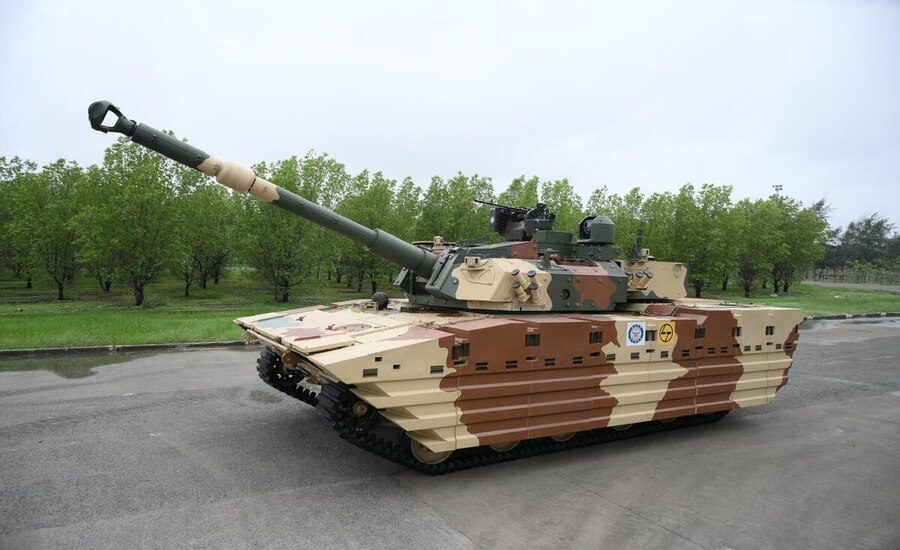
The Zorawar is a 25-tonne class indigenous light tank developed jointly by DRDO and private sector partner Larsen & Toubro (L&T) under Project Zorawar, aimed at providing the Indian Army with a highly mobile, air-transportable combat platform optimized for high-altitude and diverse terrain operations.
Designed to operate where heavier main battle tanks struggle — such as the Himalayan frontiers along the Line of Actual Control (LAC) — Zorawar is engineered for rapid manoeuvreability, superior firepower, and advanced battlefield awareness.
What are the Features of Zorawar Light Tank
Key technical and operational features include:
- Lightweight and Portable — ~25 tonnes allowing airlift by C-130J or C-17 aircraft.
- Advanced Firepower — Mounted with a 105 mm gun capable of firing conventional ammunition and modern anti-tank guided missiles (including Nag Mk-II).
- High Mobility Systems — Hydropneumatic suspension and high power-to-weight ratio for performance above 14,000 feet.
- Modern Sensors & AI — Integrated AI-assisted fire control, thermal imagers, and reconnaissance data systems.
Named after the legendary Dogra general Zorawar Singh, the tank embodies India’s strategic intent for indigenous, agile armoured warfare solutions.
Details of Zorawar Light Tank Trials
Before preparing for Army assessment, Zorawar underwent extensive internal mobility and firing evaluations led by DRDO and L&T throughout 2024 and 2025, including tests in desert terrain and initial firing validations.
In late 2025, it also successfully test-fired the Nag Mk-II anti-tank guided missile, showcasing significant lethality enhancements critical for modern combat scenarios.
Formal User Trials in 2026
DRDO Chief Dr. Samir V. Kamat confirmed on official defence forums that the platform has matured sufficiently to enter user trials overseen by the Indian Army, projected to begin in early 2026 — possibly as early as February.
These trials are structured in multiple phases across extreme climatic conditions:
1. High-Altitude Cold Trials: Focused on rugged mountain passes, likely through Ladakh, to assess mobility, crew ergonomics, and systems reliability in freezing, thin-air conditions.
2. Desert Heat-Endurance Evaluations: Subsequent tests at Pokhran and Rajasthan will stress the tank’s cooling systems and sustained performance in high temperatures.
Collectively, this two-pronged evaluation will validate Zorawar as a true all-terrain combat solution, capable of tackling the strategic challenges posed by high-altitude borders, deserts, and plains alike.
Importance of Zorawar Light Tank to India’s Defence
The Zorawar light tank emerges against the backdrop of longstanding capability gaps in India’s high-altitude armoured warfare — an issue accentuated during the 2020 standoff with China in Eastern Ladakh, where heavier tanks faced mobility constraints in harsh terrain.
By transitioning to lighter, more versatile armour, India aims to:
- Enhance manoeuvrability in Himalayan and plateau regions.
- Reduce logistical foot-print and lower deployment time.
- Strengthen deterrence postures along the LAC and central frontiers.
Industry sources report the Army’s requirement for approximately 354 light tanks, with an initial order for 59 units already placed.
What’s Next After User Trials?
If Zorawar successfully clears the Army’s rigorous trials over varied seasons and terrains — spanning summer heat, winter cold, and high mountain conditions — it could move swiftly into production and induction phases, with field deployment anticipated by 2027.
This milestone would not only elevate India’s indigenous defence manufacturing capabilities but also signal a broader shift toward self-reliant land warfare solutions under the Aatmanirbhar Bharat initiative.