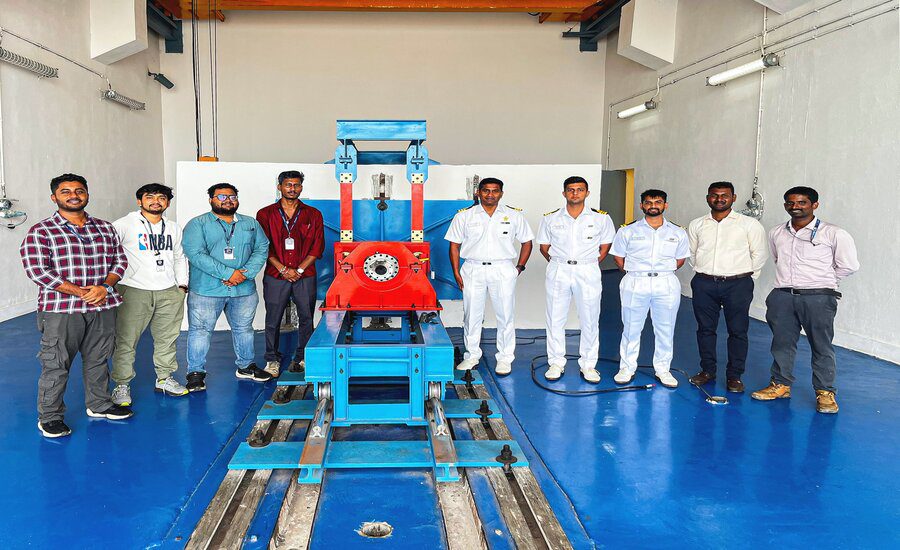
New Delhi: India’s deep-tech startup Space Fields has achieved a historic milestone by successfully hot-firing a naval rocket solid motor developed specifically for the Indian Navy, marking the first instance of a private Indian company achieving this feat in defence propulsion.
This breakthrough signals a major evolution in India’s indigenous defence manufacturing and aerospace sector, reducing dependency on global suppliers and promoting self-reliance under national priorities.
Space Fields: India’s Rising Deep-Tech Propulsion Innovator
Founded in 2021 and incubated at Indian Institute of Science (IISc), Bengaluru, Space Fields specializes in advanced solid propulsion technologies for aerospace and defence applications.
The Bengaluru-based startup designs and delivers custom solid rocket propulsion systems used in naval weapons and potentially broader defence and space missions. Its team comprises ex-DRDO engineers and aerospace specialists, combining deep research with prototype-to-production capabilities.
This milestone comes amid India’s booming deep-tech ecosystem, which has witnessed increased government support, regulatory reforms, and belief in public-private collaboration.
Importance of Space Fields Naval Rocket Solid Motor
The hot-fire test conducted by Space Fields successfully validated a solid rocket motor designed for naval use — a complex propulsion system engineered for:
- High-thrust, reliable performance
- Operation in harsh marine environments
- Use in missiles, underwater vehicles, and decoy systems
The test confirms the motor’s:
- Thermal stability
- Structural strength
- Precise thrust performance
It was conducted under strict Indian Navy supervision at a premier Armament Inspectorate, showcasing the startup’s ability to meet stringent defence standards.
Importance of Space Fields Naval Rocket Solid Motor
The Indian Navy operates in one of the world’s most geopolitically complex regions — the Indian Ocean Region — where maintaining maritime security requires advanced capabilities.
Traditionally, solid propulsion for missiles and marine systems has been dominated by large public defence entities like DRDO and Hindustan Aeronautics Limited. Space Fields’ success now:
- Reduces dependency on imported rocket motors
- Cuts potential costs by up to 40%
- Boosts strategic autonomy in defence supply chains
Indigenous production also strengthens India’s Atmanirbhar Bharat (self-reliant India) agenda — a cornerstone of national defence strategy.
Technology Edge: What Sets Space Fields Apart
Space Fields uses proprietary grain formulations and composite casings that deliver higher energy density and operational efficiency compared to older designs, tailored for marine and tactical use.
The company has integrated AI-driven simulations into its development cycle, accelerating testing and optimizing design performance for real combat conditions.
These advances position Space Fields to compete with global innovators and elevate India’s technological stature in propulsion engineering — a critical component in both defence and space sectors.
Broader Context: India’s Deep-Tech & Aerospace Surge
India’s space and defence startup scene is rapidly transforming:
- Private firms like Skyroot Aerospace and Agnikul Cosmos are advancing rocket and launch vehicle technologies.
- Initiatives by IN-SPACe are boosting satellite development and small-sat bus platforms.
- Venture capital funding — including backing for space propulsion innovators — is rising steadily.
This ecosystem growth reflects India’s broader goals of technological sovereignty and enhanced global competitiveness in cutting-edge defence and aerospace capabilities.