New Delhi: Indian Navy self-reliance plan has taken a major step forward as Chief of Naval Staff Admiral Dinesh K Tripathi outlined a bold roadmap to build over 200 indigenous warships by 2035.
This Indian Navy self-reliance plan focuses on boosting domestic shipbuilding, reducing imports, and strengthening maritime security.
The announcement reflects India’s commitment to Aatmanirbhar Bharat in defence and aims to transform the Navy into a modern, combat-ready force capable of handling future threats in a rapidly changing global environment.
Details of Indian Navy 2035 Vision
Admiral Dinesh K Tripathi shared this vision during the Staff Course at the Defence Services Staff College, Wellington.
Read also: Explained: Why Indian Navy Is Investing in Expendable Aerial Targets That Will Be Destroyed Mid-Air
He highlighted that the Indian Navy is moving towards:
- A fully self-reliant force
- Advanced technology integration
- Strong maritime security presence
The aim is to make the Navy future-ready and capable of handling both traditional and modern threats.
Target: Over 200 Indigenous Warships
The Navy plans to induct:
- More than 155 indigenous warships initially
- Expand the fleet to over 200 warships by 2035
This is a major increase in India’s naval strength.
Officials also noted that:
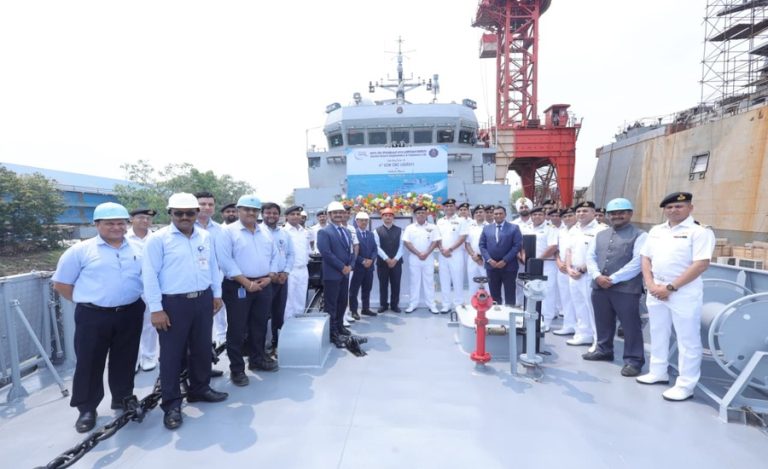
- New ships are being commissioned every 40 days on average
- This shows the fast pace of modernization
Focus on Indigenous Shipbuilding
A key part of the plan is building ships in India.
Major Indian shipyards involved include:
- Mazagon Dock Shipbuilders Limited
- Garden Reach Shipbuilders & Engineers
- Goa Shipyard Limited
- Cochin Shipyard Limited
These projects will:
- Boost domestic manufacturing
- Create jobs
- Reduce dependency on foreign defence imports
Examples of Indigenous Naval Strength
India has already achieved success in indigenous warship development.
Some major examples include:
- INS Vikrant (India’s indigenous aircraft carrier)
- INS Imphal
- INS Arnala
- INS Vindhyagiri
These ships show India’s growing capability in naval technology.
Upgrading Existing Warships
The Navy is not only building new ships but also upgrading older ones.
For example:
- INS Vikramaditya is being upgraded
This ensures:
- Better performance
- Longer service life
- Alignment with modern warfare needs
Preparing for Future Naval Warfare
Admiral Tripathi stressed that naval warfare is changing rapidly.
New challenges include:
- Hybrid warfare
- Unconventional threats
- Technological disruptions
The Navy is preparing to handle all these challenges while ensuring:
- Maritime stability
- National security
What is the Importance of Indian Navy 2035 Vision
This initiative strongly supports India’s self-reliance mission.
Key benefits:
- Stronger defence industry
- Reduced imports
- Increased technological independence
It also positions India as a major power in the Indian Ocean region.