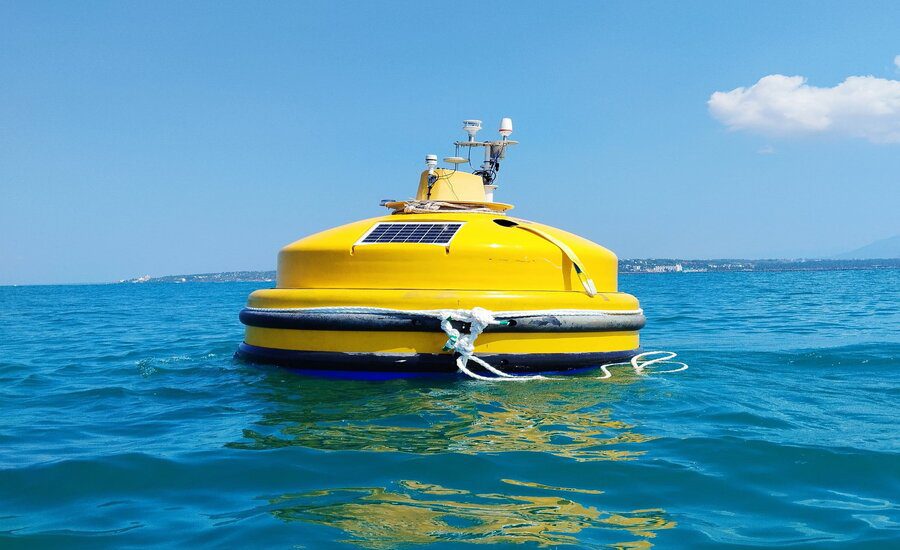
New Delhi: Indigenous Floating LiDAR Buoy marks a major step in strengthening the country’s offshore wind energy capabilities. Developed using domestic technology, this advanced system will help India accurately measure wind resources in deep-sea areas.
This is crucial for planning large-scale offshore wind projects. The initiative supports India’s clean energy goals and reduces dependence on foreign technology. By deploying such innovative solutions, India is moving closer to becoming a global leader in renewable energy and sustainable infrastructure.
What is an Indigenous Floating LiDAR Buoy
A Floating LiDAR (Light Detection and Ranging) Buoy is a modern system used to measure wind speed, direction, and other atmospheric data over the sea.
Unlike traditional wind measurement towers, this buoy floats on water and uses laser-based technology to collect accurate data.
What are the Features of Indigenous Floating LiDAR Buoy
- Uses laser pulses to measure wind speed
- Works in deep-sea conditions
- Provides real-time data
- More cost-effective than fixed structures
Developed with Indigenous Technology
India’s Floating LiDAR Buoy has been developed using completely indigenous technology, showcasing the country’s growing capability in advanced marine and renewable energy systems.
This achievement aligns with the government’s “Make in India” initiative and reduces reliance on imported equipment.
What is the Importance of Indigenous Floating LiDAR Buoy
India has a huge potential for offshore wind energy, especially along its long coastline. However, accurate wind data collection in deep waters has been a major challenge.
What are the Benefits of the Floating LiDAR Buoy
- Helps identify the best locations for offshore wind farms
- Reduces project risks
- Improves efficiency in planning
- Lowers overall project costs
- Supports faster renewable energy expansion
Supporting India’s Renewable Energy Goals
India aims to significantly increase its renewable energy capacity in the coming years.
Offshore wind energy is expected to play a major role in this transition.
The deployment of indigenous Floating LiDAR Buoys will:
- Accelerate offshore wind projects
- Improve energy security
- Reduce carbon emissions
- Help achieve climate targets
Major Impact
By developing its own advanced measurement systems, India is moving toward energy self-reliance. This technology not only supports domestic projects but also opens opportunities for exports in the future.