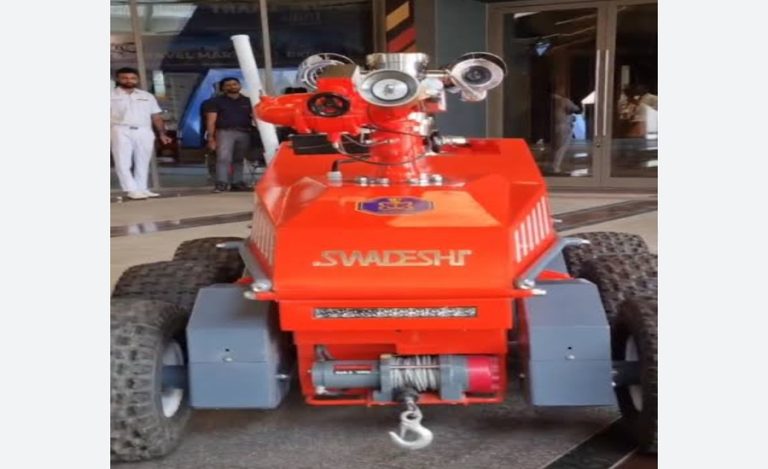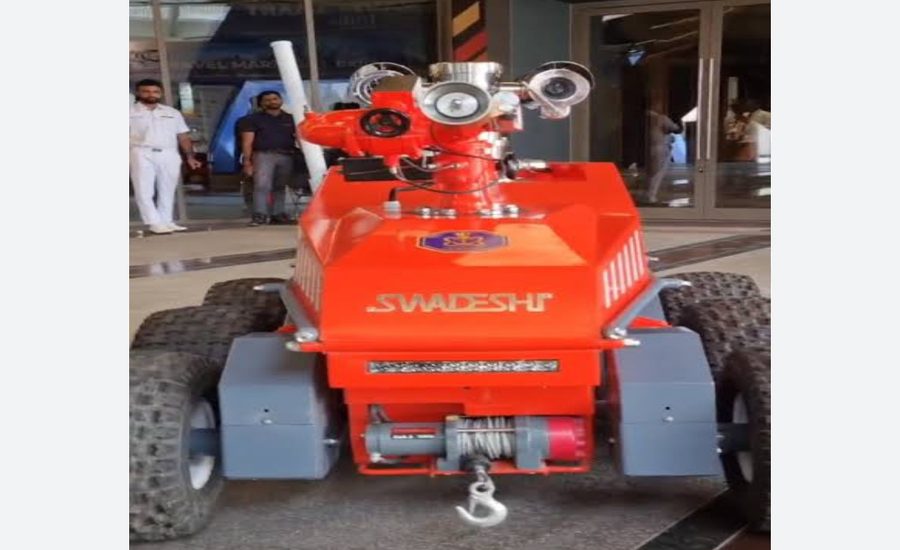
New Delhi: India has taken a big step towards self-reliance with the induction of indigenous firefighting robots in the Indian Air Force (IAF). These advanced machines are designed to handle dangerous fire situations without risking human lives.
The move supports the government’s Atmanirbhar Bharat mission and strengthens defence safety systems. The indigenous firefighting robots will be used in high-risk areas like airbases and fuel storage zones. This development not only improves emergency response but also reduces dependence on foreign technology.
What Are These Firefighting Robots
The newly inducted robots are unmanned machines specially designed to fight fires in dangerous environments.
Read also: Indian Army Shaurya Drone Squadrons Explained: Role, Features, Benefits And Future Impact
They can operate in places where humans cannot safely go, such as:
- Aircraft hangars
- Fuel depots
- Ammunition storage areas
These robots reduce the risk to firefighters and defence personnel during emergencies.
Key Features of Indigenous Firefighting Robots
1. Advanced Sensors and Smart Detection
- Detect heat, smoke, and flames in real time
- Use AI-based navigation to reach fire quickly
- Work even in zero visibility conditions
2. Powerful Fire Suppression System
- Equipped with high-pressure water cannons
- Use foam systems for fuel-based fires
- Can handle aviation fuel and chemical fires
3. Strong and Heat-Resistant Design
- Can withstand temperatures up to 1200°C
- Built for extreme and hazardous environments
4. Remote and Autonomous Operation
- Controlled remotely through secure wireless systems
- Can also move autonomously using AI pathfinding
These features make them highly effective in modern defence operations.
What is the Importance of Indigenous Firefighting Robots
Improved Safety
The robots protect human lives by entering dangerous zones first.
Faster Response Time
- Fire response time can reduce by up to 40%
- Helps save costly aircraft and equipment
Cost Efficiency
- Indigenous production reduces cost by nearly 60% compared to imports
- Saves money for other defence projects
Stronger Self-Reliance
This move supports India’s goal of reducing foreign dependency in defence technology.
Role in Atmanirbhar Bharat Mission
The induction of these robots shows India’s growing capability in defence manufacturing.
- Developed by Indian engineers and companies
- Supported by defence organisations and public-private partnerships
- Part of a larger push where over 75% of some defence procurements are now indigenous
This aligns with India’s long-term defence modernisation strategy.
Future Scope and Expansion
The firefighting robots are just the beginning. Future upgrades may include:
- Swarm technology (multiple robots working together)
- Use in chemical and nuclear emergencies
- Deployment in civilian disasters and industries
- Export opportunities to other countries
India is slowly becoming a global player in defence robotics.
Read also: Inside the Indian Army’s ‘Bhairav’ Force: How 100,000 Drone Warriors Are Transforming Modern Warfare