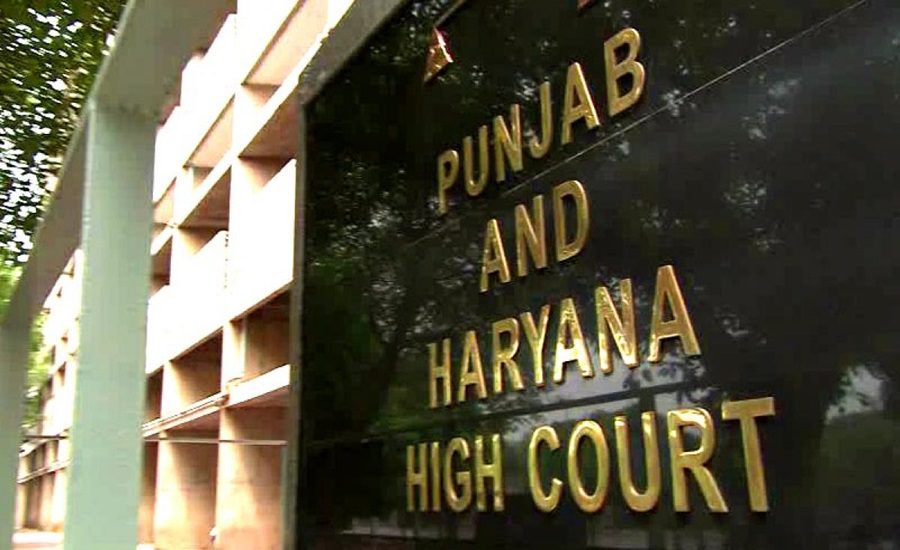
CHANDIGARH: In a landmark environmental order aimed at protecting the fragile ecology of Punjab, the Punjab and Haryana High Court has issued a total prohibition on tree cutting in the state of Punjab until further notice.
The bench, led by Chief Justice Sheel Nagu and Justice Sanjiv Berry, took the extraordinary step after noting that the state’s forest cover remains dangerously low, prompting judicial intervention to check what it said was institutional apathy towards ecological conservation.
What is the Background of Punjab Tree Cutting Prohibition Order
On December 24, 2025, the High Court passed an interim order in the Praneet Kaur v. State of Punjab and Others case, declaring that no tree of any species or age shall be cut in Punjab without prior permission from the Court until further orders are issued.
The decision followed a batch of public interest litigations (PILs) challenging widespread tree felling in Mohali (SAS Nagar) and other districts for infrastructure and development purposes.
The bench expressed strong displeasure at delays in execution of environmental safeguards, emphasising that the state government’s inaction had reached a level warranting drastic judicial measures.
Punjab Tree Cutting Prohibition Order: PILs Raise Alarm Over Infrastructure-Driven Tree Felling
Petitioners in the case, including Mohali resident Praneet Kaur, argued that authorities were cutting down hundreds of trees for construction of three major roundabouts and traffic rotaries in the SAS Nagar district.
Counsel for petitioners highlighted:
- The tender for cutting 251 mature trees near key junctions was issued with little environmental assessment.
- Authorities failed to comply with mandatory environmental appraisal mechanisms before authorising tree removal.
Another PIL challenged a proposed land swap involving protected forest land in Mohali, alleging it was impermissible under the Punjab Land Preservation Act (1900) and would result in irreversible ecological loss.
Reasons of Punjab Tree Cutting Prohibition Order
The High Court cited official data from the Union Ministry of Environment, Forest and Climate Change (MoEFCC) to underline the urgency of its intervention.
The latest information shows Punjab’s forest cover at just about 3.67% of its total geographical area — one of the lowest figures in the country, even trailing dry states like Rajasthan.
This percentage is well below the national average forest cover target of 33% recommended for ecological stability, underscoring how dire the situation has become in Punjab.
Ecologists and environmental groups have long pointed out that historical land use shifts — especially during the Green Revolution — led to widespread tree removal across Punjab’s fertile agricultural landscape, leaving the state with a much smaller forest and tree cover compared to other parts of India.
Major Observations in Punjab Tree Cutting Prohibition Order
The High Court strongly criticised institutional inertia and lack of robust environmental governance from state machinery. It noted that the state’s environmental regulatory mechanisms appeared insufficient to curb ecological harm caused by seemingly routine development projects.
Observing that conventional administrative processes had failed to safeguard Punjab’s green cover, the Court invoked constitutional principles, including:
- Article 21 — Right to life (which includes the right to a clean environment),
- Article 48A — Directive Principles urging protection of forests and wildlife, and
- Article 51A(g) — Fundamental duties related to environmental protection.
It also directed the state government to inform all relevant authorities immediately about the order, while the matter is listed for further hearing on January 19, 2026.