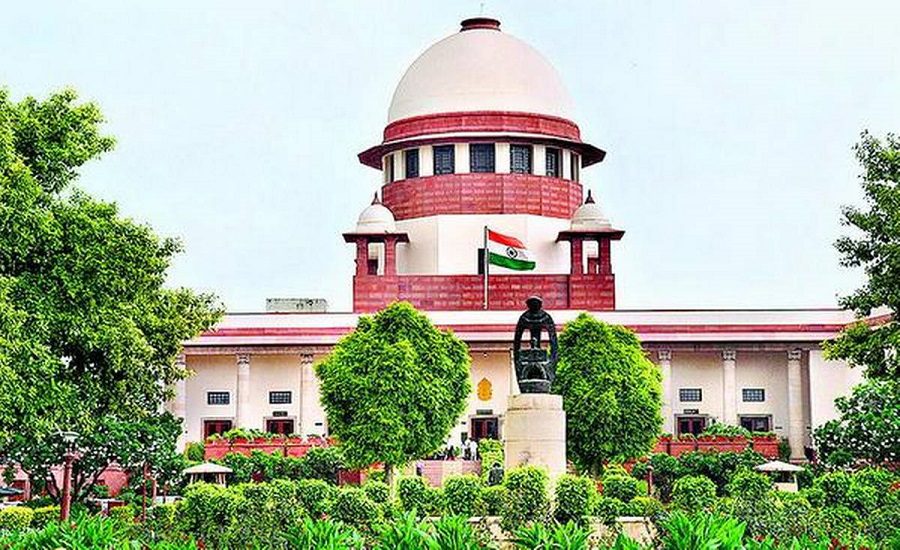
New Delhi, India — The Supreme Court of India has urged the central government to revisit the service rules of the Indian Coast Guard, especially the provisions prescribing different retirement ages for officers of varying ranks. The Court made this plea while staying the Delhi High Court’s order that had mandated a uniform retirement age of 60 for all Coast Guard personnel.
The primary focus of the Court’s direction is to assess whether the existing retirement policy, originally framed decades ago, aligns with the modern role and service conditions of the Coast Guard — one of India’s key maritime security forces.
Background of Coast Guard Retirement Age Review
Under the current Coast Guard (General) Rules, 1986, officers up to the rank of Commandant retire at 57 years, while officers above that rank retire at 60 years of age. This differential rule was recently challenged by retired officers arguing it violates the Constitution’s equality provisions.
Read also: From Overcrowded Jails to Open Prisons: Supreme Court’s Nationwide Reform Plan Explained
Last November, the Delhi High Court struck down the rule as unconstitutional, saying there was no rational basis for different retirement ages within the same force. It set a uniform retirement age of 60 for all officers, citing Articles 14 and 16 of the Constitution.
Supreme Court Reasoning on Coast Guard Retirement Age Review
A bench led by Chief Justice Surya Kant and Justice Joymalya Bagchi suspended the High Court’s judgment after hearing the Centre’s appeal. The Court noted that Coast Guard service conditions and operational requirements have evolved substantially since the rules were framed.
The Supreme Court asked the government to form an expert panel to review every aspect of the service conditions—from recruitment age to retirement age. The panel’s findings will be submitted before the Court in the next hearing.
Government & Legal Arguments
The Centre argued that Coast Guard duties involve strenuous sea-going and aviation tasks, requiring a younger workforce, similar to the Indian Navy. It warned that a blanket uniform retirement age could trigger similar legal claims across other armed forces.
However, the Supreme Court maintained that these matters, being central to policy and service conditions, must be evaluated carefully in the light of current operational realities.
Next Steps and Timeline
The matter has been listed for further hearing in April 2026. Meanwhile, the expert committee’s formation remains a focus point, as the Court wants comprehensive suggestions based on modern service requirements, career progression needs, and retirement norms across forces.