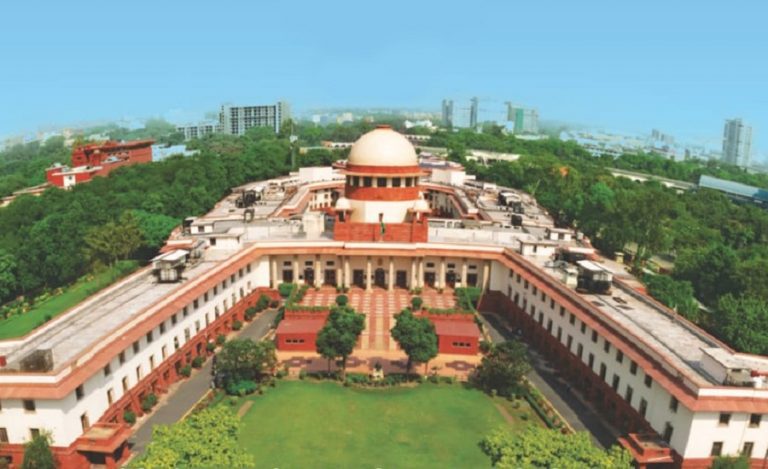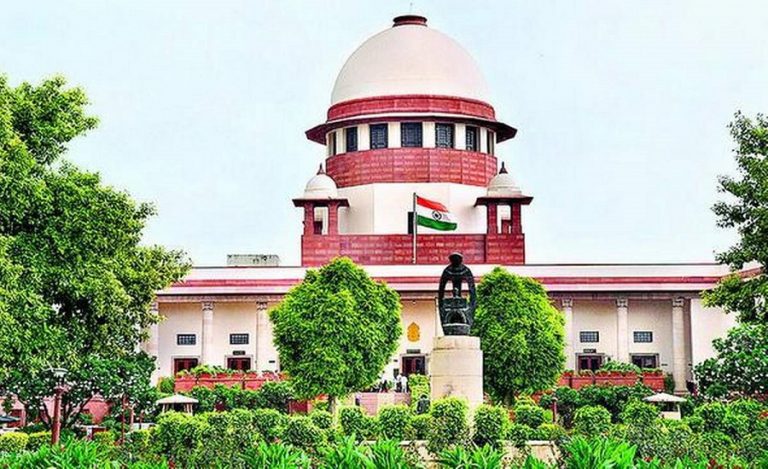
New Delhi: The supreme Court has directed the Union Government, States and Union Territories to connect important databases, including VAHAN, SARATHI, the Electronic Detailed Accident Report (eDAR) portal and the Insurance Information Bureau (IIB).
The move is intended to make it easier to verify accident records, vehicle details and previous insurance claims while helping genuine accident victims receive fair compensation.
What is the Reason of Supreme Court Digital Portal Integration Ruling
The Supreme Court issued these directions while hearing The Oriental Insurance Company Limited v. Tuni Pati & Others, a case involving concerns about potentially fraudulent motor accident compensation claims. The proceedings raised questions about whether a vehicle had genuinely been involved in an accident for which compensation was claimed.
Read also: Supreme Court Directs Priority Hearing For Pension Cases After 10-Year Delay Shock
The Court found that better coordination between government databases, police authorities and insurance companies could help verify such claims more effectively. The aim is not to deny compensation to genuine victims. Instead, the system should help identify false claims while protecting the rights of people who are legally entitled to compensation.
Which Digital Portals Must Be Connected
The Court directed the concerned authorities to improve the exchange of information among four important digital platforms.
1. VAHAN Portal
VAHAN is a government database that stores vehicle-related information, including registration details. Linking it with other databases can help investigators check whether a vehicle’s identity and records match the details provided in an accident claim.
2. SARATHI Portal
SARATHI is the government’s digital platform for driving licences and related services. Its integration with other systems can help authorities cross-check relevant driving licence information when investigating road accidents.
3. Electronic Detailed Accident Report (eDAR)
The eDAR portal supports the digital recording and sharing of information related to road accidents and motor accident compensation proceedings. The Court noted that the portal had been established by the National Informatics Centre, but only a few States had started uploading data. It directed all States to ensure that relevant information was uploaded without delay.
4. Insurance Information Bureau (IIB)
The Insurance Information Bureau maintains insurance-related information and supports data sharing within the insurance sector. Connecting its records with accident and vehicle databases can help insurers and investigating agencies check previous claims and identify possible inconsistencies. Together, these systems are expected to make accident claim verification more efficient.
Supreme Court Seeks Faster Accident Alerts And Data Sharing
The Court also directed that the integration should extend to the Hit-and-Run and PM-RAHAT schemes. This is important because accident information needs to reach the relevant authorities and insurers quickly. Better data sharing can support early alerts and help reduce delays caused by disconnected records.
The authorities were directed to complete the integration exercise within four weeks from the relevant order and place a compliance report before the Court by way of affidavits.
Supreme Court Orders States To Upload Accident Data Without Delay
The Court expressed concern that the eDAR portal was not being used consistently across the country.
Although the platform had already been established, only a limited number of States had started uploading the required information. The Court therefore directed every State to ensure that relevant accident data was uploaded promptly. This step is important because incomplete records can make it harder to verify accident claims across different States and agencies.
Supreme Court Digital Portal Integration Ruling: Court Takes Action Against Suspected Fake Insurance Claims
The digital integration order forms part of the Court’s wider effort to address suspected fraud in motor accident compensation cases. In earlier proceedings in the same matter, the Court examined allegations that a vehicle had been linked to multiple accident claims. It directed an investigation to establish whether the vehicle was genuinely involved in the accident in question.
In its subsequent directions, the Court required States and Union Territories to establish dedicated Special Investigation Teams (SITs) to examine complaints of potentially fraudulent insurance claims. Insurance companies were also directed to forward suspicious cases to the relevant SITs rather than selectively referring to only some cases. These directions aim to improve accountability and ensure that allegations of fraud are properly investigated.
Contempt Notices To Insurance Company Officials
The Court also expressed concern about insurance companies that failed to comply with earlier directions or did not appear before it when required.
In the proceedings, the Court issued contempt notices to certain company officials and sought explanations for non-compliance. The Court rejected an explanation in the case of Navi General Insurance Limited, observing that the lapse had been described as a genuine error without notice being issued to the persons concerned.
The Court directed the company’s Managing Director and Chief Executive Officer, Vaibhav Goyal, to file a personal affidavit explaining why appropriate action should not be taken. It also issued notices concerning other insurance companies. These notices are part of the ongoing proceedings. They should not be treated as a final finding that every company or official involved committed fraud.
How Will The Supreme Court Digital Portal Integration Ruling Help Accident Victims
The integration of digital portals could offer several practical benefits.
- Faster Verification: Authorities may be able to verify vehicle and accident details more quickly.
- Better Fraud Detection: Matching information across databases can help identify suspicious or inconsistent claims.
- Improved Coordination: Police, transport authorities and insurance companies can access relevant information more efficiently.
- Better Data Accuracy: Sharing records can reduce errors and gaps in accident-related information.
- Protection For Genuine Claimants: More reliable verification can help ensure that legitimate compensation claims are assessed on accurate facts.
The actual benefits will depend on how effectively the authorities implement the directions and keep their databases updated.
FAQs
The portals and systems named in the directions include VAHAN, SARATHI, the Electronic Detailed Accident Report (eDAR) portal and the Insurance Information Bureau (IIB). The integration is also intended to extend to Hit-and-Run and PM-RAHAT schemes.
The Supreme Court ordered the integration to improve the verification of accident records, vehicle details and insurance claim histories. The aim is to identify potentially fraudulent claims and help genuine victims receive fair compensation.
Digital integration can help authorities verify accident details faster, reduce information gaps and identify suspicious claims. Better coordination may also support faster claim processing, while ensuring that genuine claims are assessed on accurate records.