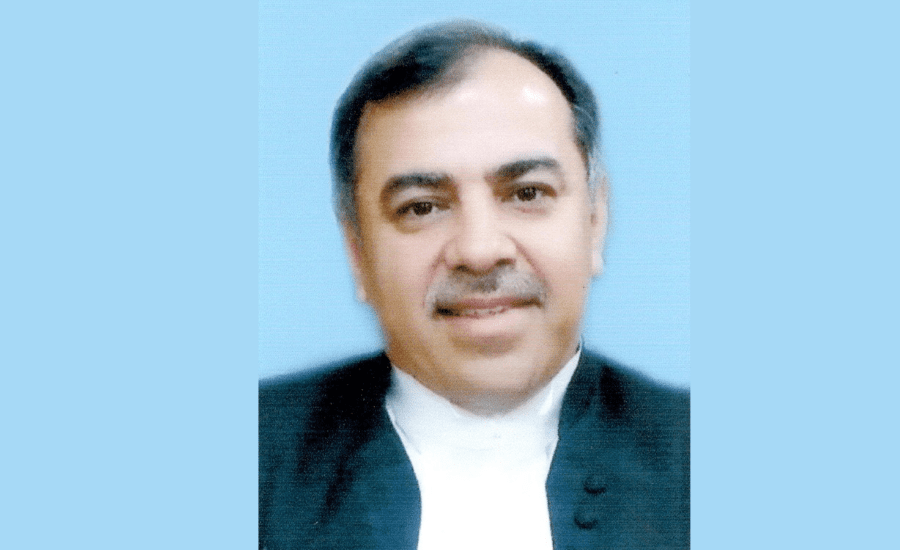
New Delhi/Prayagraj: In a rare and candid judicial response, Justice Pankaj Bhatia of the Allahabad High Court has formally requested that he no longer be assigned bail matters. This follows sharp criticism from the Supreme Court of India, which deemed one of his bail orders “most shocking and disappointing”.
The decision has sparked discussion around judicial morale and the balance between appellate supervision and judicial independence.
Background of the Justice Pankaj Bhatia Bail Roster Removal
Earlier this week, a bench of the Supreme Court of India, led by Justices JB Pardiwala and KV Viswanathan, reviewed a bail order passed by the Allahabad High Court in a dowry death case.
The High Court had granted bail to an accused husband by observing only that:
- The accused had spent significant time in custody, and
- He had no prior criminal history.
However, the Supreme Court found this reasoning inadequate and remarked that the order lacked meaningful judicial analysis, especially considering the serious nature of the crime.
The Supreme Court said it “failed to understand on plain reading what the High Court was trying to convey”, highlighting the absence of any reasoning on crucial bail factors.
Justice Bhatia’s Response
In an unusual move, Justice Pankaj Bhatia, who presided over the original bail order, issued a two-page judicial order stating that:
- The Supreme Court’s observations had a “huge demoralising and chilling effect” on him; and
- He did not wish to be assigned the bail roster in future by the Allahabad High Court’s Chief Justice.
Justice Bhatia noted that while it is common for higher courts to set aside orders, the tone of the Supreme Court’s comments in this case was particularly disheartening. He also acknowledged that he had seen media reports about the criticism.
Importance of Justice Pankaj Bhatia Bail Roster Removal Request
In India’s judicial system, all higher court rulings are open to appeal, including bail decisions. But bail orders — especially in serious offences — are expected to engage with established legal principles like:
- Nature and gravity of the offense,
- Likelihood of the accused evading justice, and
- Impact on victims and society.
When higher courts intervene, it is usually to ensure consistency in applying law. However, Justice Bhatia’s response raises questions about how such interventions may affect the morale of trial-level judges.
Broader Context of Justice Pankaj Bhatia Bail Roster Removal Request
This is not the first time the Supreme Court has rebuked court orders. In recent years, India’s top judiciary has emphasised that clarity and reasoned judgment are essential to maintain public confidence in the rule of law.
At the same time, judicial leaders, including the Chief Justice of India, have highlighted that judges must be prepared for critical review and continuous learning — acknowledging that appellate correction is part of judicial growth.