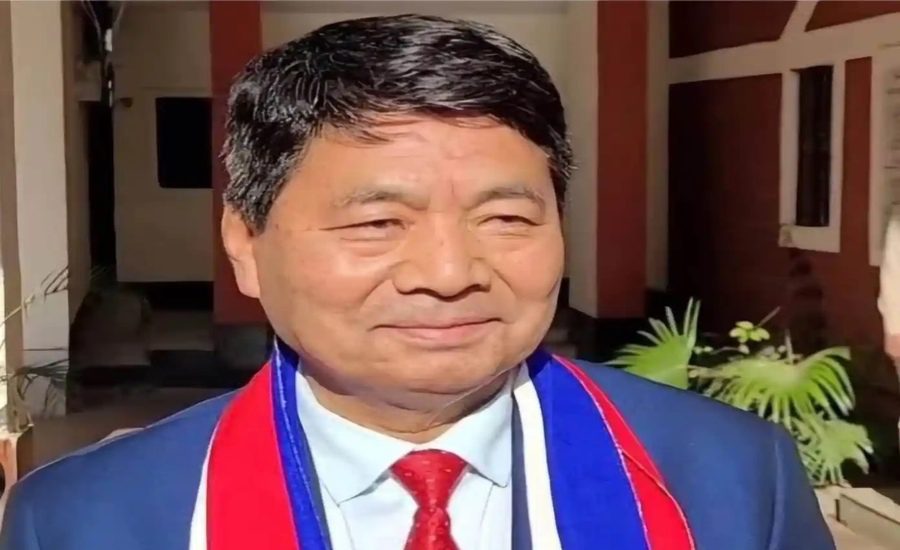
Imphal/New Delhi: In a detailed petition submitted to the Governor of Manipur on April 4, 2026, former Principal Chief Commissioner of Income Tax K Timothy Zimik, a retired IRS officer of 1985 batch, has raised a series of concerns regarding the continuing ethnic tensions in the state, illegal immigration, internal security, distribution of resources in hill districts, and recent incidents affecting Naga-inhabited areas.
The memorandum, copies of which were also sent to the Chief Minister of Manipur and the Union Home Minister, focuses particularly on what Zimik described as the “root cause of the ethnic crisis” and calls for immediate administrative, legal and security interventions.
Key Details of K Timothy Zimik Manipur Petition
In his representation, Zimik argued that continuous illegal immigration from Myanmar into Manipur has been a major factor contributing to ethnic tensions for decades.
According to the petition, demographic changes in the hill districts and the establishment of new settlements have intensified disputes over land and identity. He claimed that a large number of new villages had emerged between 2006 and 2024, leading to concerns among indigenous communities regarding land ownership and administrative control.
Zimik also referred to previous public statements by constitutional and administrative authorities, including speeches delivered in recent years, to support his arguments on demographic and governance concerns.
Concerns Raised Over Drug Trafficking, Arms Smuggling and Border Security
The former bureaucrat also highlighted concerns over alleged narcotics trafficking, cross-border arms movement and poppy cultivation in certain parts of the state.
He noted that Manipur shares a 398-km porous international border with Myanmar and argued that this has made the state vulnerable to illicit trafficking routes linked to the so-called Golden Triangle region, which includes Myanmar, Laos and Thailand.
He alleged that narcotics-related networks have contributed to insecurity in the state by providing financial support to armed groups operating in conflict-prone areas.
Allegations Regarding Attacks on Naga Villages and Sinakeithei Incident
A major section of the petition focused on security concerns in Naga-inhabited areas, particularly incidents affecting villages such as Sinakeithei.
Zimik referred to the killing of two villagers in August 2021 and alleged repeated armed intimidation against local residents. He stated that recent tensions have created fear among villagers and urged authorities to ensure stronger security deployment in vulnerable areas.
He specifically called for security forces to remove armed elements and fortifications from around Sinakeithei village so that normal life and agricultural activity can resume.
At the same time, he acknowledged the role played by security forces including Border Security Force, Manipur Rifles and the 4 Mahar Regiment in protecting civilians inside the village limits.
Criticism of Suspension of Operations Pact
The memorandum also questioned the effectiveness of the existing Suspension of Operations (SoO) agreement with armed groups.
Zimik argued that the current structure of the SoO mechanism requires review and alleged that weak enforcement has reduced public confidence in conflict-management arrangements. He urged the Government of India to reconsider the framework if long-term peace is to be restored in Manipur.
Demand for NRC and Detection of Illegal Immigrants
One of the strongest demands in the petition is the immediate conduct of a National Register of Citizens (NRC) exercise in Manipur.
Zimik proposed 1951 as the base year for determining citizenship records and argued that such an exercise is necessary to identify illegal immigrants and address demographic concerns.
He also referred to multiple legal provisions, including immigration and foreigner-related laws, stating that stronger enforcement mechanisms are needed to detect and deport undocumented migrants.
Separate Budget for Hill Areas Proposed
Apart from security and immigration issues, the former senior tax official also focused on governance and fiscal equity.
He argued that unequal distribution of resources between the Imphal Valley and hill districts remains a significant contributor to ethnic dissatisfaction.
To address this, he proposed a separate budgetary framework for hill areas and recommended that the Governor use powers available under Article 371C of the Constitution to send a detailed report to the President of India for administrative reforms.
Objection to Shirui Lily Festival Amid Security Situation
Zimik also objected to the organisation of the Shirui Lily Festival in 2026 under the present security environment.
He argued that given continuing tensions in parts of Ukhrul district and nearby areas, state resources should instead be directed toward village development, infrastructure improvement and restoration of normalcy in the region.
The festival, usually associated with tourism and cultural identity in Ukhrul, has often drawn visitors from across the Northeast.
K Timothy Zimik Manipur Petition: Seven Key Demands Submitted to Governor
In the concluding part of the memorandum, Zimik placed seven major demands before the Governor:
1. Security Action in Sinakeithei
He demanded removal of armed groups from Sinakeithei territorial areas and full police deployment for civilian protection.
2. Prevent Illegal Immigration
He urged immediate border control measures and enforcement of immigration laws against illegal entrants from Myanmar.
3. End Support to Armed Groups
He called for an end to any perceived protection of armed militant networks.
4. Review and Abrogate SoO if Necessary
He argued that peace efforts require stronger accountability mechanisms.
5. Conduct NRC in Manipur
He demanded preparation of a verified citizenship register using 1951 as the base year.
6. Separate Budget for Hill Areas
He sought a constitutional mechanism for equitable fiscal allocation.
7. Ensure Safe Movement on Roads
He urged active enforcement of secure travel across national highways, state highways and inter-village roads.
Political and Administrative Sensitivity Remains High
The petition comes at a time when Manipur continues to witness fragile inter-community relations and periodic tensions across hill and valley regions.
Given the sensitivity of the issues raised, official responses from Raj Bhavan or the state government are awaited.
Observers note that such petitions reflect the continuing demand from various civil and community voices for long-term administrative, constitutional and security solutions in the state.
About Kachui Timothy Zimik
Mr Zimik is a retired Indian Revenue Service officer of the 1985 batch who completed a distinguished 36-year career in the Income Tax Department, retiring in 2022 as Principal Chief Commissioner of Income Tax—one of the department’s highest positions. During his service under the Ministry of Finance, he held several senior administrative postings in major cities including Delhi, Mumbai, and Kolkata. Before joining the civil services, he was a research scholar at Jawaharlal Nehru University and also pursued advanced management programmes at Indian Institute of Management Bangalore, along with executive training in the United States and Canada.
After retirement, Zimik entered active politics and contested the 2024 Lok Sabha elections as the Naga People’s Front candidate from Outer Manipur, backed by the NDA alliance. Beyond electoral politics, he has emerged as a vocal policy advocate, submitting representations to constitutional authorities seeking a separate budget for Manipur’s hill areas, arguing that historical resource imbalance has contributed to regional instability. Born on January 14, 1962, in Lungpha, he belongs to Ukhrul district and has also held important leadership roles in Tangkhul community organisations before entering public life.
Read also: An IRS Officer’s Weekend Mission That Changed Gongloor