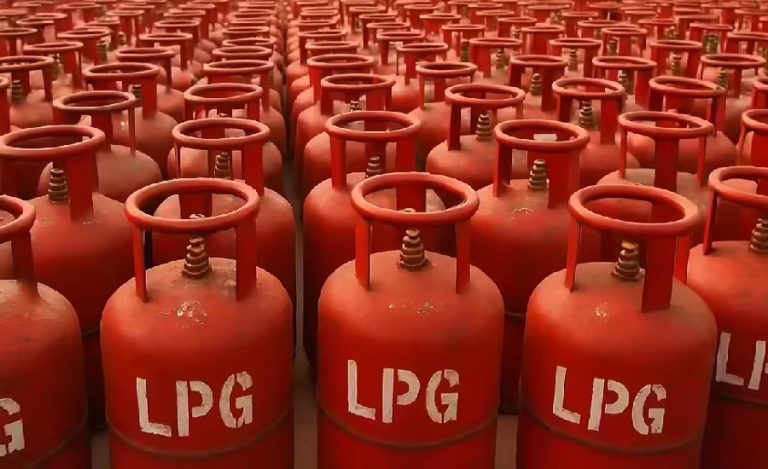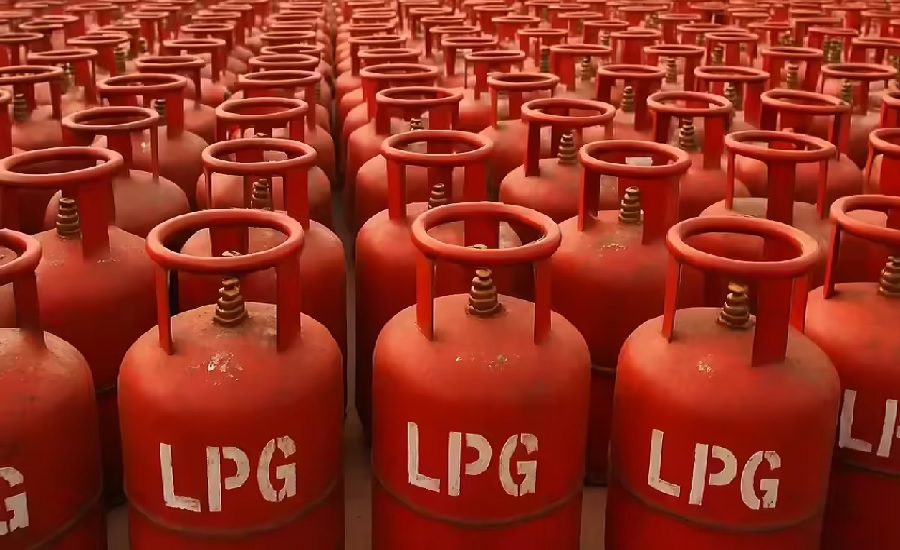
New Delhi: The Parliament of India was informed that domestic LPG pricing in India is determined through a complex balancing mechanism involving global benchmark prices, exchange-rate movements, logistics costs and government subsidy intervention, even as international fuel prices continue to rise sharply.
Minister of State for Petroleum and Natural Gas Suresh Gopi, in a written reply, explained that although India imports nearly 60 per cent of its LPG requirement and remains highly exposed to international price volatility, the government has absorbed a large part of the burden through direct fiscal support and targeted subsidies to protect household consumers.
Global Benchmark Drives LPG Base Price in India
India’s LPG pricing begins with international benchmark rates, primarily linked to the Saudi Contract Price, which serves as the principal global reference for imported LPG cargoes.
According to data shared in Parliament:
- Average Saudi CP stood at $385 per metric tonne in July 2023
- It increased to $542 per metric tonne in February 2026
This represents an increase of approximately 41 per cent over the period.
Since India imports nearly 60 per cent of its LPG demand, such international movements directly affect domestic cost structures.
Exchange Rate Also Plays a Critical Role
The government said LPG pricing is not determined only by global benchmark rates.
Another important factor is the rupee-dollar exchange rate because LPG imports are paid in US dollars.
Any depreciation in the Indian rupee increases import costs even if benchmark fuel prices remain stable.
Thus, the pricing formula effectively combines:
- International benchmark price
- Currency exchange rate
- Ocean freight
- Inland transportation
- Bottling costs
- Distribution margins
- Marketing margins
Domestic LPG Prices Reduced Despite Global Increase
Under ordinary market conditions, a 41 per cent increase in Saudi CP would have caused a significant increase in domestic cylinder prices.
However, government intervention altered the final retail outcome.
In Delhi:
- Domestic 14.2 kg LPG cylinder price was ₹1,103 in August 2023
- Price reduced to ₹913 in March 2026
This reflects a decline of nearly 17 per cent despite rising global costs.
PMUY Beneficiaries Receive Deeper Price Protection
For beneficiaries under Pradhan Mantri Ujjwala Yojana, the reduction has been sharper because of direct subsidy support.
Effective cylinder price for PMUY households:
- ₹903 in August 2023
- ₹613 in March 2026
This means a decline of approximately 32 per cent.
The government currently provides a subsidy of ₹300 per cylinder for PMUY beneficiaries.
At present:
- Retail price = ₹913
- Subsidy = ₹300
• Effective consumer price = ₹613
Government Compensation to Oil Marketing Companies
To maintain lower household LPG prices, the government has compensated oil marketing companies for under-recoveries arising from below-market sales.
Financial support provided includes:
- ₹22,000 crore in FY 2022–23
- ₹30,000 crore approved for FY 2025–26
This compensation helps state-run oil marketing companies absorb losses without passing full international cost increases to consumers.
Commercial LPG Remains Fully Market-Linked
Unlike domestic LPG, commercial cylinders are priced entirely on market principles.
Oil marketing companies revise commercial LPG prices according to global benchmarks and cost trends.
In Delhi, price of a 19 kg commercial LPG cylinder moved upward steadily:
- ₹1,691.50 on January 1, 2026
- ₹1,883.00 on March 7, 2026
This reflects direct transmission of global price movements to commercial users.
Core Mathematics Behind LPG Pricing
The government explained that LPG pricing in India operates through two parallel principles:
Cost Push Factors
- Saudi CP increase
- Dollar appreciation
- Freight escalation
- Supply chain cost increase
- Price Cushion Factors
- Budgetary subsidy
- OMC compensation
- Controlled domestic pricing
This balancing model ensures that household consumers are protected while commercial consumption remains market-driven.
Policy Objective: Shield Households from Global Volatility
Officials said the pricing strategy is designed to ensure affordability for domestic consumers, especially economically weaker households, even during periods of global fuel stress.
The government’s intervention reflects a targeted subsidy approach where welfare support is concentrated on vulnerable consumers while allowing commercial pricing to remain aligned with international energy markets.
Read also: NHAI Exceeds FY 2025–26 Highway Construction Target with 5,313 km, Boosts Infrastructure Growth