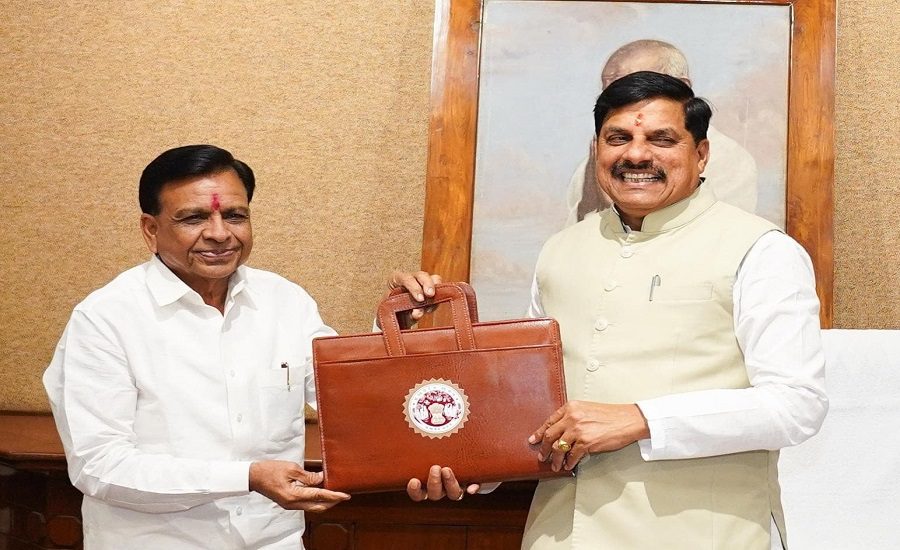
Bhopal: Madhya Pradesh has projected a major expansion in its economy for 2026–27, with the state’s Gross State Domestic Product expected to rise to ₹18.48 lakh crore under the leadership of Chief Minister Mohan Yadav. The state government’s ₹4,38,317 crore budget places strong emphasis on infrastructure expansion, agriculture, women’s welfare and long-term social development, while maintaining a revenue surplus position.
The latest fiscal estimates indicate that Madhya Pradesh’s economy is set to accelerate beyond the ₹16.48 lakh crore GSDP recorded in 2025–26, reflecting strong budgetary support for growth sectors and capital investment.
₹4.38 Lakh Crore Budget Anchored on Development and Fiscal Stability
The 2026–27 budget proposes total expenditure of ₹4,38,317 crore, with development, infrastructure and social protection forming its central pillars.
According to state financial estimates:
• Revenue surplus is projected at ₹44 crore
• Capital expenditure is estimated at ₹80,266 crore
• Capital expenditure equals 4.80% of GSDP
The capital spending is expected to strengthen:
• Industrial development
• Urban infrastructure
• Rural connectivity
• Public service delivery
Officials believe the investment push will generate fresh momentum across multiple sectors of the state economy.
Read also: CM Dr. Mohan Yadav Invites Rajasthan Investors to Explore Industrial Opportunities in Madhya Pradesh
Major Departmental Allocations See Sharp Increase
To accelerate implementation across departments, the government has significantly increased allocations in key sectors.
Department-wise Budget Increase
• Rural Development Department: 37% increase
• Urban Development and Housing: 16% increase
• Women and Child Development: 26% increase
• Revenue Department: 43% increase
• School Education Department: 11% increase
The enhanced spending is aimed at strengthening both physical infrastructure and welfare delivery across rural and urban Madhya Pradesh.
Agriculture and Farmers Receive Highest Priority
Agriculture remains one of the biggest focus areas in the new budget.
The government has allocated ₹88,910 crore for agriculture and allied sectors.
Including non-budgetary resources, total available funding for agriculture is expected to reach approximately ₹1.15 lakh crore.
The allocation is expected to support:
• Farmer income enhancement
• Irrigation strengthening
• Agricultural modernisation
• Allied rural activities
Special Focus on Farmer Welfare Schemes
The government has also allocated:
• ₹5,500 crore for Mukhyamantri Kisan Kalyan Yojana
Officials said the allocation aims to provide continued direct support to farmers and improve rural purchasing power.
Women Empowerment Gets Strong Fiscal Backing
Women-centric welfare schemes continue to receive major support in the budget.
Key Allocations for Women
• ₹23,800 crore for Ladli Behna Yojana
• ₹10,400 crore for VBG Ram Ji Yojana
The Ladli Behna Yojana remains one of the flagship welfare initiatives of the state government and continues to be among the largest social spending heads.
Health Sector Allocation Crosses ₹23,700 Crore
The state has allocated ₹23,747 crore for healthcare in 2026–27.
Additional health-linked spending includes:
• Nearly ₹4,600 crore for National Health Mission
The allocation is aimed at improving:
• Public hospitals
• Health infrastructure
• Rural healthcare delivery
• Maternal and child health services
₹3,000 Crore for Simhastha Preparations
For preparations related to the upcoming Simhastha, the government has proposed approximately ₹3,000 crore.
The spending is expected to support:
• Urban infrastructure in pilgrimage areas
• Transport facilities
• Civic services
• Public amenities
Social Justice Spending: Large Provision for ST and SC Communities
A major portion of the budget has been reserved for social and economic upliftment programmes.
Social Sector Allocation
• ₹1,83,708 crore total provision
Out of this:
• 26% earmarked for Scheduled Tribes (ST)
• 17% earmarked for Scheduled Castes (SC)
Officials said these allocations will support targeted development interventions in tribal and socially disadvantaged regions.
Long-Term Development Schemes Announced
The budget also introduces long-horizon development commitments.
New Long-Term Initiatives
• ₹5,000 crore under Dwarka Yojana over next three years
• ₹3,800 crore for SVAMITVA Yojana
• ₹700 crore for Yashoda Milk Supply Scheme
The Yashoda Milk Supply Scheme is aimed at strengthening:
• Dairy infrastructure
• Livestock-based livelihoods
• Rural household income
Revenue and Capital Receipts Estimates
For 2026–27, fiscal projections indicate:
• Revenue receipts: ₹3,08,703 crore
• Capital receipts: ₹80,694 crore
The state government expects these receipts to support both welfare commitments and infrastructure expansion without compromising fiscal discipline.
Balanced Growth Strategy for 2026–27
Officials said the budget follows a dual strategy:
• Accelerating growth through capital creation
• Expanding welfare through targeted social spending
The state expects this approach to help sustain high economic growth while improving social indicators across sectors.