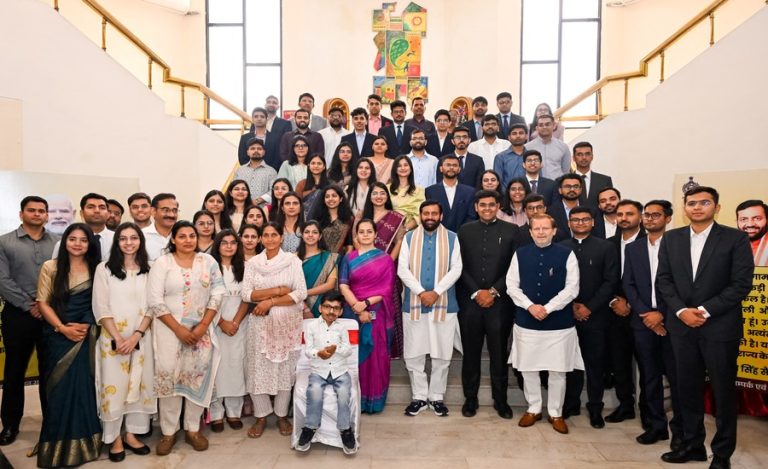
Sehore, MP: Madhya Pradesh has emerged as a key driver in India’s push for self-reliance in pulse production, with Chief Minister Dr. Mohan Yadav reaffirming the state government’s full cooperation with the Centre under the National Pulses Self-Reliance Mission. Addressing a high-level National Consultation and Strategy Conference in Sehore, Dr. Yadav said pulses are the largest source of protein in the Indian diet and enhancing their production is both a nutritional and economic necessity.
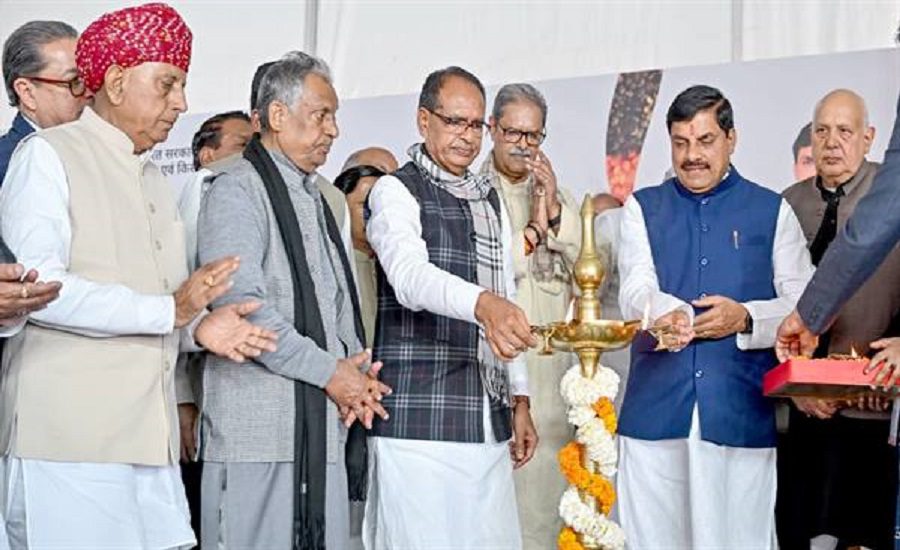
The conference was inaugurated jointly by Chief Minister Dr. Mohan Yadav and Union Minister for Agriculture and Farmers’ Welfare Shri Shivraj Singh Chouhan, marking a major step towards strengthening India’s pulse ecosystem.
National Pulses Mission Portal Launched, ₹354 Crore Approved for MP
During the event, the National Pulses Self-Reliance Mission portal was officially launched, enabling better coordination, monitoring, and implementation of pulse-related schemes across states. Madhya Pradesh received a budget allocation of ₹354 crore under the mission, with sanction letters handed over to state agriculture ministers present at the conference.
Union Agriculture Ministry officials confirmed that the total national allocation for the mission stands at ₹11,440 crore, underscoring the Centre’s commitment to reducing pulse imports and increasing domestic output.
Target: 350 Lakh Tonnes of Pulses by 2030–31
Chief Minister Dr. Yadav said the mission aims to raise pulse production to 350 lakh tonnes by 2030–31, reduce dependency on imports, and significantly enhance farmers’ income. He noted that Madhya Pradesh, already the largest pulse-producing state in India, is well-positioned to gain maximum benefit from the initiative.
“Under Prime Minister Narendra Modi’s leadership, the government is standing with farmers from seed to market. Better seeds, modern storage, scientific farming, and assured marketing will be ensured under this mission,” Dr. Yadav said.
ICARDA Infrastructure Inaugurated in Sehore
A major highlight of the event was the inauguration of ICARDA’s newly constructed administrative building, training centre, and advanced plant tissue culture laboratory at Sehore. The facilities are expected to play a crucial role in developing high-yielding and disease-resistant pulse varieties.
Dr. Yadav described the strengthening of international research institutions like ICARDA as a matter of pride for Madhya Pradesh, adding that the centre would connect farmers with global agricultural expertise and modern scientific practices.
Irrigation Expansion and River Linking Projects to Boost Agriculture
Highlighting irrigation reforms, the Chief Minister said that the state’s irrigated area has increased by 44 lakh hectares since the current government took office. He said projects like the Ken–Betwa National River Linking Project and the Parvati–Kalisindh–Chambal (PKC) River Linking Project will further accelerate agricultural growth.
The state has set a long-term goal of expanding irrigated land to 100 lakh hectares, ensuring sustainable water availability for farmers.
Union Agriculture Minister: Self-Reliance in Pulses Is a National Priority
Union Agriculture Minister Shri Shivraj Singh Chouhan stressed that India cannot afford to depend on imports for pulses, especially when production of several varieties has declined nationally.
“Madhya Pradesh continues to lead in pulse production. Farmers must diversify beyond wheat, soybean, and paddy and focus on chickpeas, lentils, black gram, and pigeon peas,” he said.
He announced that the Centre will procure pulses at assured prices –
- Tur (Pigeon Pea): ₹8000 per quintal
- Urad (Black Gram): ₹7800 per quintal
- Chana (Chickpea): ₹5875 per quintal
- Masoor (Lentil): ₹7000 per quintal
The Centre will purchase 100 percent of pulse produce, ensuring income security for farmers.
Pulse Clusters, Seed Villages and Processing Units Planned
Under the mission, the government will establish pulse clusters, seed villages, and seed hubs with ICARDA’s support. Progressive farmers producing pulses on one hectare will receive an incentive of ₹10,000.
To strengthen value addition, the Centre plans to set up 1,000 pulse mills nationwide, including 55 mills in Madhya Pradesh. Entrepreneurs setting up pulse mills will be eligible for grants of up to ₹25 lakh.
Technology, Research and Farmer Training at the Core
ICAR Director General Dr. M.L. Jat said average pulse productivity in India stands at 926 kg per hectare, while Madhya Pradesh averages 1,200 kg per hectare. Adopting MP’s practices nationwide could raise production by 8 million tonnes, enabling full self-sufficiency.
ICARDA Director General Ali Abur Saba noted that ICARDA has developed 41 new pulse varieties, and India’s leadership in pulse consumption makes it a global focal point for innovation.
Farmers’ Welfare Year and Broader Participation
Madhya Pradesh Agriculture Minister Shri Edal Singh Kanshana reiterated the state’s commitment to farmer welfare, noting that 2026 has been declared Farmers’ Welfare Year. He emphasized the need for technology-driven farming practices.
The event also featured –
- Release of ICAR and ICARDA publications
- Launch of the Pulse Mission portal
- Agricultural development exhibition
- Tree plantation at ICARDA campus
- ‘One Product – Best Product’ showcase from MP districts
Wide National Participation
The conference saw participation from agriculture ministers and senior officials from multiple states, including Odisha, Uttar Pradesh, Haryana, Gujarat, Chhattisgarh, Maharashtra, Rajasthan, and Bihar, along with agricultural scientists, experts, progressive farmers, and representatives from national and international institutions.