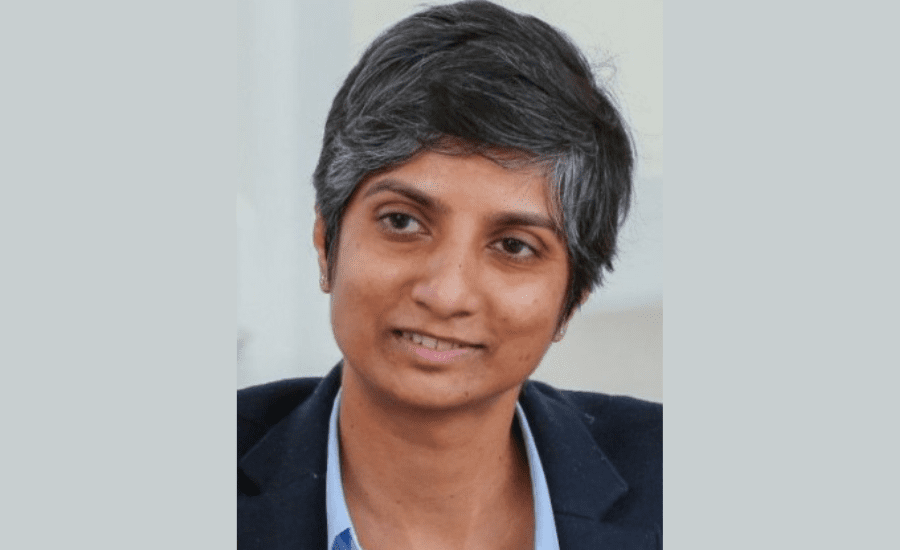
New Delhi: Menaka Guruswamy Rajya Sabha election has created history in Indian politics. Senior Supreme Court advocate Menaka Guruswamy has been elected to the Rajya Sabha, becoming India’s first openly queer Member of Parliament (MP). The historic moment marks a major step forward for representation and inclusivity in the country’s democratic institutions.
Nominated by the Trinamool Congress (TMC) from West Bengal, Guruswamy’s entry into Parliament highlights the growing visibility of LGBTQ+ voices in public life. Known globally for her role in the landmark Section 377 case, which decriminalised homosexuality in India in 2018, her election is being seen as both a political milestone and a symbol of social change.
Details of Menaka Guruswamy Rajya Sabha Election
The election of Menaka Guruswamy to the Rajya Sabha marks a historic first for India’s Parliament. She is the first person openly identifying as LGBTQ+ to serve as a national-level Member of Parliament in India.
Her election reflects a significant shift in India’s democratic institutions toward greater diversity and representation. For many activists and observers, this moment is seen as a major step in the long journey for equal rights and political visibility for the LGBTQ+ community in India.
Political analysts say the development also sends a strong message that Indian politics is gradually opening up to voices from diverse social backgrounds.
TMC’s Nomination and Rajya Sabha Elections
The All India Trinamool Congress (AITC) announced Menaka Guruswamy as one of its candidates for the Rajya Sabha elections scheduled on March 16. The party also nominated other prominent figures including former Bengal DGP Rajeev Kumar, actor Koel Mallick, and politician Babul Supriyo.
Given the strong majority of the TMC in the West Bengal Legislative Assembly, her victory was widely expected. Political observers described the nomination as a strategic and symbolic decision that highlights the party’s progressive stance on diversity and inclusion.
Who Is Menaka Guruswamy?
Menaka Guruswamy is a renowned constitutional lawyer and senior advocate at the Supreme Court of India. Over the years, she has built a strong reputation for working on important constitutional and human rights cases.
Key Highlights of Her Career
- Supreme Court Senior Advocate specialising in constitutional law and human rights.
- Played a major role in the 2018 Supreme Court judgment that decriminalised homosexuality by reading down Section 377 of the IPC.
- Worked on several landmark cases involving constitutional rights and governance reforms.
- Served as a legal advisor to international organisations including UNICEF and the United Nations Development Fund.
- Recognised globally for her work in constitutional law and social justice.
Academic Background and Global Recognition
Menaka Guruswamy also has an impressive academic record and international recognition.
- Educated at the National Law School of India University, Oxford University, and Harvard Law School.
- A Rhodes Scholar at Oxford University, one of the most prestigious academic scholarships in the world.
- Her portrait was unveiled at Rhodes House, Oxford, honouring her contributions to public life.
- Named among the Top 100 Global Thinkers by Foreign Policy magazine in 2019.
She has also taught or served as visiting faculty at leading institutions such as Yale Law School, New York University School of Law, and the University of Toronto Faculty of Law.
Role of Menaka Guruswamy in the Landmark Section 377 Case
Menaka Guruswamy gained nationwide recognition for her role in the Navtej Singh Johar vs Union of India case, which challenged the colonial-era Section 377 of the Indian Penal Code.
In September 2018, the Supreme Court ruled that consensual same-sex relationships between adults could not be treated as a criminal offence. The judgment was widely hailed as a landmark decision for LGBTQ rights in India.
Guruswamy, along with other lawyers and activists, played a crucial role in presenting arguments before the Constitution Bench that led to the historic ruling.
Representation for the LGBTQ+ Community
Guruswamy’s election is being seen as a powerful symbol for LGBTQ+ representation in India.
Experts say her presence in Parliament could help bring greater focus on issues related to equality, anti-discrimination laws, and social acceptance.
Activists believe that representation in policymaking institutions is essential for ensuring that the concerns of marginalized communities are heard and addressed effectively.
Read also: India May Get Vaccine Side Effect Compensation Scheme After Supreme Court Directive to Centre