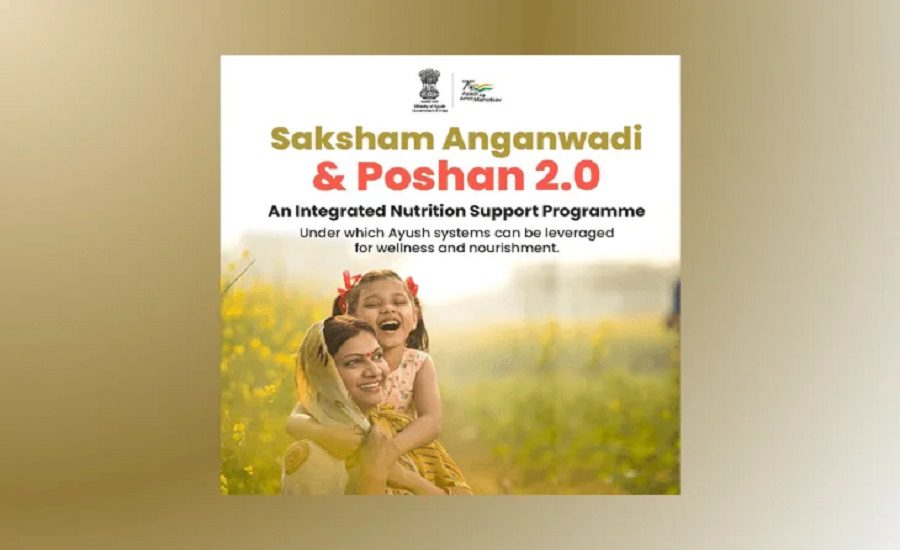
New Delhi: The Government of India has undertaken several initiatives to improve infrastructure and service delivery at Anganwadi Centres under Mission Saksham Anganwadi and Poshan 2.0. The program focuses on strengthening nutrition services, enhancing early childhood care and education, and modernizing Anganwadi facilities across the country.
Union Minister for Women and Child Development Annpurna Devi shared these details in the Rajya Sabha, highlighting the government’s commitment to tackling malnutrition and improving child welfare.
Construction of 50,000 Anganwadi Centres
As part of the 15th Finance Commission cycle, the government is constructing 50,000 Anganwadi Centres across the country at a pace of 10,000 centres per year. The construction is being carried out in convergence with Mahatma Gandhi National Rural Employment Guarantee Scheme (MGNREGS).
Under the funding model:
- ₹8 lakh is provided through MGNREGS
- ₹2 lakh is allocated under the 15th Finance Commission or other untied funds
- ₹2 lakh is contributed by the Ministry of Women and Child Development
This funding is shared between the Centre and states or Union Territories as per the prescribed cost-sharing ratio.
States and UTs have also been advised to use additional funding sources such as:
- Member of Parliament Local Area Development Scheme (MPLADS)
- Rural Infrastructure Development Fund (RIDF)
- Finance Commission grants to Panchayati Raj Institutions
- Multi-Sectoral Development Programme
Special Initiatives for Tribal and Border Areas
Additional efforts are being made to develop Anganwadi infrastructure in tribal and remote areas through initiatives such as:
- PM JANMAN
- Dharti Abha Janjatiye Gram Utkarsh Abhiyan
- Vibrant Village Programme
These programs aim to improve childcare and nutrition services for tribal communities and populations living near India’s northern borders.
Improved Facilities at Anganwadi Centres
To enhance infrastructure at Anganwadi Centres, the government has increased financial support for essential amenities:
- Funding for drinking water facilities increased from ₹10,000 to ₹17,000
- Funding for toilets increased from ₹12,000 to ₹36,000
These measures aim to improve hygiene, sanitation, and overall working conditions at the centres.
Development of Saksham Anganwadis
Under Mission Poshan 2.0, the government is strengthening two lakh Anganwadi Centres located in government buildings as Saksham Anganwadis during the 15th Finance Commission period.
Approximately 40,000 centres per year are being upgraded with enhanced facilities, including:
- LED screens
- Water filtration systems
- Poshan Vatika (nutrition gardens)
- Early Childhood Care and Education (ECCE) learning materials
- Building as Learning Aid (BALA) educational paintings
These improvements aim to provide better nutrition services and early learning opportunities for children.
Integration with Schools for Early Education
To improve early childhood education, the Ministry of Education and the Ministry of Women and Child Development jointly launched guidelines on 3 September 2025 to co-locate Anganwadi Centres within government primary schools.
Where co-location is not feasible, Anganwadi Centres are being mapped with the nearest primary schools to strengthen foundational literacy and numeracy programs.
Technology Integration Through Poshan Tracker
Anganwadi Centres are also being technologically empowered through the Poshan Tracker application.
The platform enables:
- Monitoring of Anganwadi centres and workers
- Real-time tracking of beneficiaries
- Growth monitoring of children
- Tracking of stunting, wasting, and underweight prevalence
- Monitoring of daily attendance and nutrition services
Smartphones and growth monitoring devices have been provided to Anganwadi workers to ensure efficient service delivery.
Facial Recognition for Beneficiary Authentication
To ensure transparency in the distribution of Take-Home Ration (THR), the government has introduced a Facial Recognition System (FRS) integrated with Poshan Tracker.
This system ensures that nutrition benefits reach the correct beneficiaries, including:
- Pregnant women
- Lactating mothers
- Adolescent girls
The system also includes a Nominee Module, allowing beneficiaries to nominate a representative to collect ration if they are unable to visit the centre themselves.
Budget Allocation for Mission Poshan 2.0
The government has steadily increased funding for the mission over the years. Budget allocations include:
- ₹20,294.58 crore in 2022–23
- ₹20,554.31 crore in 2023–24
- ₹21,200 crore in 2024–25
- ₹21,960 crore in 2025–26
Independent evaluations conducted by NITI Aayog in 2020 and 2025 found the scheme to be effective and relevant in addressing malnutrition in India.
Strengthening Nutrition and Child Development
Through improved infrastructure, technological tools, and enhanced monitoring systems, the government aims to strengthen nutrition services and early childhood care across India.
Officials believe these initiatives will significantly improve maternal and child health outcomes, ensure better service delivery at the grassroots level, and support the country’s long-term efforts to combat malnutrition.
Read also: PM Narendra Modi Lays Foundation Stone for ₹5,514 Crore Polypropylene Plant at BPCL Kochi Refinery