New Delhi: India’s long-awaited quest for propulsion self-reliance has entered a decisive phase as the Ministry of Defence (MoD) has set 2026 as the target year for certifying the indigenous Dry Kaveri engine, a critical milestone aimed at accelerating the Ghatak Unmanned Combat Aerial Vehicle (UCAV) programme.
The certification effort will be led by the Gas Turbine Research Establishment (GTRE) under the Defence Research and Development Organisation (DRDO), marking a strategic push to align engine readiness with next-generation combat airframe development.
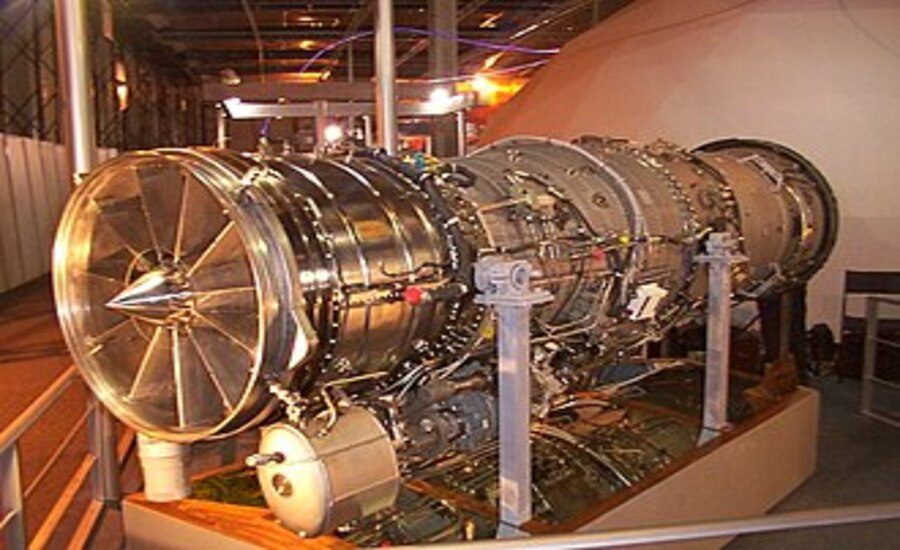
What is Dry Kaveri Engine
The Dry Kaveri Engine is a non-afterburning derivative of the original Kaveri turbofan engine programme, originally conceived for the Light Combat Aircraft (LCA) Tejas.
For decades, India’s aero-engine ecosystem suffered from a mismatch between airframe progress and propulsion maturity. The MoD’s 2026 certification deadline reflects a doctrine-level shift—ensuring that indigenous engines are no longer an afterthought but a core enabler of advanced aerospace platforms.
The Dry Kaveri’s certification is pivotal for securing Cabinet Committee on Security (CCS) clearance for the Ghatak UCAV, India’s most ambitious stealth unmanned combat aircraft project to date.
What are the Key Technical Highlights of Dry Kaveri Engine
Thrust Output: ~49 kN (dry thrust)
Configuration: Non-afterburning turbofan
Primary Platform: Ghatak UCAV
It is optimised for the following operations;
- Stealth operations
- Long-endurance missions
- High-altitude performance
Its dry thrust configuration makes it especially suitable for low-observable unmanned platforms, where thermal and acoustic signatures must be minimized.
What are the Importance of Dry Kaveri Engine for Ghatak UCAV
The Ghatak UCAV is envisioned as a stealthy, deep-penetration strike platform capable of autonomous missions, internal weapons carriage, and AI-driven decision support.
An indigenous engine is essential to:
- Preserve mission secrecy
- Avoid foreign export restrictions
- Enable customised stealth-engine integration
- Ensure wartime availability and scalability
MoD officials have explicitly rejected interim foreign engine solutions, reinforcing India’s commitment to propulsion sovereignty under the Atmanirbhar Bharat framework.
High-Altitude Trials and International Validation
A major boost to the programme has come from successful high-altitude flight trials conducted aboard an Ilyushin Il-76 testbed in Russia.
These trials validated:
- Engine performance across extreme operational envelopes
- Stability at high altitudes
- Thermal and airflow characteristics
The results now serve as a benchmark for advancing full-scale prototype funding and flight-readiness assessments.
Parallel Validation on Tejas Testbed
In a risk-mitigation strategy, DRDO is also evaluating the Dry Kaveri on a limited-series Tejas aircraft post-2030, strictly as a flying testbed.
Importantly:
- The engine will not be operationally deployed on Tejas
- The objective is data acquisition and envelope expansion
- This allows real-world validation without programme dependency risks
What is the Role of L&T in Dry Kaveri Engine Development
Private sector participation has emerged as a cornerstone of the programme. Larsen & Toubro (L&T) has been designated as the Development-Cum-Production Partner for the Ghatak UCAV.
This partnership signifies:
- Deeper private-sector integration in strategic defence manufacturing
- Faster production scalability
- Improved supply-chain resilience
Recent Milestones Achieved
According to defence officials, several critical steps have already been completed:
- Dry Kaveri engine integration finalized
- Static performance testing completed
- Wind tunnel validation and mission simulations concluded
- Design reviews cleared for next-phase trials
The first production-quality Dry Kaveri engine, delivered in September 2025, is currently undergoing baseline validation and endurance testing.
What are Implications of Dry Kaveri Engine
The MoD’s resolve reflects broader geopolitical imperatives:
- Reduced reliance on imported propulsion systems
- Insulation from sanctions and supply disruptions
- Strengthening India’s deterrence posture amid regional tensions
Certification by 2026 could unlock full-scale development funding, paving the way for early 2030s operational induction of the Ghatak UCAV.
Future Growth Potential: Scalable Thrust Variants of Dry Kaveri Engine
Defence Secretary Rajesh Kumar Singh has indicated that the Dry Kaveri architecture allows future scalability, including:
- 49–51 kN current configuration
- Potential upgrades to 73–75 kN with afterburner integration
- Applicability to future UCAVs and loyal wingman concepts
Such modular growth could significantly enhance India’s autonomous combat aviation roadmap.