Chandigarh: The Defence Research and Development Organisation ( DRDO) has successfully conducted a high-speed rocket-sled test of a fighter aircraft escape system — a dramatic demonstration that validates the emergency pilot-ejection mechanism under conditions replicating real-world flight.
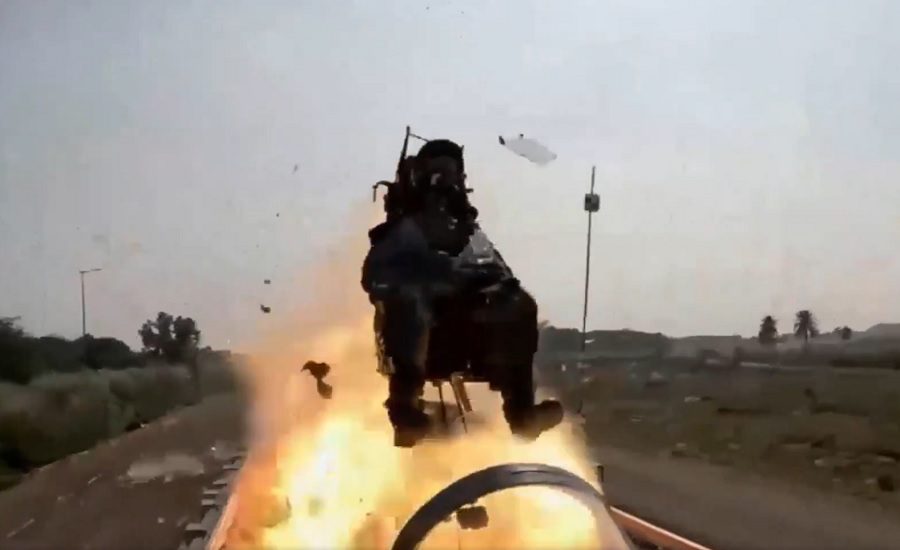
The trial, carried out at the Rail Track Rocket Sled (RTRS) facility in the premises of Terminal Ballistics Research Laboratory (TBRL), Chandigarh, saw the ejection system perform flawlessly at a controlled velocity of 800 kilometres per hour (km/h).
The success of this test marks a major leap forward for India’s aviation safety capabilities and strengthens the nation’s stride toward defence self-reliance. As acknowledged by the government, this puts India among a select group of countries capable of conducting advanced in-house escape system tests.
Background of the Rocket-Sled Test
A rocket sled is a specialized test platform that rides along a track — propelled not by wheels, but by rockets — to simulate the high-speed conditions of a flying aircraft.
The RTRS facility at TBRL, inaugurated by DRDO years ago, provides one of the few such test infrastructures in India capable of safely accelerating test articles to velocities comparable to those experienced by combat aircraft in flight.
Dynamic tests using rocket sleds are considered significantly more realistic and demanding than static evaluations (like “zero-zero” ground ejection tests), because they replicate the aerodynamic loads, speed-induced stresses, and real-time conditions a pilot might face during an in-flight emergency.
The impetus for indigenous ejection-seat systems
The current generation of combat jets in India, including earlier versions of the LCA Tejas, rely on imported ejection seats (for example, from foreign manufacturers).
However, reliance on foreign suppliers can pose strategic and logistical constraints — especially under sanctions, export restrictions, or in times of supply chain disruption. Recognizing this, the Aeronautical Development Agency (ADA) and Hindustan Aeronautics Limited (HAL) have been pushing, in collaboration with DRDO, to develop fully indigenous or jointly-developed ejection seats for future jets (including upgraded versions of Tejas, like Mk-II, and upcoming platforms).
Thus, a successful high-speed test is a critical validation step on the path to replacing imported seats with domestic alternatives — ensuring pilot safety while enhancing India’s defence-manufacturing autonomy.
What is Rocket-Sled Test
The rocket-sled test was conducted using a dual-sled setup carrying the forebody of a Tejas aircraft. Using multiple solid-propellant rocket motors fired in a phased sequence, the sled was accelerated to a precise controlled velocity of 800 km/h.
The entire escape sequence — from canopy severance to ejection sequence and full air-crew recovery — was simulated using an instrumented anthropomorphic test dummy.
This dummy recorded critical biomechanical data: loads, moments, accelerations — the kind of physical stress a real pilot would undergo in an emergency ejection.
Onboard sensors and high-speed ground-based cameras captured the entire sequence for detailed post-test analysis and certification.
The trial was witnessed by officials from the Indian Air Force (IAF), the Institute of Aerospace Medicine, as well as relevant certification and technical oversight bodies — underscoring the seriousness and official scrutiny behind the test.
Significance: What This Achievement Means for India
- With this successful dynamic test, India joins a small group of nations capable of conducting high-speed rocket sled ejections for fighter jets. This is not just a technological feat, but a sovereign capability — one that allows India to design, validate, and certify air-crew escape systems without reliance on foreign infrastructure or approvals.
- This development aligns with India’s broader push for self-reliance in defence (often referred to as “Atmanirbhar Bharat”), especially in aerospace. By moving toward indigenous ejection-seat and escape-system solutions, India can insulate itself from export restrictions, reduce dependence on foreign supply chains, and exercise full control over critical safety systems — vital in combat and emergency scenarios.
- The success of this test paves the way for integrating indigenous escape systems not just into Tejas Mk-II, but future advanced platforms as well — potentially including 5th-generation fighter projects or optionally piloted systems.
- Moreover, because the rocket-sled track facility was originally designed for a broad range of tests (missile systems, aerospace payloads, parachutes, warhead systems, etc.), this success demonstrates the versatility and robustness of India’s test infrastructure.
- With a validated escape system, safety of air-crew improves — especially under high-stress, high-velocity ejection scenarios typical of modern aerial combat or aircraft emergencies.
- It reduces dependence on imported ejection seats (with associated logistical or geopolitical complications), especially as India scales up its indigenous fighter-jet fleet (Tejas Mk-II and beyond).
- Ultimately, it strengthens India’s strategic autonomy — giving the IAF and defence planners greater control in design, certification, maintenance, and lifecycle support for critical safety systems.
Officials Statements on Rocket-Sled Test
Rajnath Singh — the Defence Minister — lauded the test as a “major milestone” for India’s indigenous defence capability, highlighting its importance in the nation’s journey toward self-reliance.
Raksha Mantri, Shri @rajnathsingh has complimented DRDO, IAF, ADA, HAL and industry on successful conduct of High-Speed Rocket Sled Test of Fighter Aircraft Escape System and described it as a significant milestone for India’s indigenous defence capability towards self-reliance. https://t.co/hNddBxM2Yt
— रक्षा मंत्री कार्यालय/ RMO India (@DefenceMinIndia) December 2, 2025
Samir V. Kamat — Secretary of Defence R&D and Chairman of DRDO — praised the technical team involved, noting that the success reflects India’s growing confidence and competence in advanced aerospace systems.
What Comes Next: Road Ahead
The validated escape system will now go through detailed certification processes, integration trials, and further refinement before becoming operational. Given the test success, it’s highly probable that upcoming Tejas Mk-II and future platforms will benefit from the indigenous design.
DRDO, ADA, HAL (and possibly private-sector collaborators) may expand development of other cockpit / pilot-safety subsystems — reducing the footprint of foreign equipment in fighter jets.
The rocket-sled infrastructure and expertise may also be leveraged for other aerospace or defense-related tests (missiles, parachutes, ejection seats for different aircraft types, even unmanned / optionally piloted platforms), further expanding India’s test and qualification capabilities.
As India continues its push for “Atmanirbhar” defence manufacturing, such successful high-speed tests could encourage more indigenous design & manufacturing efforts — thereby strengthening domestic aerospace industry and reducing long-term foreign dependency.