New Delhi: The National Biodiversity Authority (NBA), a statutory body under India’s Ministry of Environment, Forest and Climate Change, released ₹6.2 crore on 11 December 2025 to beneficiaries across five Indian states under the Access and Benefit Sharing (ABS) framework of the Biological Diversity Act, 2002.
This funding aims to enhance conservation efforts for the endangered Red Sanders (Pterocarpus santalinus)—a high-value timber species endemic to southern India—and boost the socio-economic resilience of farmers and forest-dependent communities involved in its protection.
What Is National Biodiversity Authority ABS funds
The ABS mechanism, rooted in India’s Biological Diversity Act, 2002, ensures that benefits—both monetary and
non-monetary—derived from the use of biological resources and associated traditional knowledge are fairly and equitably shared with local communities and stakeholders who have conserved these resources over generations.
This legislative framework aligns with international biodiversity goals, including those outlined under the Convention on Biological Diversity (CBD) and the Nagoya Protocol, which emphasize equitable benefit-sharing from genetic resources globally.
Background of Red Sanders and Its Conservation Significance
Red Sanders is a rare and highly prized timber species found primarily in the Eastern Ghats of India. Its wood is sought after for high-end furniture, musical instruments, cosmetics and traditional medicine, making it commercially valuable and ecologically significant.
Due to over-exploitation, illegal trade, and habitat loss, the species is classified as endangered and protected under both national and international conservation laws.
Previously, the NBA and various State Biodiversity Boards (SBBs) have implemented ABS schemes to channel funds from commercial utilization and benefit-sharing arrangements back into local conservation efforts. The recent disbursement marks a continuation of these initiatives, reinforcing sustained, participatory biodiversity conservation.
Details of the ₹6.2 Crore National Biodiversity Authority ABS funds
The ₹6.2 crore released in December 2025 was allocated across five states to support diverse stakeholders, including farmers, forest departments and biodiversity boards directly engaged in Red Sanders conservation:
- Telangana: ₹17.8 lakh to farmers.
- Andhra Pradesh: ₹1.1 crore to farmers.
- Tamil Nadu Forest Department: ₹2.98 crore.
- Karnataka Forest Department: ₹1.05 crore.
- Maharashtra Forest Department: ₹69.2 lakh.
- Telangana Forest Department: ₹5.8 lakh.
- State Biodiversity Boards: ₹16 lakh shared among various boards.
These funds are earmarked for frontline protection, enhanced patrolling and monitoring infrastructure, adoption of research-backed silvicultural practices, expansion of community-based livelihood programmes and socio-economic upliftment of Red Sanders growers.
Benefits of National Biodiversity Authority ABS funds to Farmers and Communities
With this latest tranche, total ABS funds exclusively for Red Sanders conservation have surpassed ₹101 crore since the mechanism was first operationalised for this species.
Additionally, cumulative NBA ABS disbursements—across all beneficiaries and sectors—have now crossed ₹127 crore, underscoring India’s efforts to drive equitable benefit-sharing linked to its biological wealth.
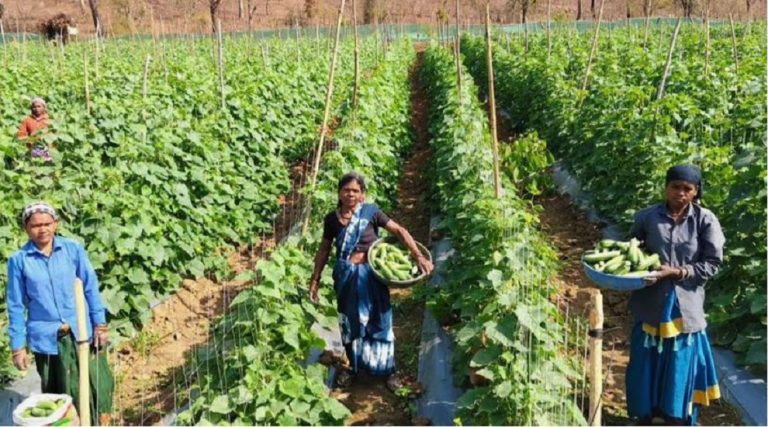
The initiative has directly benefited 216 individual farmers (198 in Andhra Pradesh and 18 in Tamil Nadu) through prior ABS releases, and has supported the conservation and sustainable use activities of forest departments and biodiversity boards in six states.
National and Global Context: Biodiversity Policy and Sustainable Livelihoods
The NBA’s ABS disbursements align with broader national biodiversity strategies encapsulated in the National Biodiversity Strategy and Action Plan (NBSAP) 2024–2030, which prioritizes mobilizing financial resources for biodiversity conservation and community livelihood enhancement.
These efforts also contribute toward achieving Target-13 and Target-19 of the Kunming-Montreal Global Biodiversity Framework adopted under the Convention on Biological Diversity.
Importantly, the ABS framework demonstrates how legislative instruments like the Biological Diversity Act can transform conservation from a compliance obligation into a sustainable livelihood opportunity for farmers and local communities—linking ecological protection with economic incentives.