New Delhi: NITI Aayog on April 7 released the second edition of its report titled From Borrowers to Builders: Women and India’s Evolving Credit Market, highlighting a major expansion in women’s participation in India’s formal credit ecosystem, with women now holding a credit portfolio worth ₹76 lakh crore — accounting for 26 per cent of the country’s total system credit.
The report was launched in New Delhi in collaboration with the Women Entrepreneurship Platform (WEP), TransUnion CIBIL and MicroSave Consulting.
It shows that women’s credit exposure has expanded 4.8 times since 2017, indicating a significant shift from basic financial inclusion toward deeper and more structured participation in formal borrowing.
Read also: India on Track for Viksit Bharat 2047 and Net Zero 2070, NITI Aayog Charts Clean Energy Roadmap
Report Released in Presence of Senior Government and Financial Sector Officials
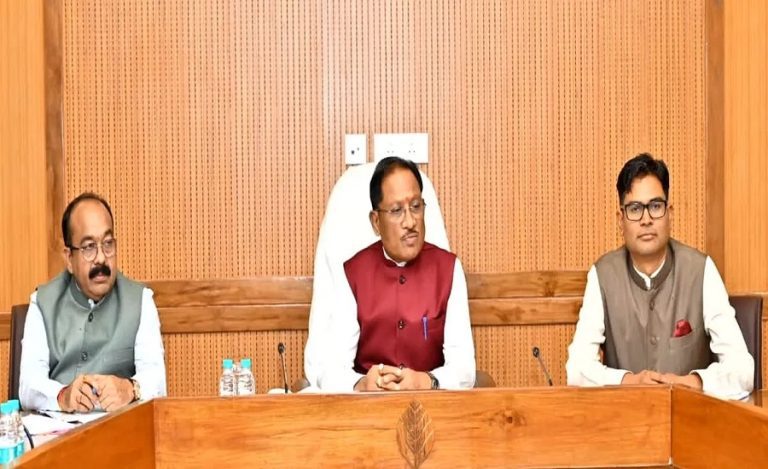
The report was released by Nidhi Chhibber in the presence of senior officials from government, financial institutions and policy bodies.
Among those present were:
- Neelam Patel
- Rajib Kumar Sen
- Ishtiyaque Ahmed
- Sonia Pant
- Swapnalee Bhattacharya
- Mercy Epao
- Bhavesh Jain
- Akhand Tiwari
The report was prepared under the aegis of the Women Entrepreneurship Platform.
Women’s Credit Participation Expanding Rapidly
According to the report, between December 2017 and December 2025:
- Number of credit-active women borrowers grew at a CAGR of 9%
- Women’s credit penetration increased from 19% to 36%
- Total outstanding credit to women rose from ₹16 lakh crore to ₹76 lakh crore
The report notes that India currently has nearly 45 crore credit-eligible women, indicating substantial room for further growth in formal credit access.
Nidhi Chhibber Highlights Deepening Economic Integration
Speaking at the launch, Nidhi Chhibber said that broader market participation strengthens economic development.
She noted that digital public infrastructure and formal credit systems are transforming how financial participation is recorded and financed.
According to her, women borrowers are increasingly moving beyond entry-level loans and entering retail and business-purpose lending, reflecting stronger financial capability and deeper integration into the economy.
Shift Visible in Commercial and Business Credit
A major finding of the report is the strong rise in commercial credit among women borrowers.
Between 2022 and 2025:
- Credit to women business borrowers grew at CAGR of 31%
- Overall commercial credit grew at CAGR of 17%
This indicates that women are not only borrowing more but also increasingly using credit for enterprise creation and expansion.
Microfinance Borrowers Transitioning to Formal Retail Credit
The report highlights a gradual shift among women borrowers who earlier depended mainly on microfinance.
It states that:
- 19% of active Microfinance Institution borrowers now also hold retail or commercial loans
This reflects a transition from small group-based borrowing to individual formal credit products.
Bihar and Uttar Pradesh Emerging Strongly in Women Credit Growth
The geographical spread of women’s formal credit participation is also widening.
While southern and western states continue to perform strongly, northern states such as:
- Bihar
- Uttar Pradesh
have shown significant growth in women’s borrowing activity.
This suggests that formal credit expansion is no longer concentrated only in historically strong financial regions.
Personal and Gold Loans Lead, Housing Loans Rising
Among credit products, the most widely accessed by women remain:
- Personal loans
- Gold loans
At the same time, housing loans are showing encouraging growth, which the report interprets as a sign of increasing asset ownership among women.
Digitisation Reducing Barriers to Formal Credit
The report states that rapid digitisation across:
- identity systems
- payments
- underwriting
- loan servicing
is helping reduce entry barriers for women borrowers.
It argues that digital systems are making it easier for women to move from informal borrowing arrangements to structured formal finance.
Study Based on 16 Crore Women Borrowers and Rural Research
The report draws on longitudinal credit bureau data covering approximately 16 crore credit-active women across India.
It also includes primary field research involving 161 rural nano-entrepreneurs, providing behavioural insights into how women access and use credit.
This year’s edition additionally incorporates microfinance data, making it one of the most comprehensive assessments of women’s financial progression in India.
WEP Collaboration Aims to Fill Gender Data Gaps
The report builds on a collaboration initiated by the Women Entrepreneurship Platform in 2025 under its Financing Women Collaborative.
The objective is to address gaps in sex-disaggregated financial data and better understand:
- borrower trends
- progression patterns
- formal credit behaviour among women
Anna Roy Calls It a Structural Economic Shift
Anna Roy, Programme Director at NITI Aayog and Mission Director of WEP, said the diversification of women’s participation in credit reflects a meaningful shift in India’s economic structure.
She noted that sustaining this momentum will require a stronger enabling environment so that rising participation translates into resilient enterprises and deeper economic contribution.