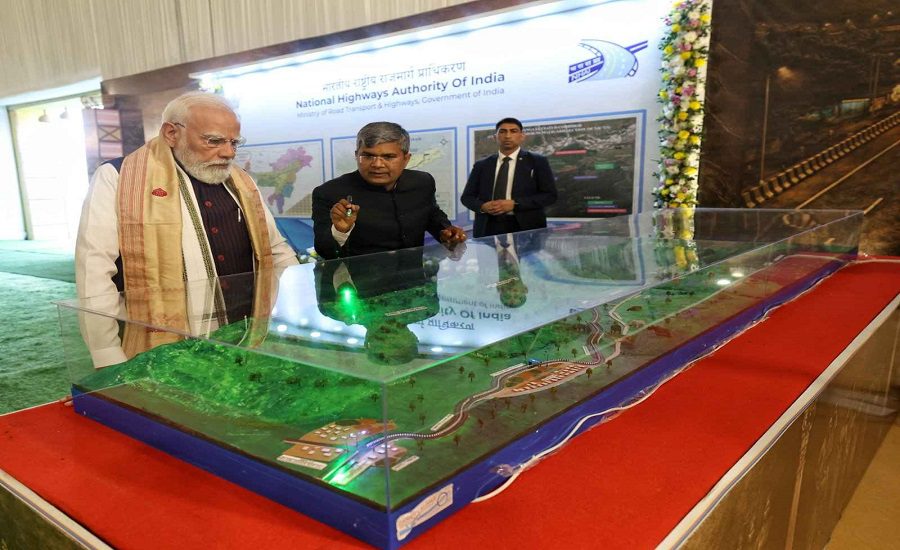
Kaliabor, Assam: Prime Minister Narendra Modi on 18 January 2026 performed the Bhoomi Pujan of the Kaziranga Elevated Corridor Project, a landmark National Highway development worth over ₹6,950 crore. The 86-kilometre project, part of the 4-laning of the Kaliabor–Numaligarh section of NH-715, will improve connectivity in Upper Assam while prioritizing environmental protection of the UNESCO World Heritage Kaziranga National Park.
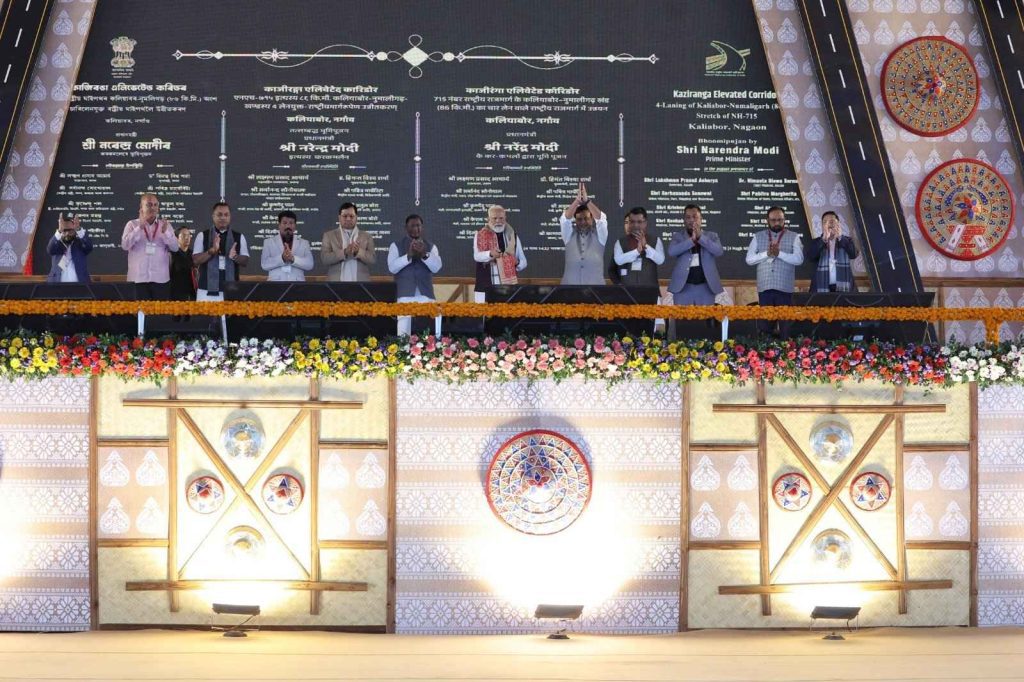
The event in Kaliabor saw the presence of Assam Governor Mr Lakshman Prasad Acharya, Chief Minister Mr Himanta Biswa Sarma, Union Ministers Mr Sarbananda Sonowal, Mr Pabitra Margherita, and several dignitaries.
Kaziranga Elevated Corridor: Infrastructure Meets Environmental Conservation
The ambitious project covers 86 km, including –
- 35 km of Elevated Wildlife Corridor passing through Kaziranga National Park
- 21 km of Bypass sections at Jakhalabandha and Bokakhat
- 30 km widening of existing NH-715 from two to four lanes
The corridor is designed to –
- Ensure uninterrupted wildlife movement, reducing human-animal conflicts
- Enhance road safety and regional connectivity
- Decongest towns and improve urban mobility in Nagaon, Karbi Anglong, and Golaghat districts
- Support growing passenger and freight traffic, linking Dibrugarh and Tinsukia to the national highway network
PM Modi emphasized that nature and development can coexist, highlighting that the corridor will allow vehicles to pass above while wildlife moves freely below.
PM Modi Highlights Assam’s Heritage and Development
Addressing the gathering, PM Modi described Kaziranga as “the soul of Assam and a priceless jewel of India’s biodiversity.” He recalled his previous visit, including staying overnight in the park and experiencing the elephant safari.
The Prime Minister praised Assam’s youth, noting how tourism, handicrafts, guide services, transport, and homestays have created new livelihood opportunities, bridging conservation with economic growth. He also acknowledged the historical importance of Kaliabor, recalling the leadership of Lachit Borphukan in defending Assam against Mughal invasions.
Protecting Wildlife and Celebrating Achievements
PM Modi lauded Assam’s efforts to protect the one-horned rhinoceros, noting that poaching, which was a concern in 2013-2014, has been fully controlled due to enhanced surveillance, modern resources, and community participation through initiatives like ‘Van Durga.’
He highlighted India’s broader environmental achievements, including –
- Planting over 260 crore trees under the “Ek Ped Maa Ke Naam” campaign
- Expansion of tiger and elephant reserves
- Growth of protected and community areas
- Reintroduction of cheetahs and development of wetlands under Asia’s largest Ramsar network
Strengthening Rail Connectivity in Assam
The Prime Minister also flagged off two new Amrit Bharat Express trains –
- Guwahati (Kamakhya) – Rohtak Amrit Bharat Express
- Dibrugarh – Lucknow (Gomti Nagar) Amrit Bharat Express
He underlined that improved rail connectivity complements the highway project, linking Assam more effectively with northern India, facilitating trade, education, and travel, and reinforcing the North East’s integration with the nation.
PM Modi on Development, Governance, and Opposition Politics
PM Modi emphasized that the North East is no longer “on the margins of development”, citing historic underinvestment during previous governments. He highlighted record funding increases in railways and infrastructure, contrasting it with the neglect during opposition rule.
He also warned against illegal infiltration and encroachment, stating that Assam’s identity, culture, and ecology must be protected, while criticizing opposition parties for failing to safeguard the region.
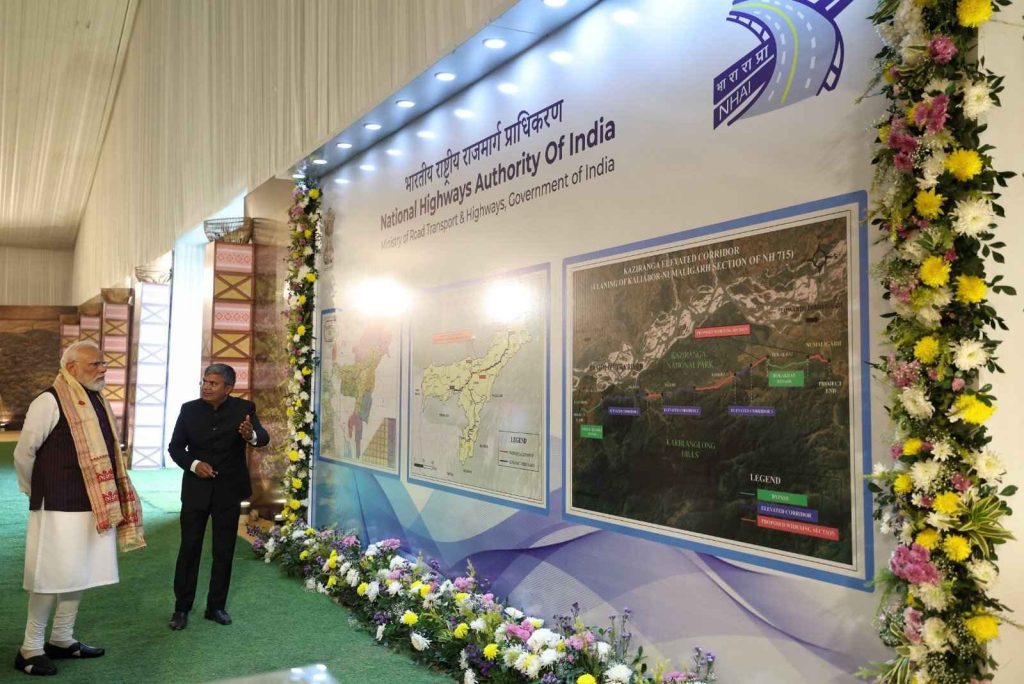
Background: Kaziranga Elevated Corridor Project Details
Project Cost: ₹6,950 crore
- Length: 86 km (Kaliabor – Numaligarh section of NH-715)
- Elevated Wildlife Corridor: 35 km
- Bypasses: Jakhalabandha and Bokakhat (21 km)
- Highway Widening: 30 km, from 2 to 4 lanes
- Districts Covered: Nagaon, Karbi Anglong, Golaghat
Key Benefits:
- Improved connectivity to Upper Assam, Dibrugarh, and Tinsukia
- Reduced human-wildlife conflicts
- Decongested towns and better traffic flow
- Enhanced tourism and local economic opportunities