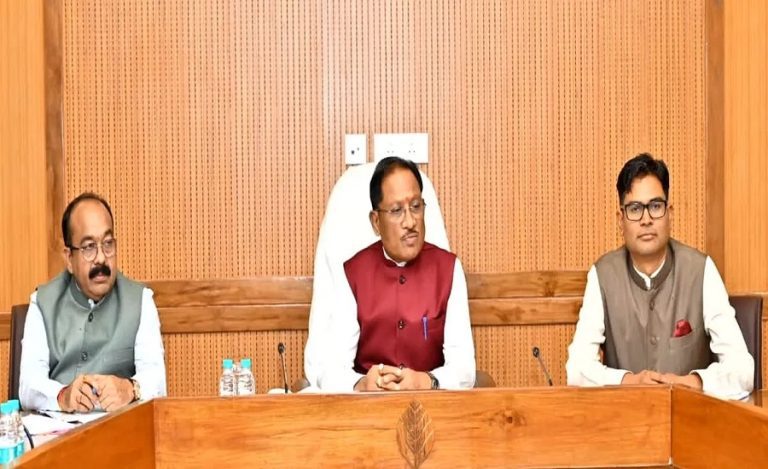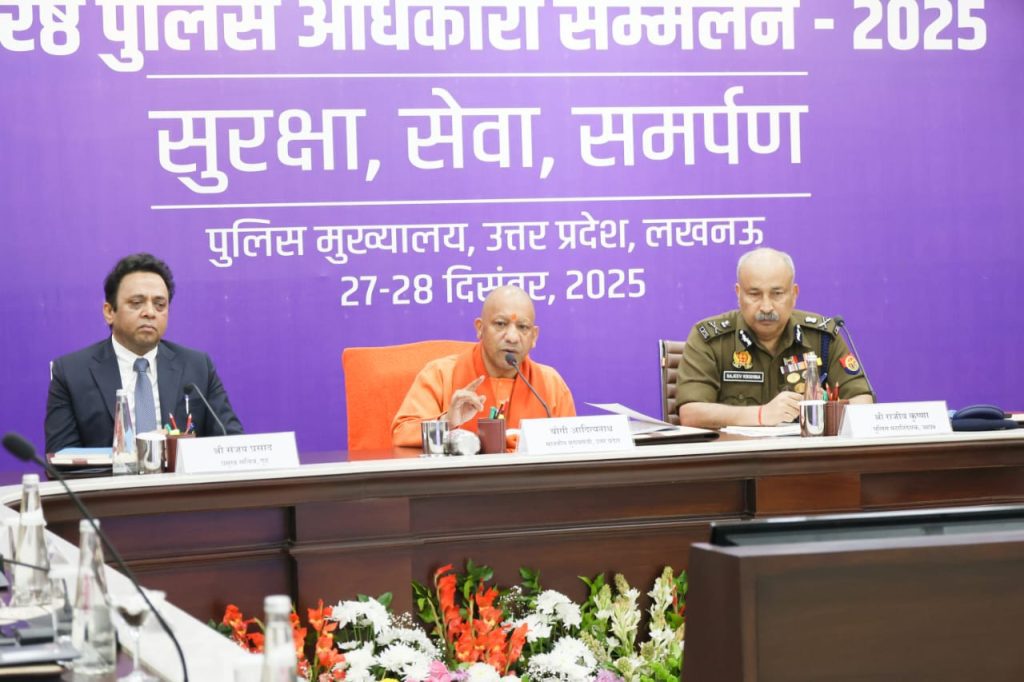
Lucknow: After a gap of seven years, Uttar Pradesh Police has revived the traditional Police Week in a reimagined and reform-oriented format titled “Police Manthan”, a two-day high-level conference being held on December 27 and 28 at the police headquarters in Lucknow. The programme is being chaired by Chief Minister Yogi Adityanath, underscoring the state government’s direct involvement in shaping the future roadmap of policing in Uttar Pradesh.
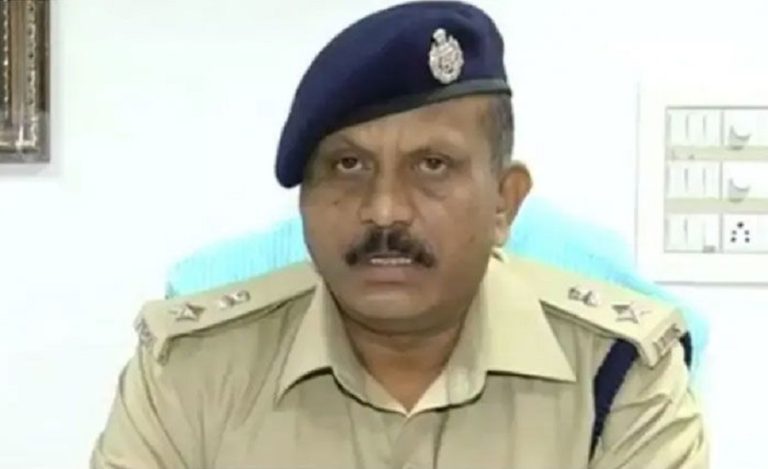
The event was announced by Director General of Police (DGP) Rajeev Krishna (IPS:1991:UP) during a press conference on Friday, where he emphasized that the revived Police Week would go beyond ceremonial observances and focus on policy deliberation, institutional reforms, and result-oriented discussions.
Police Week Transformed into Strategic ‘Police Manthan’
Traditionally marked by symbolic and formal events, Police Week – also referred to as IPS Week – has this time been transformed into a strategic platform aimed at addressing contemporary policing challenges and preparing the force for future requirements.
“The earlier model was largely ceremonial. This time, Police Week has been redesigned as Police Manthan to focus on meaningful dialogue, reforms, and outcomes,” said DGP Rajeev Krishna.
Notably, Police Week was last organized in April 2018, during the tenure of former DGP O.P. Singh. Officials described the current format as both a revival of tradition and a significant departure from the earlier approach.
Highlights of Saturday’s Sessions
Session 1: Beat Policing & ‘Yaksh’ App
Led by ADG (Crime) S.K. Bhagat, the session focused on addressing grassroots policing challenges. The CM launched the ‘Yaksh App’, an AI- and Big Data-driven digital version of the traditional beat book. It provides a comprehensive data map of crimes, criminals, and sensitive areas for targeted action.
Session 2: Women and Child Safety
ADG Padmaja Chauhan presented updates on Mission Shakti Centres, community awareness programs, and the Family Dispute Resolution Clinic (FDRC). ADG (Gorakhpur Zone) Ashok Mutha Jain also highlighted the ‘Bahu-Beti Sammelan’ initiative.
Session 3: Smart Station Management
DG (Lucknow Zone) Sujit Pandey introduced the ‘Smart SHO Dashboard’, an integrated tool designed to reduce grievance redressal time, enhance accountability, and improve traffic and crime monitoring at the police station level.
Session 4: Cyber Crime
DG (Cyber Crime) Binod Kumar Singh discussed capacity building with the Indian Cyber Crime Coordination Centre (I4C) and the role of Cyber Help Desks in tackling evolving digital threats.
Session 5: HRD and Welfare
DG (Training) Rajiv Sabharwal emphasized behavioral improvement of personnel, health schemes for families, and the use of the i-GOT portal for online training. The role of ‘Vamasarathi’ in women empowerment was also highlighted.
Session 6: Prosecution and Prisons
DG (Prosecution) Dipesh Juneja discussed an e-reporting portal for monitoring mafias and 12 KPIs for prosecutors. DG (Prisons) Prem Chand Meena highlighted jail digitization initiatives, including AI-based CCTV surveillance, Health ATMs, and video conferencing for over 50,000 court testimonies.
Session 7: CCTNS 2.0 & New Laws
ADG (Technical Services) Naveen Arora elaborated on making policing data-driven under the new criminal codes (Nyay Sanhita), focusing on e-FIR, Zero FIR, e-Summon, and e-Sakshya.
The first day of the conference concluded with a closing address by the DGP, marking a significant step toward a technologically advanced UP Police.
Focus on People-Oriented Policing and Technology-Driven Reforms
According to the DGP, the conference will primarily focus on –
- Strengthening people-oriented policing
- Enhancing technological capabilities of the police
- Ensuring swift and effective action against crime and criminals
The aim is to align policing practices with evolving social realities, emerging security threats, and new criminal laws, while improving public trust and service delivery.
Eleven Thematic Sessions with Wide Participation
A total of 11 thematic sessions have been scheduled during the two-day conference. Each session will be led by a senior nodal IPS officer, supported by 45 other police officers, who will make detailed presentations.
“This structure ensures wider participation, collective responsibility, and ownership of reforms across the police hierarchy,” the DGP said.
Each session is designed to address key challenges and emerging priorities in law enforcement, enabling in-depth discussion and actionable recommendations.
Key Themes to Be Discussed on December 27
Discussions scheduled for December 27 will focus on –
- Beat policing
- Crimes against women and children
- Human trafficking
- Upgradation and management of police stations
- Cybercrime and digital threats
- Human resource development and training
- Prosecution and prison reforms
- Integration of new criminal laws with forensics
- Implementation of CCTNS 2.0
These sessions aim to strengthen grassroots policing and modernize institutional processes.
December 28 Sessions to Address Security and Border Challenges
The sessions on December 28 will cover –
- Disaster management, civil defence, and home guards
- Large-scale crowd management
- Intelligence challenges linked to social media and NGOs
- Security concerns along the Nepal border
- Terrorism
- Narcotics trafficking
- Cattle theft
- Other forms of organized crime
These discussions will focus on both preventive and responsive strategies in dealing with complex and evolving threats.
Special Session on Best Practices and Innovation
In addition to the scheduled thematic discussions, a special supplementary session will be held on best practices and innovations in policing. This session will provide a platform for sharing successful initiatives, innovative tools, and field-level solutions that have shown tangible results.
With participation from senior leadership and field officers alike, Police Manthan is expected to emerge as a key forum for policy formulation, strategic planning, and the exchange of innovative ideas.
A Platform to Shape the Future of Policing in Uttar Pradesh
Officials believe that the reimagined Police Week will play a crucial role in defining the future course of policing in the state. By shifting focus from symbolic observances to substantive discussions, the conference seeks to create a roadmap for efficient, accountable, and technology-enabled policing in Uttar Pradesh.