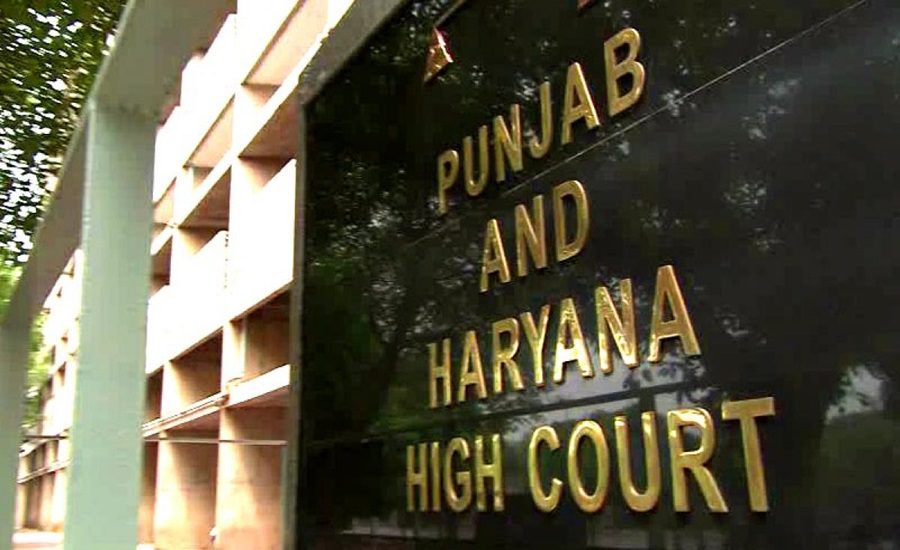
Chandigarh: In a significant judicial intervention impacting rural employment governance, the Punjab & Haryana High Court has sought the Union Government’s formal response on a petition demanding the regularisation of long-serving contractual employees under the Mahatma Gandhi National Rural Employment Guarantee Scheme (MGNREGA).
The Court emphasised the absence of a clear, humane policy for regularisation and called upon the Centre to formulate one urgently.
This development marks a crucial moment in the ongoing nationwide debate over the security and rights of contractual workers who have performed vital administrative roles in what is officially one of India’s most significant rural welfare programmes.
What is MGNREGA
The Mahatma Gandhi National Rural Employment Guarantee Scheme (MGNREGA) has long been a flagship programme of the Government of India, designed to guarantee rural employment and strengthen livelihood security for the poor.
Read also: SBI Report Highlights Viksit Bharat – G RAM G Act Replacing MGNREGA, ₹17,000 Crore Gains for States
Contractual workers, including Accounts Assistants and other field staff, have been engaged for years to support implementation, often against sanctioned posts but without permanent status or benefits.
In recent years, contractual workers across various sectors have increasingly approached courts arguing that long-standing service, qualifications, and administrative continuity entitle them to regularisation — converting temporary status into permanent government employment with commensurate rights and benefits.
High Court Directions on MGNREGA Regularisation
On January 3, 2026, a bench of the Punjab & Haryana High Court, led by Justice Sandeep Moudgil, took up a writ petition filed by contractual Accounts Assistants under MGNREGA.
Petitioners contend that they have served continuously and effectively for over a decade against sanctioned posts, yet no policy framework exists to consider their regularisation.
The Court observed that:
- MGNREGA’s effective implementation depends on the dedicated work of personnel who functionally fill sanctioned roles.
- Contractual workers face uncertainty and insecurity due to the lack of policy clarity on regularisation.
- Fairness, compassion, and social justice principles demand the State address employee expectations sympathetically and in accordance with constitutional norms.
Judicial Directive to the Union Government
The High Court’s order issued notice to the Union of India, requiring it to file an affidavit outlining its position on whether and how it plans to frame a policy for regularising eligible contractual workers engaged under MGNREGA.
Senior Advocate and Additional Solicitor-General (ASG) Satya Pal Jain accepted notice on behalf of the Union, while the Haryana Additional Advocate-General accepted notice for the state. Both respondents have been directed to submit formal responses ahead of the next hearing, scheduled for February 9, 2026.
Importance of MGNREGA Regularisation
The Court’s insistence on a “comprehensive and humane policy” highlights the systemic gap in employment governance for contractual workers serving essential public roles.
Despite court precedents in similar matters, including cases dealing with long-standing contractual staff elsewhere in the country, there remains no consistent and enforceable national policy addressing these issues within MGNREGA’s framework.
Contractual workers argue that long service, qualifications, and responsibility warrant regularisation, aligning with past legal interpretations seen in broader administrative employment law.
Conversely, governments at both state and federal levels have historically hesitated to regularise contractual employees systematically, often creating prolonged legal uncertainty.
Wider Significance of MGNREGA Regularisation
This case also resonates with wider national concerns surrounding contractual employment in public schemes and government departments.
Across India, thousands of workers have faced similar battles, arguing that long-term engagement without job security undermines social justice—one of the core tenets of Indian governance.
The High Court’s directive reflects judicial recognition that contractual workers form the backbone of welfare programme implementation and deserve a clear, equitable framework for regularisation if they meet established criteria.
Looking Ahead
With the next court hearing set for February 9, 2026, observers, legal experts, and labour advocates will closely watch how the Union Government responds.
Key questions include:
- Will the Centre put forward a comprehensive policy for contractual employee regularisation?
- Can judicial impetus push public administration toward greater employment security?
- What implications will this case have for similar contractual regularisation claims nationwide?
The outcome could have broad implications not only for MGNREGA employees but potentially for contractual workforces across government schemes and departments throughout India.