New Delhi: The Indian Navy is evaluating Israel’s Rafael Ice Breaker missile to significantly boost the strike capability of its MH-60R Sea Hawk helicopters, aiming for unparalleled 300km maritime dominance in the Indo-Pacific region.
This move can transform ordinary surveillance and anti-submarine choppers into potent ship-killer platforms.
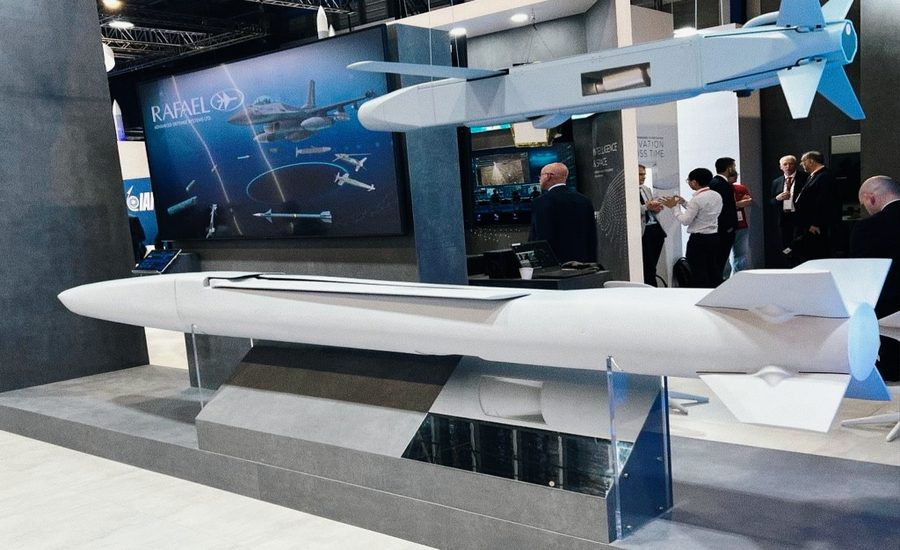
The Ice Breaker, a fifth-generation air-launched cruise weapon, offers advanced stealth, autonomous guidance, and long-range reach — features essential for modern naval warfare.
What Is the Rafael Ice Breaker Missile?
The Ice Breaker is an air-launched version of Rafael Advanced Defence Systems’ Sea Breaker cruise missile.
Read also: India Tests Advanced Third Generation Man-Portable Anti-Tank Missile With Moving-Target Capability
Designed for long-range strikes, it combines a lightweight body with a powerful guidance suite.
What are the Features of Rafael Ice Breaker Missile
Its key technologies include an Imaging Infrared (IIR) seeker, Artificial Intelligence (AI)-aided autonomous target recognition (ATR), and a low-observable stealth profile. These features make it hard for enemy air defence systems to detect or intercept it.
Unlike traditional missiles, Ice Breaker does not rely solely on GPS, giving it an edge in jamming-prone environments. Its sea-skimming flight path and advanced counter-countermeasure resistance help it strike targets without being easily noticed by radar or infrared sensors.
Why the Indian Navy Is Interested in Rafael Ice Breaker Missile
The Indian Navy currently operates MH-60R Sea Hawk helicopters mainly for anti-submarine warfare (ASW) and surveillance missions. These helicopters were procured from the United States to modernize India’s maritime patrol fleet and improve sea-lane security.
However, these helicopters were not originally equipped for extended long-range anti-ship strikes. Their basic armament includes standard AGM-114 Hellfire missiles and lightweight torpedoes — effective for close combat but limited in reach and strike power.
To fill this gap, the Navy is exploring Ice Breaker’s potential to provide a standoff strike capability of up to 300km. If integrated, this missile would allow helicopters to hit adversary warships from a distance well beyond their current defensive range — enhancing deterrence and offensive reach.
How Ice Breaker Fits MH-60R Capabilities
One reason Ice Breaker is suitable for Sea Hawks is its weight and design. At roughly 400kg, it fits within the helicopter’s payload limits without severely impacting flight performance. Many indigenous alternatives, such as DRDO’s Naval Anti-Ship Missile-Medium Range (NASM-MR), weigh over 600kg and are better suited to fixed-wing platforms, not helicopters.
By comparison, foreign missiles like the Kongsberg Naval Strike Missile (NSM) are also heavier and thus less suitable for rotary platforms. Therefore, Ice Breaker offers the right balance of weight, range, and stealth — enhancing the MH-60R’s strike horizon without compromising maneuverability.
Strategic Advantage in the Indo-Pacific
A major reason for pursuing this capability is the evolving maritime threat in the Indo-Pacific Region (IOR), where naval dominance plays a critical role in national security and trade protection. With rivals expanding their blue-water fleets, India needs weapons that enhance stand-off engagement ability. An MH-60R equipped with Ice Breaker missiles could launch high-precision attacks on hostile ships while remaining outside their defensive perimeter.
This capability is especially important for protecting sea lanes, responding to amphibious threats, and reinforcing carrier strike groups in a large ocean theatre.
‘Make in India’ and Defence Manufacturing
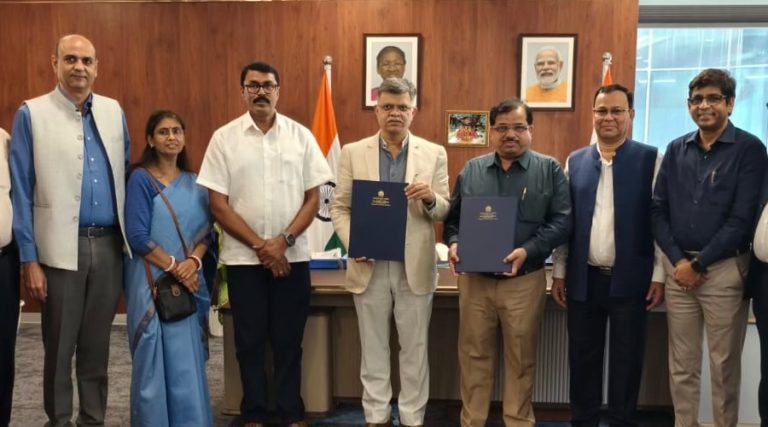
Reports suggest that Bharat Dynamics Limited (BDL) has signed a Memorandum of Understanding (MoU) with Rafael to manufacture Ice Breaker missiles in India. This collaboration supports the government’s Atmanirbhar Bharat (self-reliant India) initiative, transferring technology and building local defence industry capacity.
Domestic production could reduce dependency on foreign imports, create jobs, and strengthen India’s defence industrial base.
Future Outlook and Challenges
While Ice Breaker evaluation is underway, full integration on the MH-60R platform requires extensive testing, certification, and crew training. The missile’s autonomous systems and advanced seeker will also necessitate upgrades to targeting systems aboard the Sea Hawks.
If successful, this upgrade could redefine India’s naval aviation strategy and set a new benchmark for helicopter-launched anti-ship weapons.
Read also: Explained: Indian Navy’s First Training Squadron at Changi Naval Base and Its Strategic Significance