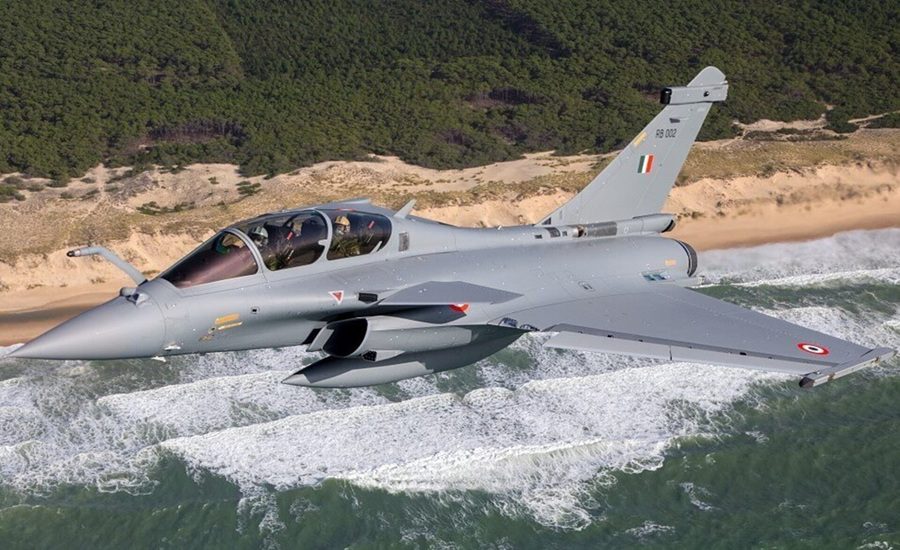
New Delhi: The Rafale fleet upgrade plan, focused on transitioning 35 Indian Air Force (IAF) Rafale F3R jets to the advanced F4 standard, represents a major leap in India’s combat aviation capabilities. With cutting-edge radar systems, enhanced sensors, and network-centric warfare features, this upgrade will align India’s frontline fighters with future battlefield requirements while strengthening strategic deterrence across the Indo-Pacific region.
Rafale F4 Upgrade: Strategic Necessity in Modern Warfare
India currently operates F3R-standard Rafale fighters, which boast strong multirole capabilities. The F3R standard integrates enhanced avionics and weapon systems, but rapid advancements in regional air threats demand further modernization. Upgrading to the F4 standard ensures these jets remain relevant against advanced adversary platforms.
The F4 variants, already entering service in other air forces like the UAE’s, include improvements in radar, communication systems, and mission planning tools.
What the Rafale F4 Upgrade Entails
The planned upgrade for the 35 Rafale F3R jets in IAF service includes several major enhancements:
1. Advanced AESA Radar
The integration of an Active Electronically Scanned Array (AESA) radar delivers superior detection range, improved target tracking, and enhanced resistance to jamming — critical advantages in evolving threat environments.
2. Infrared Search and Track (IRST) System
A dedicated IRST sensor provides passive detection of airborne targets based on heat signatures, reducing reliance on active radar emissions and improving survivability.
3. Helmet-Mounted Display & Cues
Pilots will receive real-time targeting cues via advanced helmet-mounted displays, significantly increasing situational awareness and engagement efficiency in air combat.
4. Network-Centric Warfare Capabilities
Enhanced secure data links and hardened communication systems will allow Rafales to operate seamlessly in joint operations, share battlefield data, and integrate with other assets for faster decision-making.
These upgrades enable India’s Rafales to strike a balance between air superiority and precision ground attack missions, extending their relevance in a future conflict.
Broader Rafale Procurement & Future Plans
Beyond the upgrade of existing jets, India is in advanced talks with France for a larger procurement package that could include 114 new Rafale F4 aircraft and a possible option for F5 variants, the next evolutionary step featuring even more advanced avionics and autonomous teaming capabilities.
The acquisition is designed not only to expand the IAF’s fleet but also to amplify India’s airpower amid increasing regional tensions, particularly along the northern and western borders.
Implications of Rafale F4 Upgrade for ‘Make in India’
The upgrade and procurement plans align with India’s broader ‘Make in India’ strategy, with intentions to increase indigenous production and develop local aerospace ecosystems. Partnerships between Dassault and Indian firms aim to build supply chains, enhance local technology integration, and support defence exports.
However, issues such as technology transfer and source-code access remain critical topics in negotiations, balancing national security with industrial autonomy.
What are the Impact Rafale F4 Upgrade
Upgrading the Rafale fleet boosts India’s deterrent capability against near-peer competitors equipped with advanced fighters. The combination of modern sensors, weapons systems, and networked operations significantly increases the effectiveness of Indian airpower in contested airspace.
This modernized force structure not only strengthens operational readiness but also enhances interoperability with key partners in joint exercises and coalition operations.