New Delhi: Orpheus engine family is emerging as a key opportunity for India to strengthen its aerospace engine ecosystem. British aerospace major Rolls-Royce has proposed a partnership with India to co-develop a new modular turbofan engine family called Orpheus, designed to power future trainer aircraft and advanced unmanned aerial vehicles (UAVs).
The proposal aligns with India’s long-term goal of building indigenous aero-engine capability under the “Make in India” and defence self-reliance initiatives.
If accepted, the collaboration could allow Indian industry and defence laboratories to participate in design, development, testing, and manufacturing of modern jet engines—an area where India currently relies heavily on foreign technology.
What Is the Orpheus Engine Family
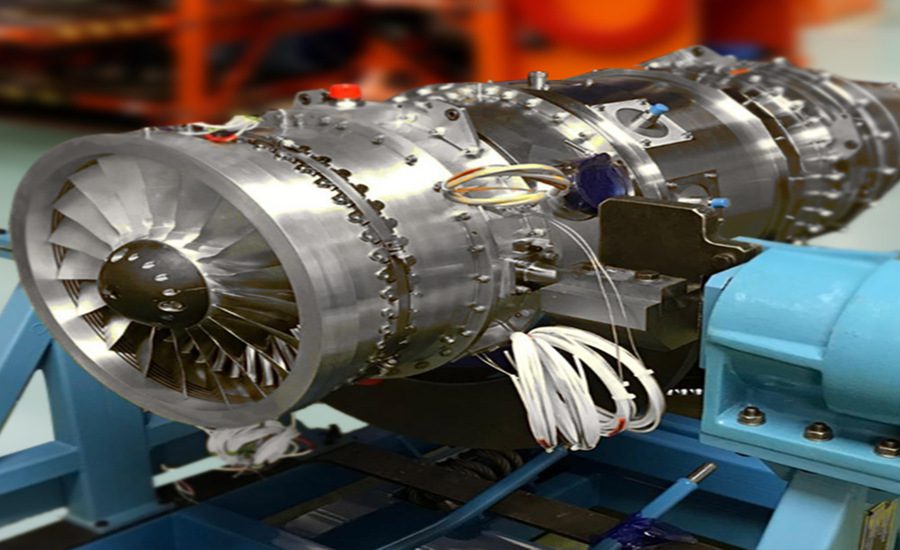
The Orpheus engine family is a new generation of small turbofan engines developed by Rolls-Royce to power modern military aircraft and autonomous systems.
Read also: Big Boost to ‘Make in India’: First Indian-Built C-295 Aircraft to Roll Out Before September 2026
According to Rolls-Royce, the concept focuses on modular architecture, meaning the same core engine technology can be adapted for multiple aircraft types and missions.
Key features include:
- Twin-spool small turbofan design for efficiency and reliability
- Low fuel consumption, reducing operational costs
- Scalable architecture that can be modified for different thrust requirements
- Integrated electrical power generation to support modern “more-electric” aircraft systems
- Flexible design suitable for future combat air systems and drones
The engine programme began around 2020 and has already completed over 100 test events across multiple configurations, showing the maturity of the technology.
Orpheus Engine Development: Why Rolls-Royce Wants to Partner with India
Rolls-Royce has offered India a co-development model rather than a simple purchase or licensed production deal. This means Indian organisations could participate in:
- Engine design and engineering
- Development and testing
- Manufacturing and supply chains
- Integration with aircraft platforms
Such collaboration could involve Indian partners like DRDO’s Gas Turbine Research Establishment (GTRE) and aerospace manufacturers.
For India, this model could help build domestic capability in jet engine design, which is considered one of the most complex technologies in aerospace.
Potential Applications of Orpheus Engine in India
Here are the major applications of Orpheus Engine in india;
1. Trainer Aircraft
India operates several trainer aircraft for pilot training, including those manufactured by Hindustan Aeronautics Limited (HAL).
A modern turbofan engine like Orpheus could power future jet trainers or upgraded trainer platforms, improving performance and fuel efficiency.
Trainer aircraft are critical because they prepare pilots before they transition to frontline fighter jets.
2. Unmanned Combat Aircraft and Drones
India is rapidly developing advanced unmanned systems for the armed forces.
Examples include:
- Loyal-wingman combat drones
- Surveillance UAVs
- High-speed strike drones
For instance, the HAL CATS Warrior programme is developing an autonomous combat drone designed to operate alongside fighter aircraft.
A scalable engine like Orpheus could power such platforms, enabling:
- High endurance
- Faster speeds
- Better payload capacity
Strategic Importance of Orpheus Engine Development for India
Jet engine technology is widely considered one of the most challenging areas in defence aerospace, with only a few countries mastering it.
India has made progress through programmes such as the Kaveri engine project, but challenges remain in achieving high-performance engines for combat aircraft.
A co-development partnership with Rolls-Royce could help India:
- Build indigenous jet-engine expertise
- Develop a domestic aerospace supply chain
- Reduce dependence on foreign engine imports
- Strengthen the “Atmanirbhar Bharat” defence initiative
Background of Orpheus Engine Development
Rolls-Royce already has a long partnership with India’s aerospace industry.
For decades, its engines have powered multiple aircraft used by the Indian military. Over 750 Rolls-Royce engines are currently operating on Indian military aircraft, including trainers, transports, and surveillance platforms.
Historically, India has also used engines related to the original Orpheus turbojet family on aircraft such as the HAL Kiran trainer.
The new Orpheus family represents the next generation of that legacy technology.
Global Trend: Engines for Autonomous Combat Systems
The development of compact turbofan engines like Orpheus is part of a broader global trend.
Many countries are investing in low-cost propulsion systems for autonomous aircraft, including collaborative combat drones that operate alongside fighter jets.
These engines are designed to be:
- Cheaper to produce
- Easier to maintain
- Suitable for unmanned platforms
This makes them ideal for future air combat concepts involving manned-unmanned teaming.
Read also: India Approves 114 Rafale Jets, 6 P-8I Aircraft in ₹3.25 Lakh Crore Defence Deal