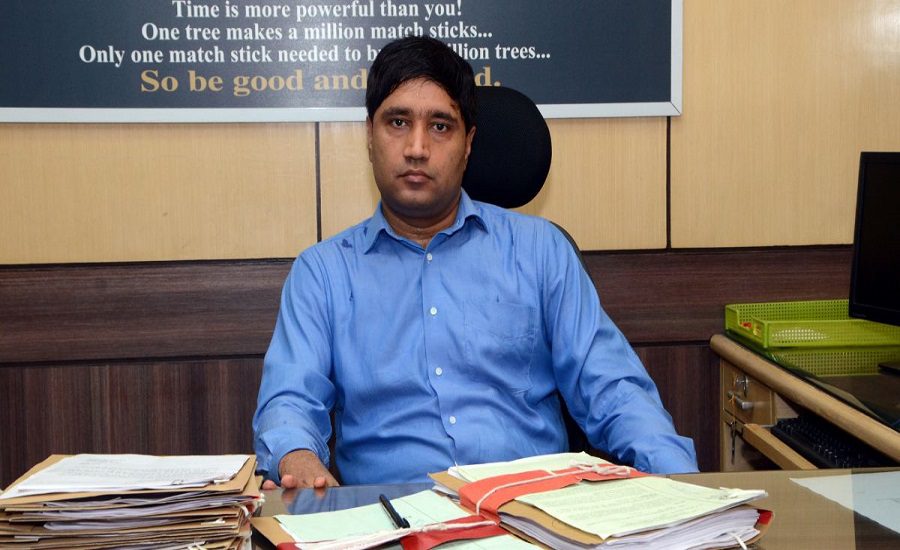
Dehradun: In a significant ruling promoting transparency, the State Information Commission (SIC) of Uttarakhand has directed the Uttarakhand High Court to disclose details under the Right to Information (RTI) Act regarding complaints and disciplinary actions against judicial officers in subordinate courts. The order followed a plea filed by 2002 batch senior Indian Forest Service (IFS) officer Sanjiv Chaturvedi, challenging the high court’s initial refusal to provide the information.
Background: RTI Application Filed by Sanjiv Chaturvedi
Chaturvedi, currently posted in Haldwani, had filed an RTI application in May 2023, seeking comprehensive data on complaints and disciplinary actions involving subordinate court judges. Specifically, he requested:
- The name of the competent authority before whom complaints of corruption or misconduct can be submitted.
- The total number of complaints registered from January 2020 to April 2025.
- The number of cases in which disciplinary or criminal action was recommended or initiated.
Read also: DoPT Seeks Recall of CAT Order on 360-Degree Appraisal Guidelines in Sanjiv Chaturvedi Case
High Court Denies Information Citing Confidentiality
In June 2023, the Public Information Officer (PIO) of the Uttarakhand High Court responded but refused to provide full information, citing confidentiality and involvement of third parties. Chaturvedi then approached the first appellate authority, but his appeal did not yield relief.
During the SIC hearing, the high court PIO stated that information could be provided only for specific complaints, and that sanction from the Chief Justice would be required to release broader statistical data.
SIC Orders Disclosure with Competent Authority Approval
After hearing both sides, Chief Information Commissioner Radha Raturi ruled that the number of complaints and actions taken should be shared, provided the competent authority grants approval. The commission also directed the high court to inform SIC of further action taken regarding the disclosure.
The order is being seen as a move toward increasing transparency in district-level judiciary functioning, allowing the public to access information on how complaints against subordinate judges are handled.
Chaturvedi’s Concerns and Lawyer’s Statement
Chaturvedi’s lawyer, Sudershan Goel, highlighted the need for such transparency, citing instances of alleged misuse of judicial procedures:
Applications filed by Chaturvedi in lower courts were sometimes adjudicated through erroneous recording of presence.
Copies of pending criminal proceedings were allegedly supplied to third parties, causing personal detriment.
Certain laws established by the Supreme Court were reportedly ignored.
Goel also referred to a case where a false complaint with forged signatures was submitted against Chaturvedi, and the FIR registration was declined, raising concerns about adherence to basic principles of criminal jurisprudence.
He called the SIC order a landmark ruling that would strengthen judicial accountability and public access to information in Uttarakhand.
Context: Previous Developments in Judicial RTI Disclosures
The ruling comes amid a broader trend of courts resisting disclosure of complaints against judges. A similar case arose last year when the Delhi High Court declined to provide statistical data on complaints filed against district-level judges since 2015. In that instance, the high court PIO stated that no such data was maintained, and therefore could not be shared.